
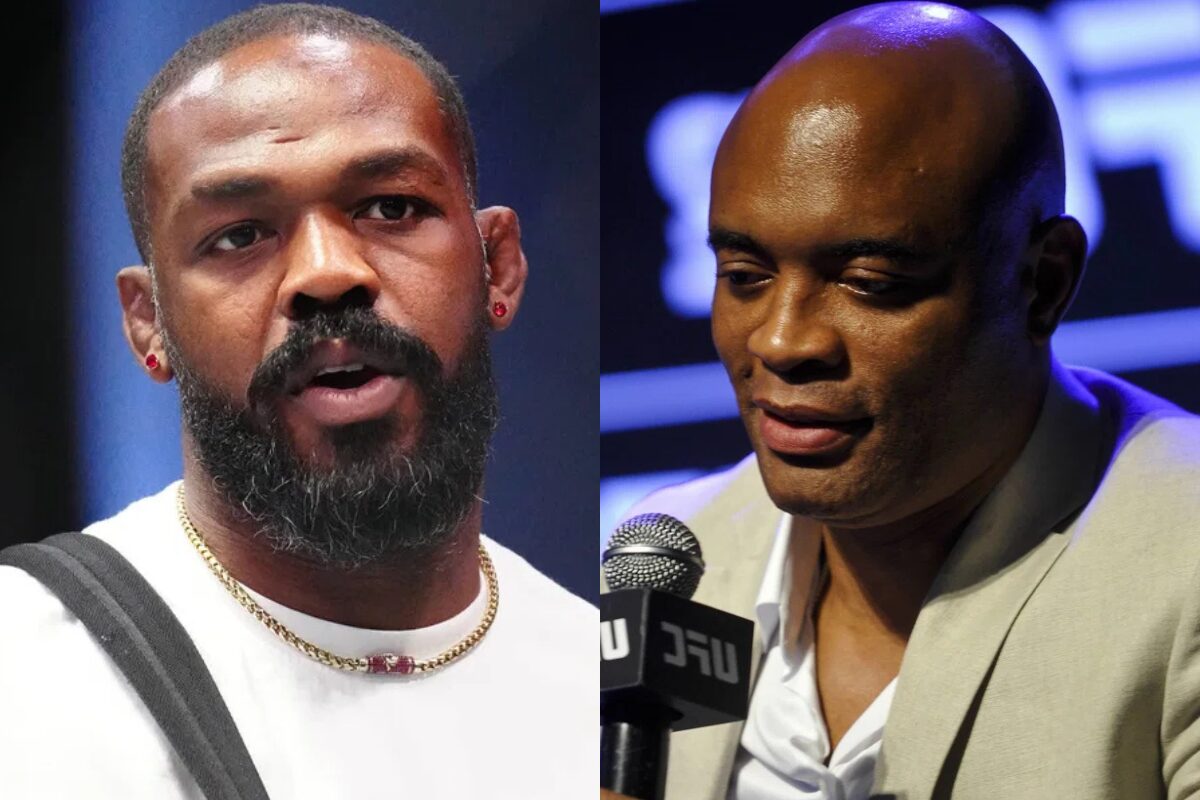
While top bantamweight contender Movsar Evloev might be focused on dethroning Alexander Volkanovski at UFC 333 to become the next featherweight champion, the Russian is not shying away from making some big claims about the careers of UFC legends.
Watch What’s Trending Now!
In a recent interaction with MMA Junkie’s Mike Bohn on the BohnFire podcast, the undefeated 20-0 Russian claimed that, apart from Jon Jones, legends such as Jose Aldo, Anderson Silva, and Anthony Pettis all declined after the UFC introduced stricter drug-testing mandates.
“Aldo was great until they did doping tests. Then he went down,” Evloev told Bohn. “Everybody knows. I think only Jon Jones stayed at the same level after the doping tests. Everybody else went down, like (Anderson) Silva and (Anthony) Pettis.
“Pettis was great before they started testing. Yeah, they are talented, but it looks like the stuff they used helped them, like Vitor Belfort. I respect all these fighters, but we know the story, right?”
There is some important context behind Movsar Evloev’s argument. Before 2015, UFC drug testing was largely handled by athletic commissions, with fighters typically being tested around fight time. The promotion then partnered with the United States Anti-Doping Agency in 2015, introducing a much stricter system that included year-round, unannounced testing.
That change eventually exposed several fighters to doping violations, including some of the biggest names in the sport. However, whether stricter testing directly caused those fighters’ performances to decline is a much more complicated question. And Evloev’s first example, Jon Jones, is particularly interesting.
Imago
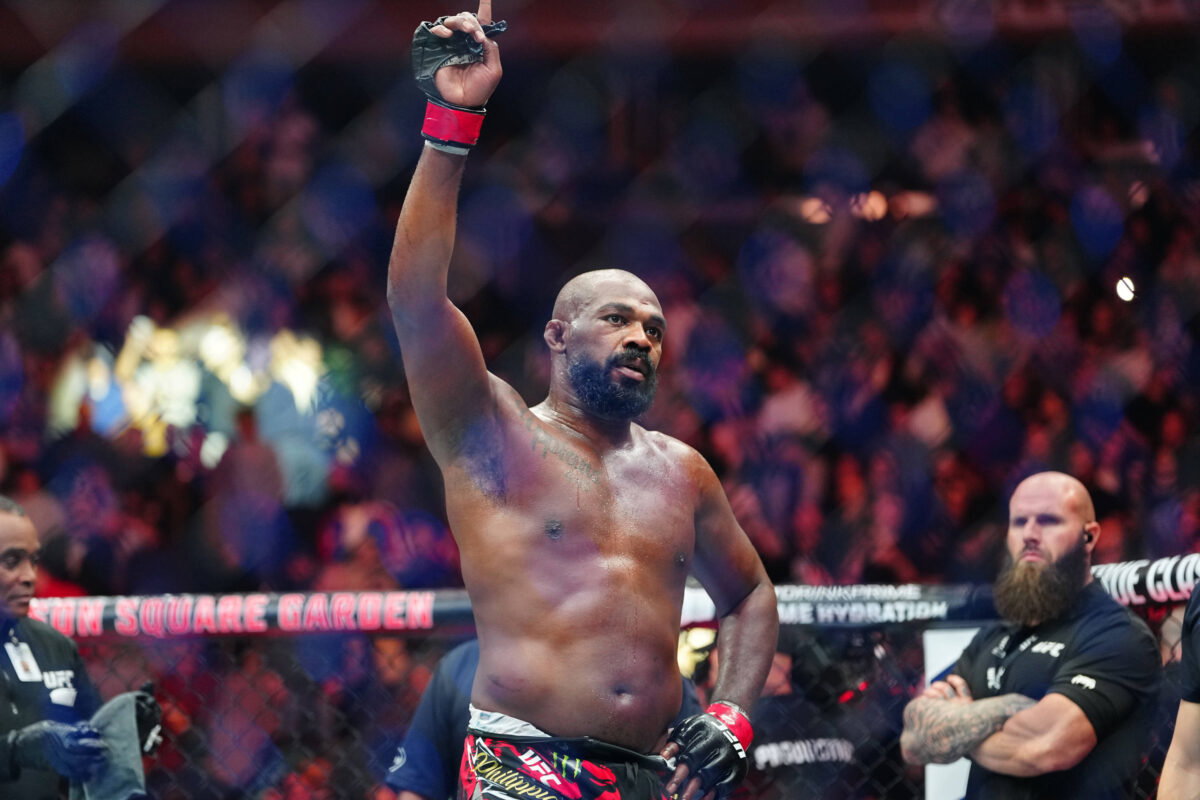
Madison Square Garden NEW YORK CITY, NY -NOVEMBER 16:Jon Jones and Stipe Miocic meet in the octagon for a 3-round bout for UFC309 – Jones vs Miocic at Madison Square Garden on November 16, 2024 in New York City, NY Photo by Louis Grasse/PxImages Louis Grasse / SPP PUBLICATIONxNOTxINxBRAxMEX Copyright: xLouisxGrassex/xSPPx spp-en-LoGr-lrg2411164283867_UFCVegas309
Although Jones tested positive for banned substances multiple times during his career, he continued to compete at the highest level after the UFC’s anti-doping program became stricter. His career, however, was anything but unaffected by those violations.
The former two-division champion tested positive for coc-ine metabolites three days after defeating Daniel Cormier at UFC 182 in 2015. However, the substance was not prohibited out of competition at the time, allowing Jones to retain his victory over ‘DC’.
A more serious violation came before their rematch at UFC 200 in 2016, when Jones tested positive for estrogen blockers. The result led to a one-year suspension and forced him out of the bout.
Jon Jones returned in 2017 to defeat Cormier at UFC 214, but that victory was later overturned to a no-contest after he tested positive for the performance-enhancing drug Turinabol. The violation resulted in another 15-month suspension.
Still, as Evloev pointed out, Jones continued to thrive after each setback. ‘Bones’ returned to win the light heavyweight title against Alexander Gustafsson at UFC 232 and went on to defend it three times. He later moved up to heavyweight, won the title, and defended it without testing positive again.
So, while Jones’ career was undoubtedly affected by his doping violations and suspensions, there is little argument that his competitive level remained remarkably high.
However, Evloev’s argument becomes much harder to defend when looking at the career of another legend he mentioned: Anderson Silva.
Anderson Silva’s decline came after doping violations, but the timeline is a bit complicated. Like Jones, Anderson Silva tested positive for banned substances multiple times during his career. ‘The Spider’ first failed a doping test in January 2015 for Drostanolone metabolites and a prohibited anti-anxiety medication.
Because of this, the commission overturned his comeback victory over Nick Diaz into a no-contest. Following that, Silva dropped two consecutive fights against Michael Bisping and Daniel Cormier, only to test positive for banned substances once again in 2017.
Months after the Brazilian legend defeated Derek Brunson at UFC 208 in 2017, he popped for an anabolic steroid called Methyltestosterone and a diuretic called hydrochlorothiazide during an out-of-competition test. As a result, the positive test forced him out of a planned main event against Kelvin Gastelum.
Once the commission determined his positive test was a result of a product contamination rather than intentional doping, his suspension was reduced to one year, and he was allowed to return in November 2018.
Silva eventually returned after serving a year-long suspension, but his career was already moving in a different direction. The former middleweight champion lost three consecutive fights and eventually retired after losing to Uriah Hall in 2020. Across the periods surrounding his two suspensions, Silva lost five of six fights.
That decline certainly gives some weight to Movsar Evloev’s argument. However, it would be difficult to definitively attribute Silva’s deterioration solely to stricter drug testing, especially considering his age, mileage, and the level of competition he faced late in his career.
Jose Aldo and Anthony Pettis never tested positive in their UFC careers
Though Jose Aldo faced adversity during the later part of his UFC career, he actually never tested positive for any banned substances. Throughout his run as featherweight champion, ‘The King of Rio’ maintained a clean record. However, he was definitely entangled in a controversial situation with USADA in 2015.
The anti-doping agency actually sent one of its sample collectors to Brazil, but without proper documentation, the official couldn’t collect the actual sample. Instead, the collector ended up using a discarded sample that turned out to be redundant.
Aldo went through a new test, which eventually came back negative, and the Brazilian never faced any controversy like that again. Similarly, Anthony Pettis also never tested positive for doping during his UFC career.
The former lightweight champion also had an episode with USADA before fighting Nate Diaz at UFC 241. While giving a urine sample, Pettis reportedly cut his hand while opening the collection bottle. Pettis was enraged to the point that he wanted to sue the UFC’s former drug-testing partners for compromising his performance against Diaz.
In that case, Evloev’s suggestion that Aldo and Pettis declined because PED use was no longer possible does not have evidence behind it. Neither fighter tested positive for banned substances during their UFC careers.
However, there is one fighter on Movsar Evloev’s list whose story does offer a much closer parallel to the argument he was making: Vitor Belfort.
Before the UFC partnered with USADA, Belfort had become synonymous with his use of Testosterone Replacement Therapy. The Brazilian tested positive for elevated testosterone levels while undergoing TRT in 2014, although he was legally permitted to use the treatment at the time under a therapeutic-use exemption regulated by the athletic commission.
The controversy surrounding Belfort’s use of TRT eventually became too much for regulators, and the use of TRT was banned altogether.
Vitor Belfort then lost three of his next four fights and never quite recaptured the form that had made him one of the most feared fighters in the sport. Photos comparing Belfort before and after TRT also became a recurring topic among MMA fans as the debate over the treatment continued.
That makes Belfort a much stronger example for Evloev’s argument than Aldo or Pettis. Still, even in Belfort’s case, the relationship between stricter drug testing and a fighter’s decline is difficult to prove conclusively.
The No.1 ranked bantamweight contender has certainly opened an interesting can of worms about how the UFC’s stricter anti-doping era changed the sport. But while Jones and Silva provide some fuel for his argument, Aldo and Pettis’ clean records make his sweeping claim harder to take at face-value.