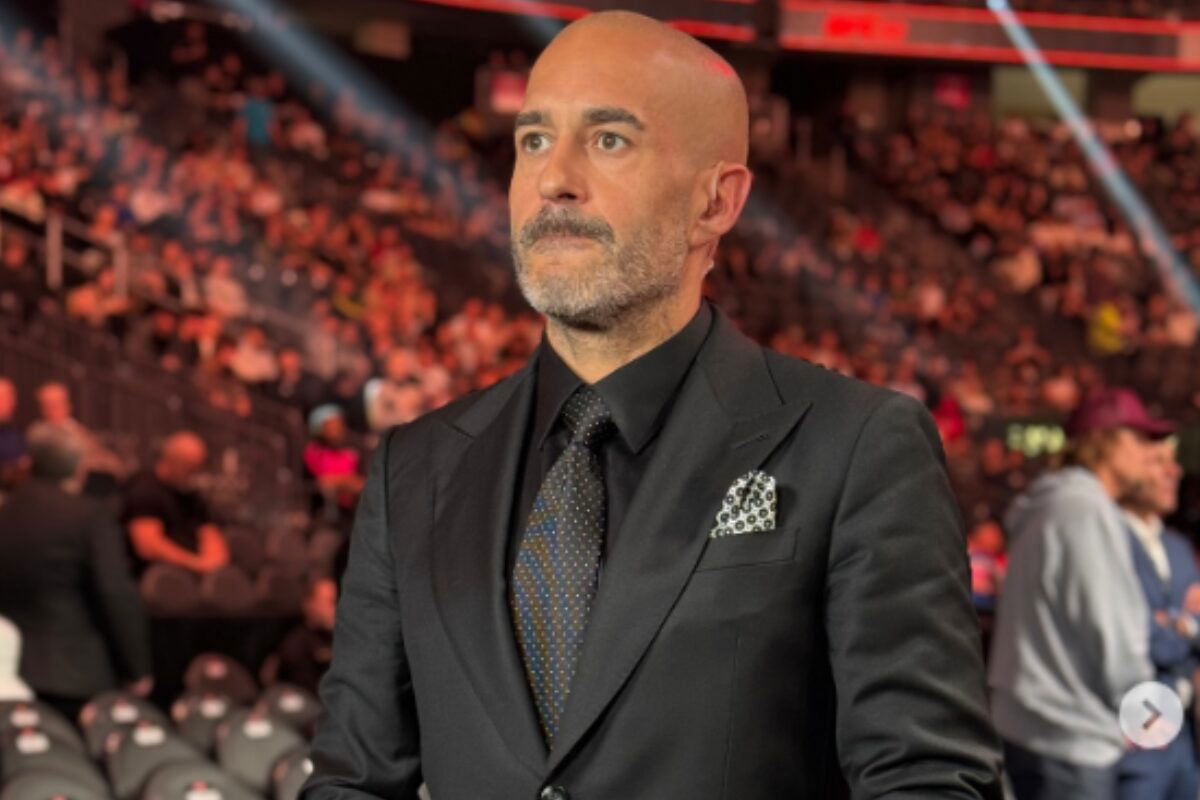
UFC commentator Jon Anik recently raised an interesting observation. According to the play-by-play voice, UFC events are “way too long,” sometimes stretching past eight hours. That is undoubtedly a heavy workload for the production team. But does it actually feel the same way for everyone, even the fans who are watching?


After 30 years of putting on fights, the UFC is sitting right at its peak. Both financially and in popularity, Dana White’s company has smashed through every ceiling. Still, Anik feels the growing number of shows and the long run time have made things a bit too stretched. So, let’s get into why the veteran commentary voice thinks that.
Watch What’s Trending Now!
Anik’s problem with the UFC’s longer run time
For a hard-working commentator like Anik, whose job is to make fans care about every fighter on a card with nothing but his voice and energy, it is easy to understand why the grind can feel overwhelming. Even though the 47-year-old is a fan just like the rest of us, the job does not get any lighter. And the same reality likely applies to other staff, too. But there is a real reason behind it.
In 2010, the average size of a UFC event was around 10 fights. For instance, UFC 118, headlined by BJ Penn and Frankie Edgar, featured 10 fights on the PPV card. Some cards did go beyond that, but the average mostly stayed in that range. Back then, the pacing felt tighter and easier to digest. But after that, things started to shift. In 2011, the UFC signed its major broadcast deal with Fox, and the promotion slowly moved toward longer cards, hovering around 12 to 14 when they stared ESPN partnership in 2019.
Well, there have been rare exceptions, like UFC on ESPN: Santos vs. Hill in 2022, with just 10 bouts. But for the most part, the cards have stayed packed beyond that. A recent example is UFC 323, the latest ESPN card, which featured 14 fights. Even the Fight Night events usually hover around the same number. While that means more action for fans, it also quietly translates into longer nights and heavier workloads for the people in broadcasting. How so?
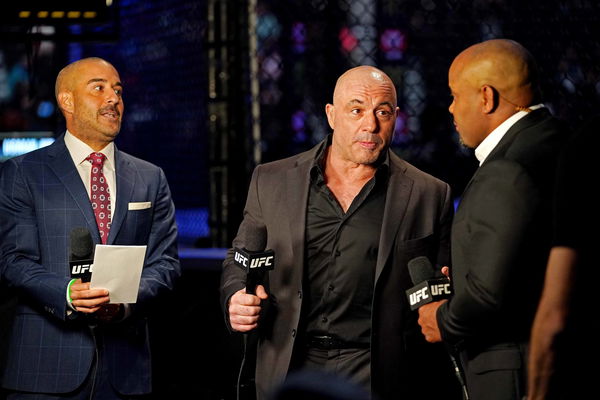
USA Today via Reuters
MMA: UFC 261-Na vs Carnelossi, Apr 24, 2021 Jacksonville, Florida, USA UFC ringside announcer Brendan Fitzgerald, UFC ringside announcer Joe Rogan and UFC ringside announcer Jon Anik during UFC 261 at VyStar Veterans Memorial Arena. Mandatory Credit: Jasen Vinlove-USA TODAY Sports, 24.04.2021 17:54:55, 15959686, NPStrans, UFC, VyStar Veterans Memorial Arena, Joe Rogan, MMA PUBLICATIONxINxGERxSUIxAUTxONLY Copyright: xJasenxVinlovex 15959686
Let’s take an average 15-minute fight, which can easily turn into 25 to 30 minutes once you add walkouts and intros. Now multiply that by three or four extra fights, and you are looking at nearly two hours of additional working time. That can take a toll on commentators like Anik, which means a considerably longer time in the office. But that begs the question, why is there a need to put so many fights in a card?
Who benefits from UFC’s long events?
The UFC has continued stacking its cards because the longer run time brings more value in sponsorships, ads, and overall revenue. And now, with the promotion entering its Paramount+ CBS era, with the PPV model seemingly fading out, the company will rely far more on total views than on how many people bought the event.
To make sure not a single fight turns into a sleep show, Laura Sanko recently revealed that the UFC would not re-sign boring fighters. Under the Paramount+ CBS era, the promotion wants to hook fans more while still keeping cards at 13 to 14 fights. Backing that up, UFC 324 was originally a 14-fight card before it dropped to 13 fights after Kayla Harrison pulled out with a neck injury, and it’s also stacked with fire-fights on the main card.
When it comes to the fans, long events can be a little confusing. For hardcore viewers, who know every fighter and watch every bout, getting through a card filled with 13 to 14 fights is no issue at all. However, the casual audience, which makes up the biggest chunk of viewers, can easily find it exhausting if the fights are not captivating enough, especially the prelims. So in that case, long events can backfire.
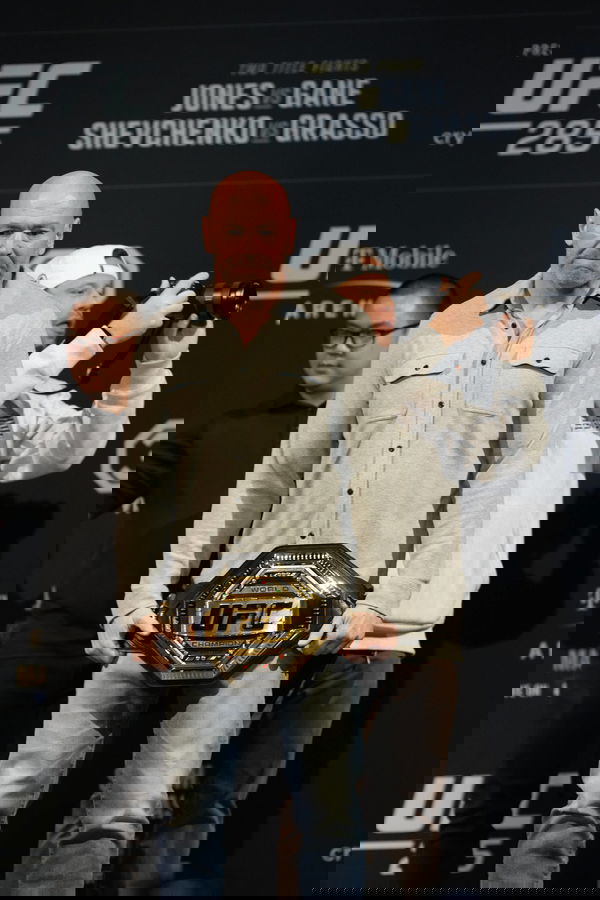
Imago
LAS VEGAS, NV – March 2: Dana White prepares for the face-off on stage for the attending press and the fans at MGM KA Arena for UFC 285 -Jones vs Gane : press conference, PK, Pressekonferenz on March 2, 2023 in Las Vegas, NV, United States. Photo by Louis Grasse/PxImages Louis Grasse / SPP PUBLICATIONxNOTxINxBRAxMEX Copyright: xLouisxGrassex/xSPPx SPP_156213
Now, as the UFC sits in a position where it is probably not going back to 10 fight cards, and Anik believes there needs to be a balance, the big question is the solution. It is not an easy one to figure out, but there is definitely one worth thinking about.
How Dana White could make the condition better
In the Spinning Backfist interview, the UFC color commentator also mentioned, “You’ve got 50 fighters signed on [Dana White’s] Contender Series every year, which I think is less than ideal…” That idea actually makes a lot of sense.
Keeping Dana White’s Contender Series running year-round could give the main UFC events some breathing room. New talents would grow under that platform, while the marquee shows would become the stage where established fighters clash. In that setup, 14 fight cards would feature bigger names, and DWCS would turn into the true home for prospects. The UFC would still retain its length, its revenue, and at the same time, develop future stars.
But that approach also comes with a sacrifice. It would mean lowering the total number of events in a year. The UFC has consistently produced over 40 shows, including Fight Nights and numbered cards. Because of that, some cards also tend to dilute in quality, which makes the events feel even longer. And if that number does not drop, the core issue stays exactly where it is, which is something Dana White likely will not want to change.
Love the idiots on the replies who have no idea what it takes to research 12-14 fights and the stamina and mental agility that’s needed to be the PxP for 6-8 hrs broadcasts. They would lose their voice in two fights, especially on site, and would crumble if they heard the comms. https://t.co/SkvvTjqaPU
— Rodrigo Del Campo González (@RodDelCampo) January 19, 2026
So yes, as Jon Anik pointed out, an eight-hour show is a lot when NFL and NBA broadcasts usually stay close to four hours. Still, it does not look like this will change anytime soon. What do you think? Let us know in the comments section below.