Imago
Credits: IMAGO
Imago
Credits: IMAGO
It’s a striking reality that the UFC’s heavyweight division, which once served as the promotion’s marquee weight class, is currently in a massive decline. Other than the top five, fans rarely care about the other fights. So what’s the problem behind the 265-pound division’s lack of depth in talent? Well, Alistair Overeem believes the division’s poor state is a bigger global complication than it meets the eye.
Currently, fans have been grilling Dana White and Co. over the sorry condition of their biggest weight class, which has become incredibly thin. As a solution, many believe the UFC simply needs to sign a bunch of exciting heavyweights, right? The idea definitely sounds valid, but the ex-UFC heavyweight veteran feels there is a global shortage of exciting 265ers, which has massively contributed to the UFC’s deteriorating division.
Watch What’s Trending Now!
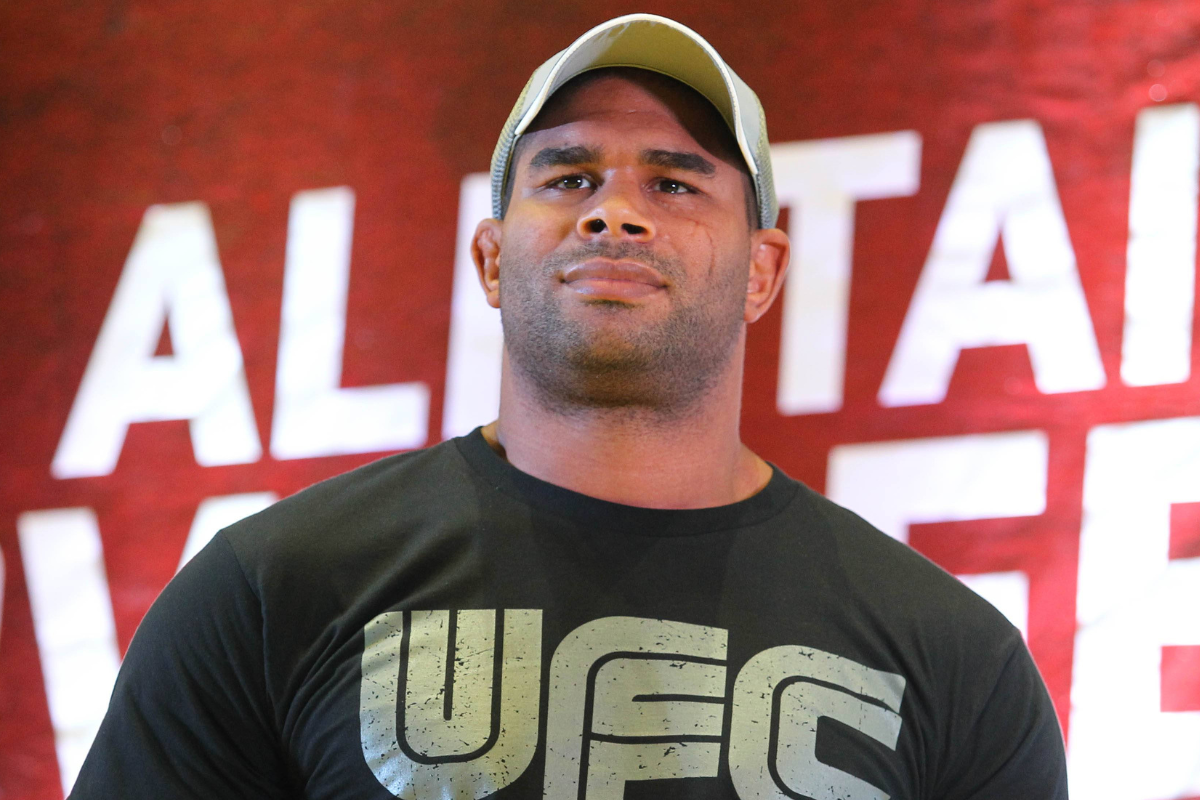
Alistair Overeem highlights the global heavyweight problem for UFC
“I mean, it’s not a secret that there is a decline, unfortunately, even though the top guys would remain the top guys,” Overeem told Bloody Elbow. “But it’s not as colorful as it once used to be. Because it used to be 15–20 top-named heavyweights, which is now not the case. And they kind of slowly declined, unfortunately, right?
That’s an interesting decline. Because we saw a similar decline happening in K-1 kickboxing. And that now happened to MMA as well. So, yeah, boxing made a revival. So, you can describe it as the tides of life; sometimes it goes up, and sometimes it goes down. I have to say that the golden era of MMA, you know, Fedor, Big Nog, Wanderlei Silva, Sakuraba. Later in the UFC, Rich Franklin, Brock Lesnar, Ronda Rousey, and Jon Jones,” he added.
Well, ‘The Demolition Man’ definitely makes a point here. If we look at the history of the UFC’s heavyweight division, we’ll see the company has certainly helped sculpt some of its own talents. But many of its standout fighters, the true prodigies, have come from other promotions. For instance, famous names like Antônio Rodrigo Nogueira, Mirko ‘Cro Cop’, and Mark Hunt all arrived in the UFC after the company acquired PRIDE.
Following that, another surge of heavyweight talent, such as Fabricio Werdum and Alistair Overeem himself, entered the UFC following the acquisition of Strikeforce. Now, after those two instances, when did the UFC actually see another big surge of 265-pounders coming in? Not much, right? He also felt the same.
“This originated in different promotions and also different countries pushing the sport, which created such a broad landscape, producing fighters. Also, there’s not much coming from Japan these days, right? Which at the height in the ’90s and early 2000s, had a lot of fights coming from there, K-1 and MMA, which is now almost negligible,” he added.
To be honest, it wouldn’t be fair to say there isn’t talent outside the UFC. However, the real problem is that they aren’t stars like the previous generation. Currently, the PFL champion, Vadim Nemkov, might be the most well-known heavyweight outside Dana White’s promotion, mainly because the Russian was also a champion in Bellator MMA. Other than that, the average fan might not even know that a Lithuanian fighter named Pavel Dailidko is a champion in BRAVE CF, with 11 knockouts on his record and not a single fight going to a decision.
The point is that although talent is thriving in different parts of the world, it isn’t exploding in popularity the way fighters from PRIDE or Strikeforce once did. So, under Paramount’s broadcast landscape, the promotion needs stars and prospects with real hype behind them, which is currently lacking in most leagues outside the UFC. And that’s the global problem they’re facing right now. There aren’t enough stars.
Alistair Overeem says the UFC heavyweight division is on the decline.
“There is a decline, unfortunately, even though the top guys will remain the top guys. There used to be 15–20 top-name heavyweights, which is no longer the case.”
(Via @BloodyElbow ) pic.twitter.com/xOyvY90IWP
— Red Corner MMA (@RedCorner_MMA) March 16, 2026
Now, alongside the global problems that might not be under the promotion’s control, there’s another thing that’s hurting the UFC. It’s their current investment process for the heavyweight division.
Dana White’s investment strategy is a core concern for the heavyweight division’s decline
Not long ago, Dana White and his team were in talks with Artem Vakhitov, Alex Pereira’s former opponent and a huge name in kickboxing. All agreed that the Russian could have been a solid addition to the 265-pound weight class. But in the end, they fumbled the bag because they couldn’t pay him enough.
Although the 34-year-old GLORY kickboxer won his fight against Islem Masraf at Dana White’s Contender Series in 2024, he opted out of joining the promotion, citing that they were offering far less money than he was making at GLORY. Furthermore, chatter about bringing Rico Verhoeven into the UFC also began. However, it soon became clear that he wouldn’t be joining the promotion either, and he is now set to fight Oleksandr Usyk in a boxing match.
Verhoeven didn’t explicitly say it, but it’s reasonable to assume that finances could have been another factor that prevented the deal from happening. In this case, the UFC couldn’t come to terms with two well-known heavyweight fighters who could have done well in the current division. If they don’t make such investments, there’s a chance the division might not truly flourish.
So, the current solution seems clear. The UFC needs to invest more money, promotion, and effort to make the heavyweight division great again. What do you think? Let us know in the comments section below.