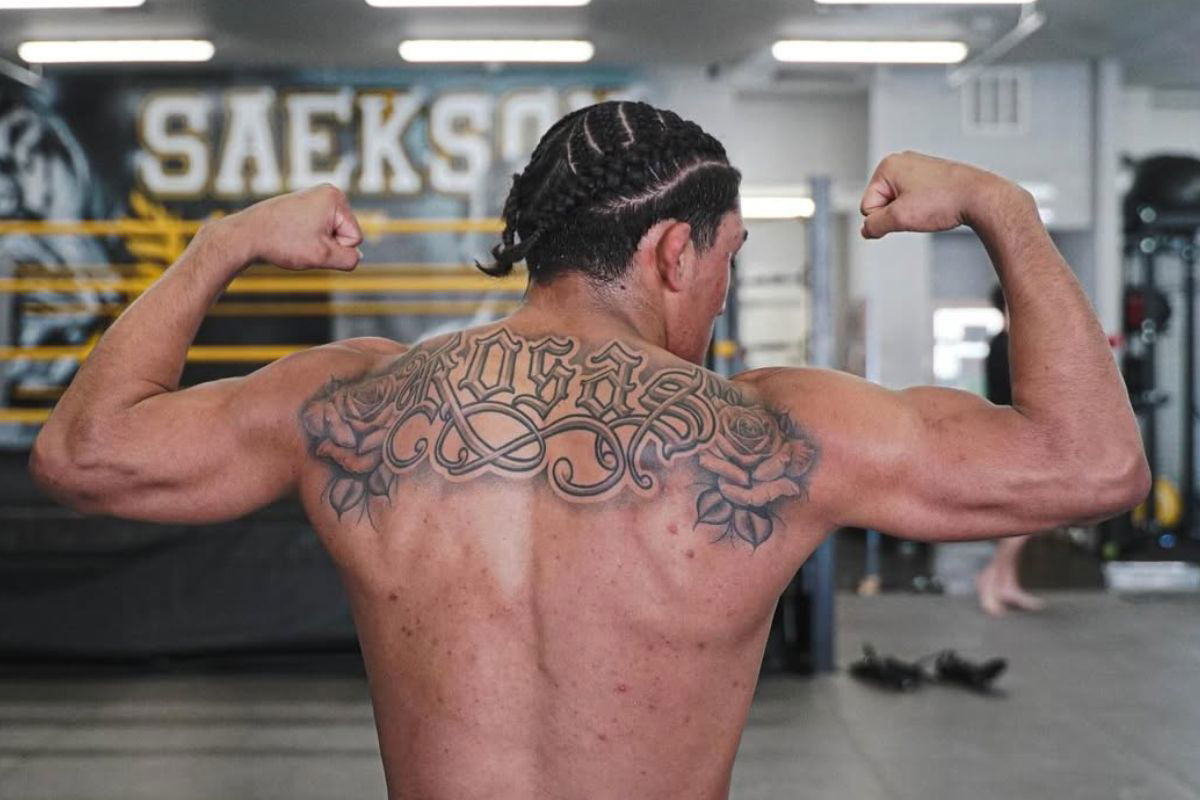
Raul Rosas Jr. became the youngest fighter ever signed to the UFC at 17 years, 11 months, and 12 days after earning his contract on Dana White’s Contender Series. Since then, he’s carried both hype and expectation. But beyond the grappling exchanges and media days, there’s something else fans have started to notice when he turns his back during walkouts: his tattoo.
Watch What’s Trending Now!
He is gearing up for his clash against veteran Rob Font at UFC 326 on March 7. The fight was originally booked for September 2025 before injury forced Rosas Jr. out. Now, at just 21 years old, the Mexican-American bantamweight gets a second shot at a statement win. So, without further ado, let’s dive into the meaning and story behind his ink.
What is the meaning of Raul Rosas Jr.’s back tattoo?
Across the top of Raul Rosas Jr.’s back, his last name, “Rosas,” is written in an elegant script. The lettering stretches wide, bordered by rose designs on both shoulders.
There’s no public quote explaining the tattoo’s meaning. He hasn’t broken it down in interviews. But sometimes the simplest ink tells the clearest story. Rosas Jr. comes from a fighting family. He has two older brothers and a sister, all professional fighters. He started training at four years old and said he took it seriously after watching his father compete.
View this post on Instagram

When a young athlete tattoos his family name across his shoulders, what is he really saying? That he represents more than himself.
The roses framing the script add another layer. His surname literally translates to “roses” in Spanish. So the floral borders aren’t random decoration; they reinforce his name visually. It’s cohesive branding, but it’s also cultural. As a Mexican-American fighter, leaning into the Spanish meaning of his surname reflects pride in his heritage.
Are there any other tattoos on Raul Rosas Jr.’s body?
As of now, no other visible tattoos appear on Rosas Jr.’s body. That’s unusual in modern MMA. But many fighters build full collections over time with chest pieces, sleeves, leg art, and layered symbolism. Rosas Jr. hasn’t followed that path yet.
And maybe that fits where he is in his career. At 21, he’s still evolving. His professional record is still being written. His skill set is still expanding. He’s known primarily for his grappling-heavy approach, his relentless pace, and his confidence in transitions.
As March 7 approaches, the question isn’t whether he’ll add more ink. It’s whether he’ll add another defining performance under that name. And at this stage of his career, that might matter more than any tattoo ever could.