
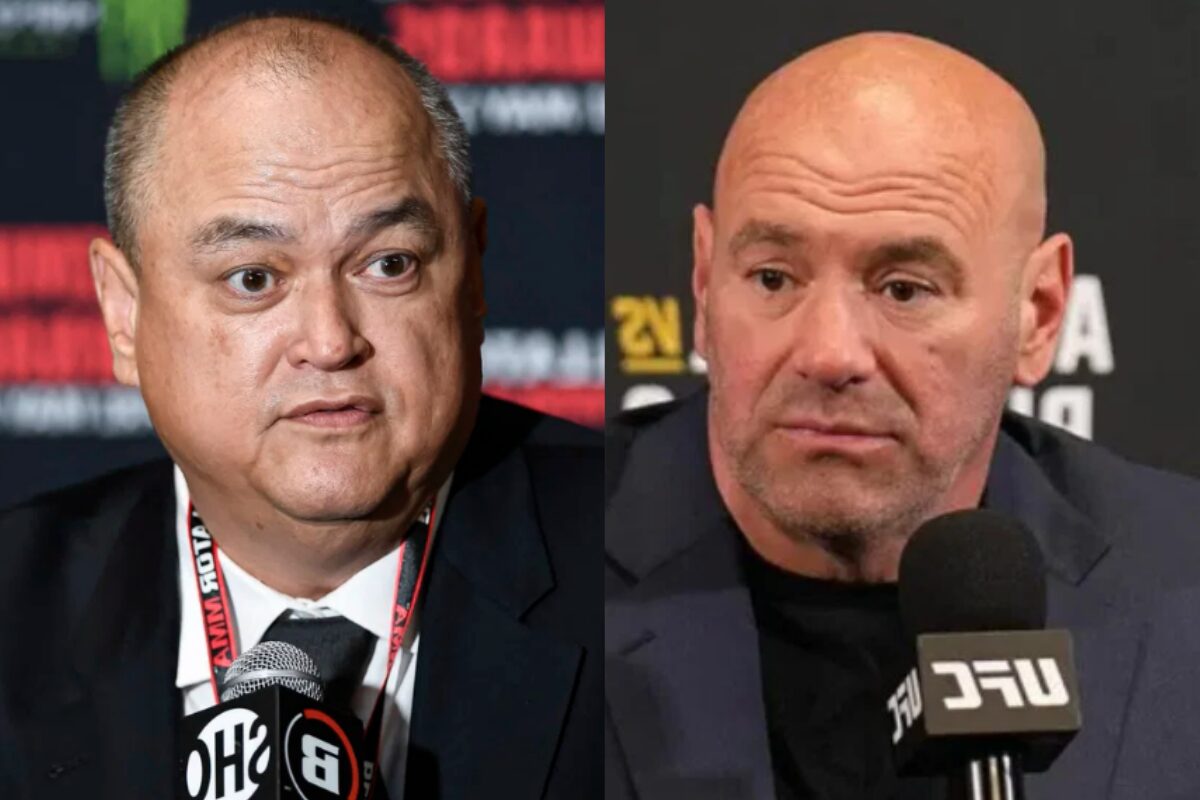
Scott Coker says the UFC, during the height of their rivalry, allegedly had a pretty bold way of trying to steal Strikeforce’s biggest stars: even offering to pay their legal bills if they broke their contracts. And according to the founder and former CEO of Strikeforce, the biggest competitor to the UFC during the late 2000s and early 2010s, Gina Carano wasn’t the only fighter to be extended that offer. Fedor Emelianenko allegedly got a similar pitch while he was already under contract with Strikeforce.
Watch What’s Trending Now!
Ahead of the launch of his new promotion Ki MMA, while in a conversation with Ariel Helwani, the longtime MMA promoter, recalled how the UFC allegedly approached the Russian heavyweight at his vacation spot, offering to cover his legal expenses if he walked away from the promotion. The story also brought him back to Carano’s historic 2009 matchup with Cris Cyborg.
“You know, when Gina said they approached her to pull out of the fight with Cyborg, I believe, and they said, ‘We’ll pay your legal fees,'” Scott Coker said. “I was like, ‘That happened with Fedor, too, right?’ That wasn’t the first time.
“When they flew to Fedor’s vacation spot and said, you know, we’ll pay for your legal fees if you leave the company. And, well, basically they wanted to breach his contract with me, right?”
Scott Coker later added a little more context, suggesting Fedor Emelianenko’s management may have given the UFC the impression that the heavyweight was a free agent. But once Strikeforce sent out legal notices, the alleged recruitment effort apparently went quiet.
“Well, and the thing is, let me rephrase this. So it’s not, and I don’t want to go down this road because it’s like the past, but it’s, Vadim, I believe, was telling them, ‘Hey, he’s a free agent, right?'” Coker explained. “But we sent him some legal notices, and then all the communication stopped.
“But Fedor, I don’t think, would have left anyway because of our relationship, right?”
Ariel Helwani pointed out that Gina Carano had also refused to entertain the UFC’s approach.
Imago
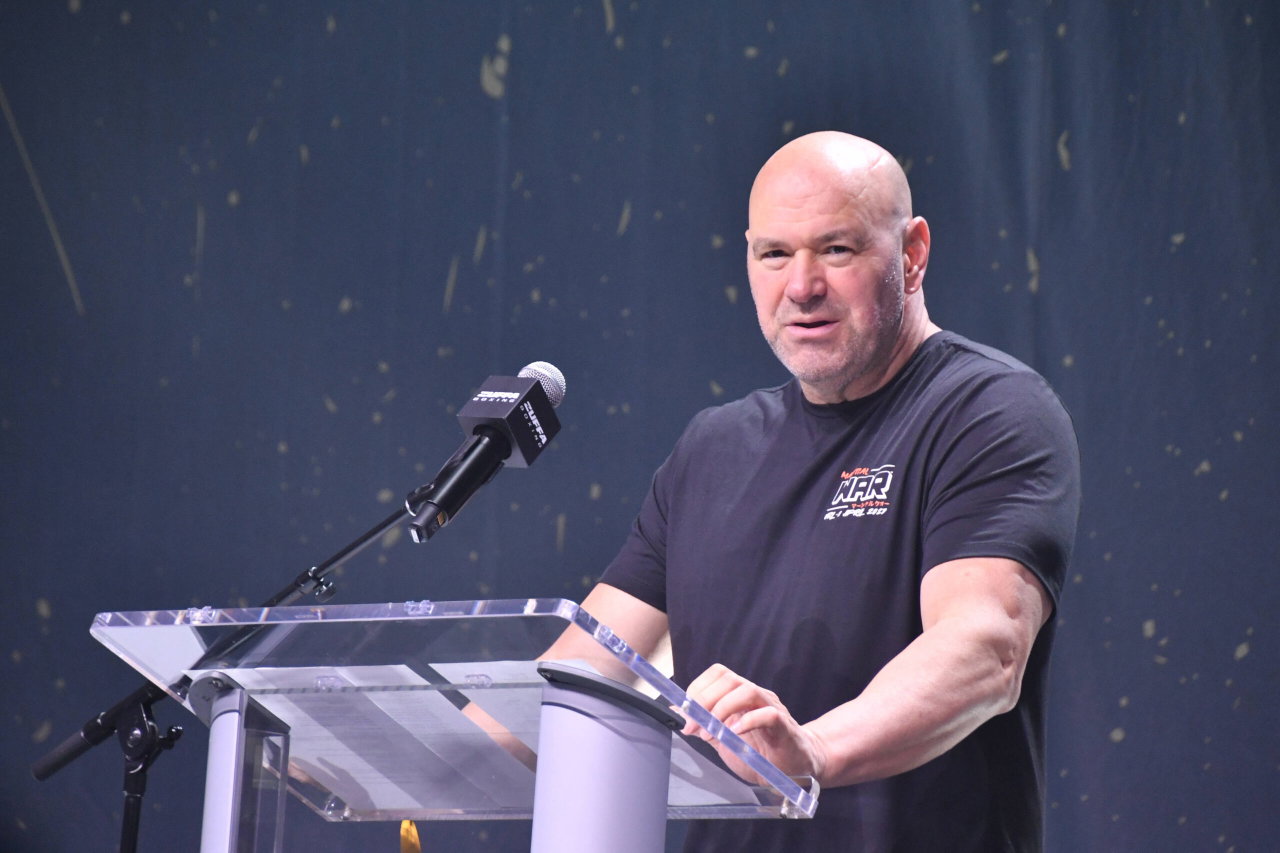
NEW YORK, NY – JULY 18: Dana White pictured during Zuffa Boxing Press Conference on day 3 of Fanatics Fest NYC on July 18, 2026 at Javits Center in New York City. Copyright: xmpi099/MediaPunchx
“Yeah, because we have such a good friendship, good relationship,” Coker replied. “And it wasn’t even like a contractual thing. It was more of a personal thing, I believe.”
While White has not publicly responded to Coker’s allegations, the 63-year-old’s comments offer a glimpse into just how nasty the UFC-Strikeforce rivalry got in the late 2000s.
After Affliction went under in 2009, Dana White made it clear he wanted Fedor Emelianenko. The UFC reportedly put a big-money offer on the table, along with an immediate heavyweight title fight against Brock Lesnar.
But the deal eventually fell apart. M-1 Global wanted co-promotion and the construction of combat sports facilities in Russia, demands the UFC wasn’t willing to accept.
So, ‘The Last Emperor’ ultimately signed with Strikeforce instead, handing Scott Coker one of the biggest heavyweight names in the sport and setting the stage for another major promotional clash with the UFC.
However, Emelianenko wasn’t the only Strikeforce star the UFC allegedly tried to pull away. Around the same time, Gina Carano was booked to face Cris Cyborg in the main event of Strikeforce’s August 15, 2009, card. It was a massive moment for women’s MMA, marking the first time women headlined a major MMA event.
But according to Coker, the UFC allegedly made a move that could have blown the whole thing up. The 63-year-old claimed the promotion approached Carano shortly before the fight and offered to cover her legal fees if she pulled out and tried to leave Strikeforce.
Had she taken the offer, Strikeforce could have been left scrambling for a new main event, and one of the most important cards in women’s MMA history could have looked very different.
Coker characterized the offers as part of UFC’s broader anti-competitive strategy documented in the Le v. Zuffa antitrust lawsuit.
“They’re trying to kill us, right?” he continued. “We had deals where we had signed the… torturous interference meant nothing to them at that point.
“And it’s all documented in the antitrust lawsuit, right? And so this is nothing new. This is all stuff that’s, you know, been out there already. So that’s just how life was back then.”
And this is where the story gets even more interesting. The lawsuit Coker referenced was ‘Le v. Zuffa,’ the landmark antitrust case brought by former UFC fighters. The plaintiffs alleged that UFC used anti-competitive tactics to suppress fighter pay and weaken rival organizations, including Strikeforce.
During the discovery process, internal UFC documents became public, including material related to alleged attempts to recruit fighters under contract with competing promotions. That included Fedor Emelianenko and Gina Carano, adding another layer to Coker’s recollections.
The case is now over. Judge Richard F. Boulware II granted final approval to a $375 million settlement to former UFC fighters on February 6, 2025, bringing the legal battle over the 2010–2017 class period to a close. However, the promotion still denies the allegations, claiming that the settlement did not constitute an admission of wrongdoing.
And while Scott Coker believes the alleged poaching attempts were a sign that the UFC took Strikeforce seriously as a threat, head honcho Dana White has never exactly been generous with his assessment of the 63-year-old’s promotional abilities.
Dana White claimed Scott Coker was a “very, very bad promoter” in leaked text messages
It is worth noting that in the past, UFC boss Dana White has dismissed the former Strikeforce executive as a promoter, adding another layer to the long-running rivalry between the two.
The UFC head honcho’s comments about Scott Coker also came up during a deposition tied to the antitrust lawsuit. White was questioned about text messages exchanged with former UFC owner Lorenzo Fertitta, with the conversation centered on Bellator booking a fight between former UFC champions Tito Ortiz and Quinton ‘Rampage’ Jackson.
“I thought they don’t take UFC castoffs,” Fertitta wrote to White.
The questioning then turned to whether the UFC viewed Ortiz and Jackson as “castoffs.”
“That’s Scott Coker’s MO,” Dana White replied. “Scott Coker doesn’t build anybody, right? He doesn’t turn anybody into stars. He just takes old names and recycles them. He’s a very, very bad promoter.”
When asked to clarify, White replied, “Very bad at what he does.”
The UFC CEO’s comments are a little hard to separate from Scott Coker’s actual track record. Before the UFC bought Strikeforce in 2011, Coker had built the promotion into a serious competitor, and the UFC’s eventual acquisition gave it access to a stacked roster.
Daniel Cormier, Luke Rockhold, Tyron Woodley, and Ronda Rousey were among the fighters who eventually made their way into the UFC orbit.
Now, the 63-year-old is trying to build something new. Backed by investors including skateboarding icon Tony Hawk, his new promotion, Ki MMA, is expected to launch in early 2027 with a 32-man featherweight Grand Prix.
So, whatever Dana White thinks of his promotional abilities, Coker clearly isn’t done trying to build the next big thing in combat sports.
Ki MMA’s tournament is expected to bring together fighters from Europe, Asia, South America, and North America, with the continental champions moving on to a final World Cup-style event.
And the longtime promoter isn’t exactly following the usual MMA playbook. Ki MMA plans to stage its fights in a ring instead of a cage, with millions of dollars reportedly available for the athletes.
It’s a pretty ambitious way to get back into the game. And while the UFC-Strikeforce rivalry is now part of MMA history, Scott Coker’s latest comments show that the history between him and Dana White still has plenty of chapters left.