
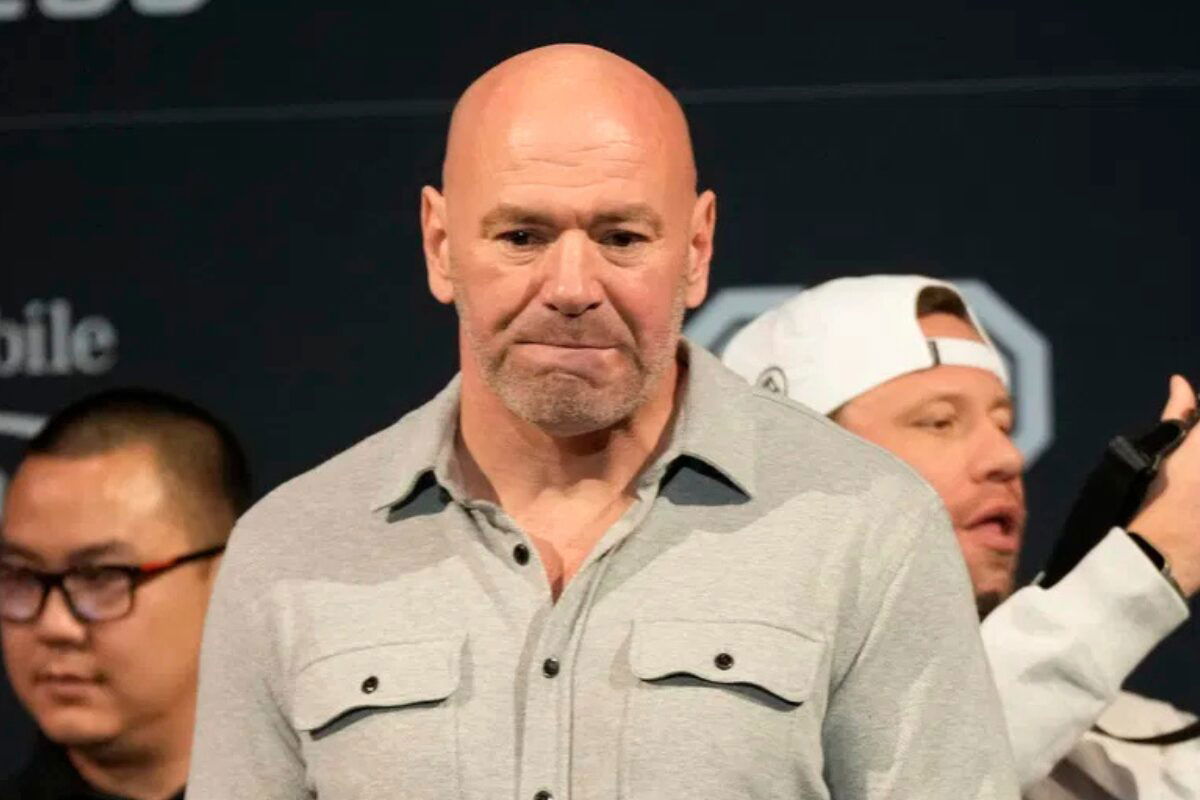
Dana White has stirred fresh controversy with his remarks on men’s mental health. The UFC CEO was featured on the cover of TIME magazine’s latest issue ahead of the Freedom 250 event at the White House next month. While much of the issue focuses on his upcoming event as well as his relationship with President Trump, one particular snippet pertains to his thoughts on masculinity and, in particular, men’s mental health.
Watch What’s Trending Now!
“What is toxic masculinity? Who has it? Who’s too masculine? There’s a difference between being a douchebag and being masculine,” Dana White told author Sean Gregory. “I am unapologetically masculine. Talking about [mental health issues] publicly, I just feel like it opens the door to make young men think that it’s okay to just f–king go, ‘Oh, I’m having mental [struggles].’ Handle it behind closed doors. Don’t show that weakness to anybody.”
As expected, the remarks have since garnered massive pushback for obvious reasons. Many have called out the UFC CEO for pushing an outdated, stubborn, and actively harmful stance that only reinforces the stigma that prevents men from seeking life-saving medical help. One such voice was that of veteran boxing promoter Lou DiBella, who blasted Dana White online for his statements.
“This is more damaging than ANY political opinion Dana White has or any politicized MMA on the White House lawn,” DiBella wrote on X. “This is a pathology that kills and pushes a stigma/silence that causes people to see killing themselves as a legit option. Maybe Dana White should NEVER talk about his opinions of mental health struggles.
“He may save a few lives that way. ‘Man up’ isn’t wonderful therapy for a sick person; and mental illness is real illness, no matter what the f–k Dana thinks.”
While Lou DiBella has been a vocal critic of Dana White for a very long time, his criticism of White’s statement is not entirely out of place in this instance. According to a report by Mental Health America, nearly 20% of adult males, approximately 24.6 million individuals, face mental health-related issues yearly in the US. Another study conducted by the ADAA shows that nearly 1 out of 10 men experience anxiety or depression, but only less than half receive any form of treatment for it.
The number of those seeking treatment is significantly higher outside the US. And a lot of it is due to the social stigma attached to it.

This is more damaging than ANY political opinion Dana White has or any politicized mma on the White House lawn. This is a pathology that kills and pushing a stigma/silence that causes people to see killing themselves as a legit option. Maybe Dana White should NEVER talk about his Show more

🚨 Dana White says that men should NEVER talk about their mental health struggles publicly: “Talking about it publicly, I just feel like it opens the door to make young men think that it’s OK to just f**king go, ‘Oh, I’m having mental [health issues] (White says in a whiny

Even UFC fighters, such as Tony Ferguson, Paddy Pimblett, and Sean Strickland, have admitted to facing mental health struggles. The middleweight champion previously claimed that he likes to show people that he’s not “Captain America” and wants to connect with fans by sharing his trauma and struggles with mental illness.
Despite the outdatedness of the stance, Dana White isn’t the only UFC personality who has recently made headlines because of their controversial comments. Not too long ago, another UFC figure also came under fire for his remarks on the matter.
Joe Rogan apologizes after controversial remarks on Theo Von’s mental health
During an episode of the Joe Rogan Experience, the UFC commentator mentioned fellow comedian Theo Von’s antidepressant use and emotional struggles. Following that, many viewers online called out Rogan for publicly discussing Von’s personal struggles without speaking to him first. Amid the backlash, the comedian also ended up rejecting the claims.
After the drama stirred more controversy, Joe Rogan finally decided to address the issue and revealed that he had apologized to Theo Von.
“I called him up and I said, ‘I’m so sorry; I didn’t even think of that,’” Rogan stated on his podcast. “And that’s very selfish of me. I didn’t think that you would have to respond. I didn’t even think of it. But Theo is one of my favorite people. He’s a very unusual and very amazing person. The last thing I’d ever want to do is hurt that guy.
“And the last thing I’d ever want to do is say something that would have people think about him in a negative way, which I’m sure I did. And this is one of the reasons why I wanted to make this video. And I wanted to apologize.”
When it comes to sensitive issues like men’s mental health or mental health in general, individuals facing the struggle should always consult experts before making any major decisions. And it should, in no way, be based on what they’ve heard people say online.