
Veteran Jim Miller returns to action this Saturday night at UFC 328 against Jared Gordon—his first fight in over 12 months, and one that, for him, carries more weight than most. However, the 42-year-old’s layoff wasn’t a matter of injury or inactivity. It had to do with his son’s grueling battle with cancer. Miller’s 14-year-old son was diagnosed with a rare and aggressive childhood cancer called rhabdomyosarcoma (RMS).
Watch What’s Trending Now!
The cancer had developed in his sinus and eye socket area. However, Jim Miller revealed that doctors were able to remove the tumor during a biopsy, which was followed by chemotherapy and proton radiation treatment at Rutgers. While his son is now cancer-free, things haven’t been easy for the family. For a fighter whose main source of income comes from fighting regularly, a year-long layoff can be difficult, especially when the medical bills are piling up, and one has to pay for the health insurance themselves.
“I’ve been a professional fighter since I’ve been in the UFC,” Miller told MMA Junkie. “And I’ve had a lot of things go my way when it comes to that. There’s a difference between fighting professionally and being a professional fighter. I’ve paid my bills as a prizefighter since 2008, and I came into this organization, chomping at the bit, fought twice in 2008, won a bonus in both of those fights, and it changed my life.”
The New Jersey native has been in the promotion since October 2008 and has had an astounding 46 fights in the promotion to date, with a record of 27-18-0 (1 NC). When he faces Jared Gordon on May 9, it will be his 47th bout. That longevity has afforded him more financial stability than most fighters at his level, and he acknowledges it, but it has not made the medical bills disappear.

“I was able to pay off debt and kind of get ahead of things, and there’ve been some low points along the way,” Miller continued. “I’ve been paying for health insurance for my family for quite a while now, and we pay a fortune. And some of those fights are still ongoing with the insurance company, but for the most part, they pay for some of the big stuff. So we’re still trying to make sure that they uphold their end of the bargain.
“But like, my wife and I, we handle that. It’s hard for me… There are a lot of bills, like every time you’re paying that $50 copay and all this stuff, and paying for parking, and this and that, and gas down to Rutgers for [my son’s] radiation. And it all adds up, but I see some of the situations that some of the other patients are in, and their parents are in, and I’d rather bring light to them, and help them more than… could I use it?”
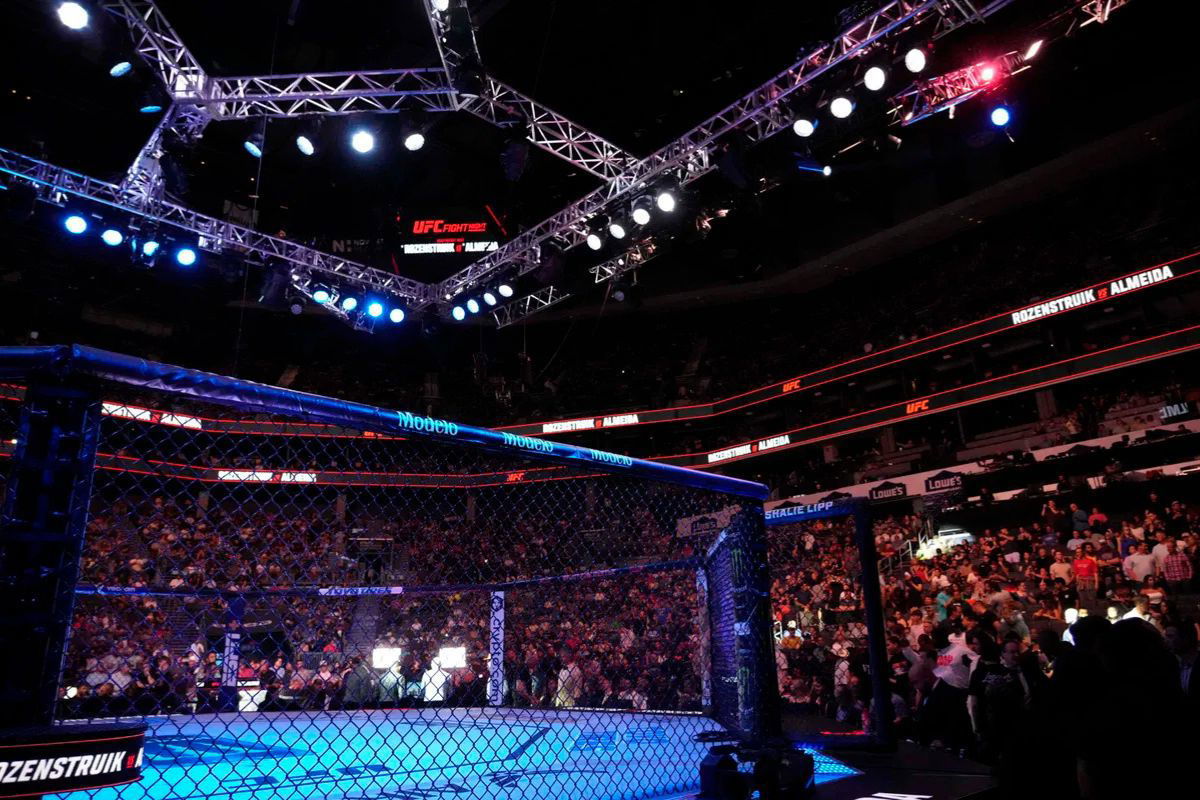
Despite his struggles to keep up with the bills, Miller is thankful for the opportunity he has received from the promotion. The UFC veteran, despite his long-standing run, will fight on the prelims in front of his home crowd in Newark, New Jersey, and his pay is unlikely to be on par with the headliners—Khamzat Chimaev and Sean Strickland—but he’s not bitter about it.
“But it’s like, I get to fight,” he added. “I get this opportunity to fight on Saturday night, and I’m at a point now, [where] it took 40 fights, but I get paid a pretty good amount of money to fight.
“Everybody always wants more, but… Listen, I’m in a good place with that, and a better place than some of the people that I’ve met along the way here. So the health issues are a pain in the a—, and I want to help other people with it.”
Even though Miller appears to hold no resentment toward the UFC for his predicament despite almost two decades in the promotion, it’s difficult to accept that he still struggles to cover his bills when the promotion is making more money than ever before.
UFC’s growing revenue in light of the $7.7 billion broadcast deal with Paramount
Last year, UFC’s broadcast deal with ESPN was coming to an end. They were on the market for a new broadcast partner. Netflix had offered a huge sum for the numbered events. But the premier MMA promotion ultimately chose Paramount, where they will get $1.1 billion each year for their full catalog of content for the next seven years, i.e., $7.7 billion in total.
And not just that, last year they posted $1.502 billion in revenue and $851 million in adjusted EBITDA. And other reports show their sponsorship revenue reached $314 million in 2025, a 25% year-over-year increase, up $63 million from 2024. While in other sports, athletes command the lion’s share of the revenue, UFC pays its fighters less than 20% of their total revenue, meaning a majority of the money goes to those at the top.
The UFC did increase pay, technically, since their new broadcast deal, but that appears to be limited to post-fight bonuses. Fight of the Night and Performance of the Night bonuses increased from $50,000 to $100,000. And they also introduced a $25,000 finish bonus, where fighters get an additional $25K if they knock out or submit their opponent. But the base pay has remained largely the same.
While the UFC foots the medical bills for its fighters when injured during training or when in the octagon, the promotion does not pay medical insurance for a fighter’s family despite its massive growing revenue. Considering all that, it’s not difficult to understand why a veteran like Jim Miller may have struggled. But, as he acknowledged, he was able to pay off his bills, and thankfully, things are much better now.