
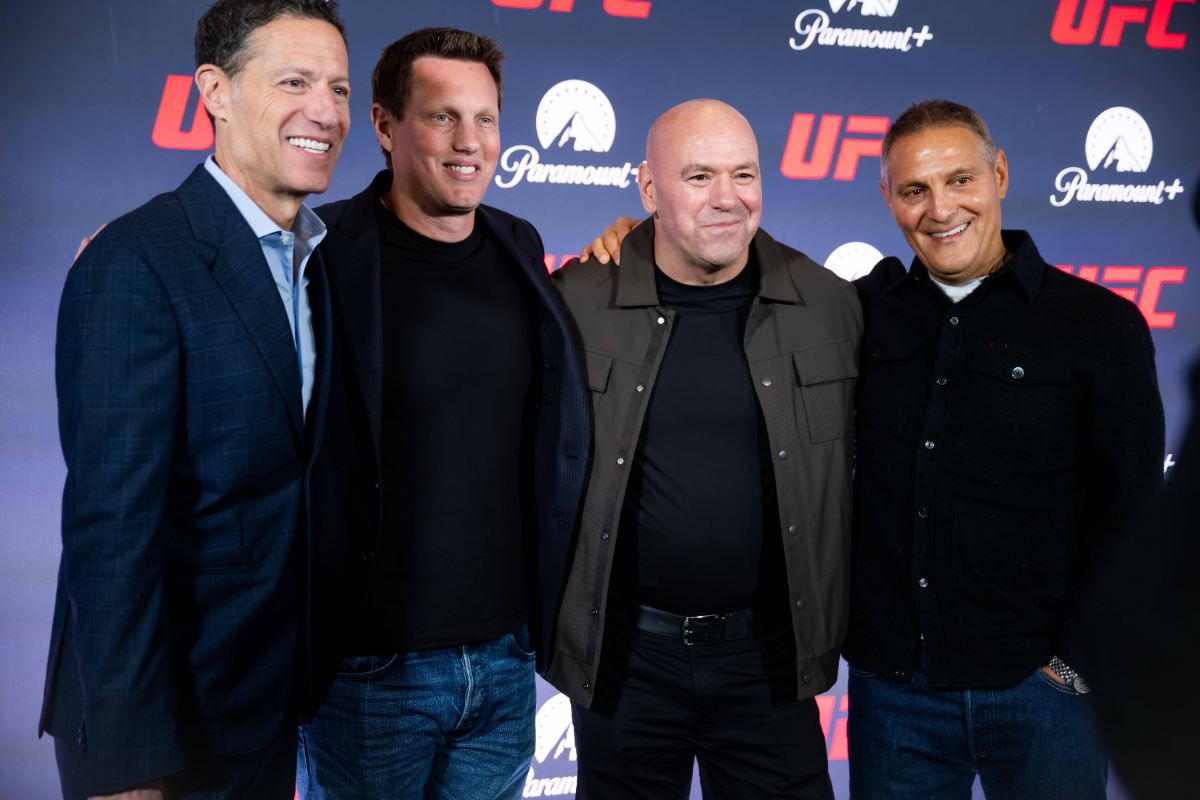
There’s no denying that UFC is the global face of MMA. They are unmatched in reach, influence, and mainstream popularity. No other promotion has come close to achieving the level of visibility and cultural impact it currently commands. Yet, that dominance hasn’t come without criticism.
Watch What’s Trending Now!
Fighter pay remains one of the most persistent and contentious issues plaguing the promotion despite its massive $7.7 billion broadcast deal with Paramount. In light of this, Alex Davis, a highly respected MMA manager who has been a key figure in combat sports for over 25 years and managed fighters like Deiveson Figueiredo, Edson Barboza, Norma Dumont, Thiago Moisés, and Antonio “Bigfoot” Silva, argues that this imbalance isn’t just a self-evident flaw. According to him, it lies at the heart of how the UFC has put MMA in a state of crisis.
“With UFC 1 less than 35 years old, an argument can be made [that] MMA is still in its infancy compared to other major global sports,” Davis said in his opinion piece on MMA Junkie. “But if we consider the [number] of people watching and the amount of money that has been generated (and the lack that has been fairly distributed below the top levels), I do not think we can continue to argue MMA is still in an embryonic stage.
“From my perspective, we are approaching a crisis. Scratch that: We are already in a state of crisis. The UFC, for example, has grown exponentially over the past 15 years. From its move from FOX to ESPN to Paramount, the sport’s leading promotion has continued to flourish, and likewise for the revenue going into the pockets of the shot callers. But here is where I think things have started to fall apart.
“The sole focus of UFC is not prioritizing athletes or the sport itself, but instead a paranoiac effort to make more and more money, with no comparative effort to improve the sport or the well-being of the athletes. On the contrary, what I see is more efforts to cut costs… While overall revenue for UFC steadily grows year over year, the money put back into the sport and its athletes, which are the lifeblood, remains stable at best.”

Imago
January 14, 2023, Las Vegas, NV, LAS VEGAS, NV, United States: LAS VEGAS, NV – JANUARY 14: Dana White meets with the press following Vegas 67 at UFC Apex for UFC Fight Night – Vegas 67 – Strickland vs Imavov – Event on January 14, 2023 in Las Vegas, NV, United States. Las Vegas, NV United States – ZUMAp175 20230114_zsa_p175_023 Copyright: xLouisxGrassex
Last year, UFC inked a $7.7 billion landmark deal with Paramount for seven years to air all its events on Paramount+ and CBS. However, while the UFC was making more money, fighter pay remained essentially the same. Things were made worse, as even top fighters lost pay-per-view upside with the introduction of the new subscription model. There were some reports of an updated contract, but that didn’t significantly increase fighter pay either.
The base model for fighter pay has remained the same. Newcomers get $12K to show and $12K to win, with more experienced fighters getting better paychecks. While the UFC has raised the post-fight performance bonuses to $100,000, up from the previous $50,000, in the grand scheme of things, where fighters are still left to incur a majority of the costs, a $50K increase, which most do not get, proves rather insignificant.
“If you look at what a beginner or mid-level fighter is making and the quantity of fights they manage to get into, and what it costs for each fighter to prepare for a fight, they are selling their product at a loss,” the veteran manager added. “Fighters work their a—es off, make all kinds of sacrifices to fulfill a dream without most of them realizing how distant that dream is now from reality.
“Sponsorships? They are nearly impossible to secure for my fighters at a level that would subsidize these fight purses. Why would a company sponsor an athlete when they cannot promote the brand on any UFC platforms when it matters most? The Reebok deal in 2015 killed all that, and that part of the sport’s economy remains burdened by the current Venum deal.
“Before these uniform sponsorships came into place with UFC, and [have] since been followed by other MMA promotions, there was a flourishing ecosystem investing in MMA and the fighters. But they were put out of business overnight, never to return in a sustainable way.”
The point of contention here that while the UFC has failed to raise its fighter payout in keeping with its growing revenue, it has also worked actively to cut out other means of income from inside the Octagon that were earlier available to fighters. However, to their credit, the UFC has opened the door for its fighters to compete in Real American Freestyle (RAF) Wrestling, giving them a chance to earn additional income outside the Octagon. On the surface, it seems like a positive step. But in reality, the opportunity is far from equal. These often tend to go to fighters who already have a strong fanbase and marketability.
As a result, lower-tier fighters, i.e., prospects—the ones who actually need the financial boost the most—are often left out, with little chance of ever being offered such opportunities. In the end, they are forced to take up multiple jobs outside of MMA just to sustain their career and dreams.
In any case, it’s not just Alex Davis who holds a critical view of UFC’s exploitative practices. Even the promotion’s former top star, Ronda Rousey, has suggested that the UFC is no longer what it once was.
Ronda Rousey reveals $40K minimum pay for fighters on Netflix card
Ronda Rousey, the former UFC bantamweight champion, is facing Gina Carano on May 16, 2026, at the Intuit Dome in Los Angeles, California, in her return to MMA. As is evident based on her recent statements, she is very much not a fan of UFC’s current business model. Rousey had claimed she approached the UFC for her fight against Carano, but she was ticked off by the Chief Business Officer Hunter Campbell’s approach to the bout.
Rousey has also suggested the promotion has shifted away from prioritizing top matchups. And is now more focused on business obligations tied to shareholders and media deals.
“Once they moved into the streaming model, it’s just not about putting on the best fights possible anymore,” she said. “Dana is legally beholden to the shareholders to maximize shareholder value.”
Not that long after, Rousey outlined a different model for her upcoming card with Jake Paul’s MVP, revealing that every fighter on her card will earn a minimum of $40,000 regardless of the result—a far cry from what the UFC pays its fighters.
“I think it’s really important that we raise the ceiling, but also that we raise the floor,” she said. “And one thing that is really important in this fight is the absolute minimum that anybody will walk away with—even if they don’t have a big, long record and even if they lose—is $40K.
“If you fight three times in a year, that’s much more than a living wage, and that’s something the UFC cannot say.”
Despite such criticisms, the reason the UFC continues to defend and prolong its practices is because of the near monopoly they have over the sport. While other MMA promotions exist, until one that is rooted in the right business model for both fighters and the promotion is able to find sustained success in the sport, the UFC will be able to exist with virtually no competition.