
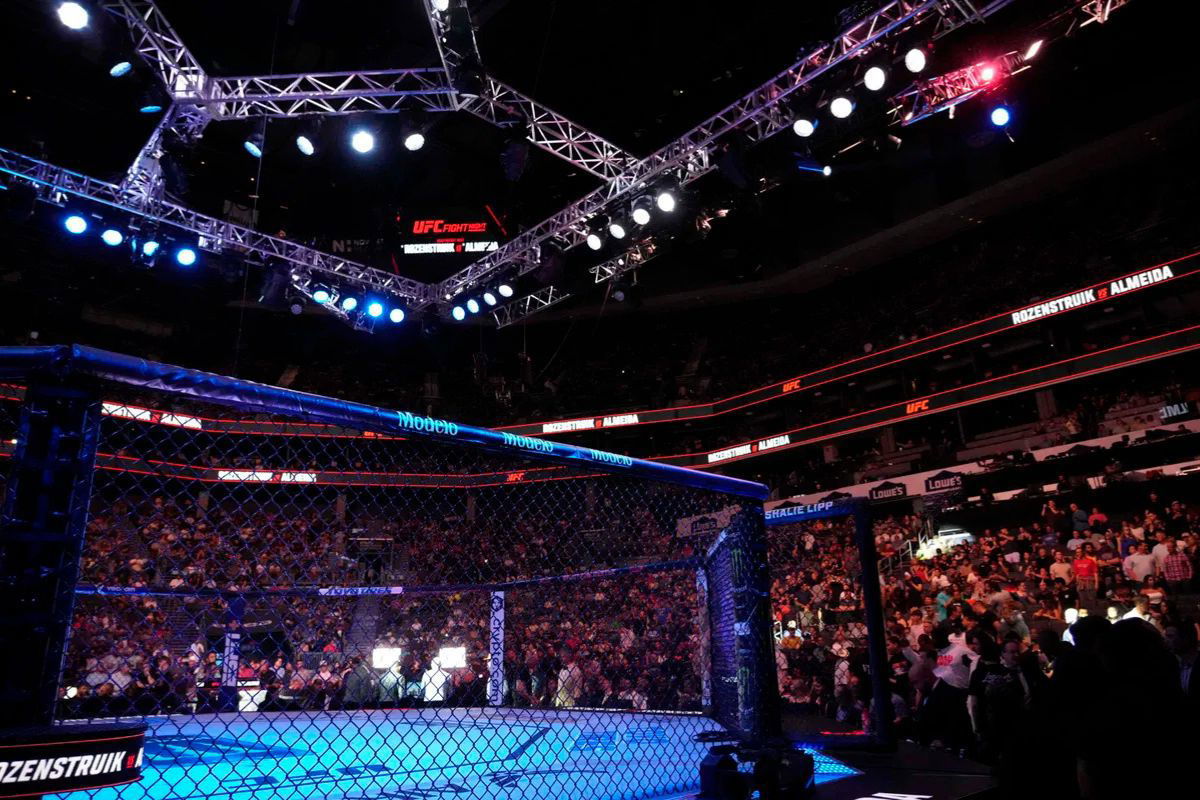
While every fighter at UFC Vegas 116 successfully made weight, the real drama unfolded before anyone even stepped on the scales. Before any MMA event, almost all promotions follow a one-hour weigh-in window. This means that if a fighter is unable to make the weight on time, they are given an extra hour to get down to the required weight.
Watch What’s Trending Now!
However, according to a recent revelation by UFC officials, the Nevada State Athletic Commission has decided to change course. And they have returned to a two-hour weigh-in window for the Fight Night on Saturday in Las Vegas. The change was reported by MMA Junkie.
As for what prompted this sudden change, no explanation was provided by the commission or the UFC. Adam Martin confirmed the report on X.
“Nevada is giving fighters a 2-hour window to weigh in again, according to [Ken Hathaway] of MMAjunkie,” Martin wrote. “Previously, fighters were given 1 hour to make weight and then 1 additional hour if they missed during the first window.”
Usually, if the fighters were to miss weight, which they didn’t, a fine or fight cancellation would have occurred.
Regardless, this isn’t the only commission to experiment with weigh-in windows. Back in March 2024, the Florida State Athletic Commission made the switch, moving from a two-hour to a one-hour window. FSAC Executive Director Timothy Shipman had explained the reasoning behind it.

Nevada is giving fighters a 2-hour window to weigh in again, according to @1khathaway of MMAjunkie. Previously, fighters were given 1 hour to make weight and then 1 additional hour if they missed during the first window.
He claimed that the shortened window “gives the commission doctors a better chance to examine the fighters before clearing them to continue cutting weight for another try.” And interestingly, a two-hour window wasn’t the max time given to fighters during weigh-ins in the past. Before UFC 199 in 2016, fighters were allowed a four-hour window.
The California State Athletic Commission made the change to give fighters additional time to properly rehydrate before competing, which then became the standard. It’s also important to note that such tweaks to weigh-in windows aren’t unusual, as commissions occasionally make changes to improve fighter safety and performance.
In addition, missing weight often results in purse penalties and, in more serious cases, fight cancellations. Fighters sign contracts that specify a particular weight class, and failing to meet that requirement constitutes a breach of those terms. While last-minute adjustments—such as moving the bout to a catchweight—are sometimes possible, the opponent must agree, and financial penalties are almost always enforced.
Extending the weigh-in window gives fighters additional time to cut the remaining weight more safely, reducing the likelihood of such issues. A notable example occurred during the UFC 324 weigh-ins in January, when Cameron Smotherman stepped on the scale for his bantamweight bout against Ricky Turcios. He successfully made weight at 135.5 pounds.
However, immediately after stepping off the scale, Smotherman fainted and collapsed face-first, briefly losing consciousness. He displayed uncoordinated movements before being attended to by medical staff. Officials rolled him onto his back, treated him on-site, and then transported him to a hospital for further evaluation.
Although he later recovered, the fight was promptly canceled. As a result, he lost the opportunity to compete and earn his paycheck. A longer, two-hour weigh-in window could help reduce the need for extreme last-minute weight cuts, making the process safer and more sustainable for fighters.
UFC Vegas 116 weigh-in results
Featherweights Aljamain Sterling and Youssef Zalal, who are set to headline the Vegas card at Meta Apex, were first on the scale and hit 146 and 145.5 pounds, respectively. In the co-main event, Norma Dumont and Joselyne Edwards each came in at 135.5 pounds, comfortably making weight for their women’s bantamweight fight.
The only moment of uncertainty came in the women’s strawweight opener, where Julia Polastri weighed 115 pounds early, while Talita Alencar arrived nearly 50 minutes later and posted 116. Elsewhere, Rafa Garcia (155) meets Alexander Hernandez (155.5), and Marcus Buchecha (252.5) faces Ryan Spann (264), with all bouts proceeding as scheduled.
While the weigh-ins for Saturday’s Fight Night remained relatively drama-free, the change in the weigh-in window suggests a positive move for fighters’ health. The shift in Nevada suggests a growing acknowledgment of the physical toll of weight cuts, a trend that could soon become the standard across the sport.