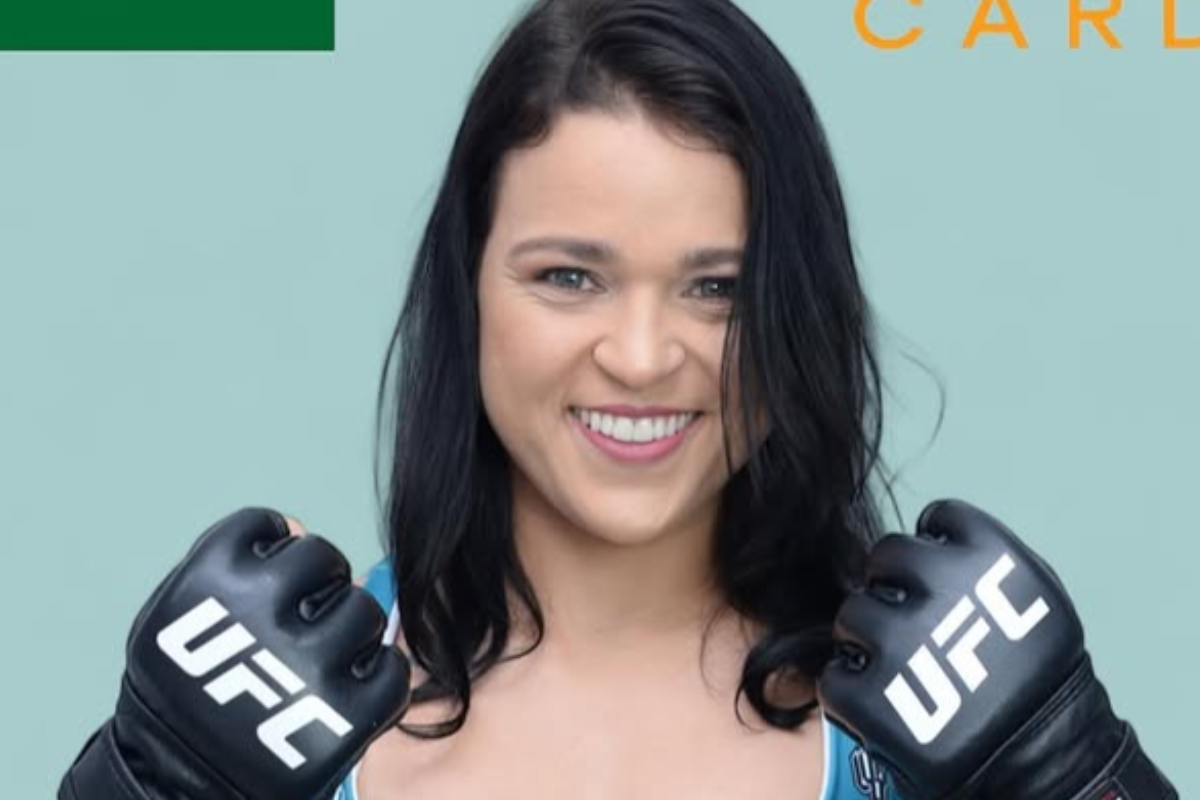
Imago
Credits: @eduardaronda_ufc on Instagram
Imago
Credits: @eduardaronda_ufc on Instagram
Behind the fancy walkouts, trash talks, and aesthetic skills sits a far messier story hidden behind weight cuts and mental health burnout. Mental health in MMA is still talked about like a glitch in the Matrix. Although many recognizable names have spoken openly about their personal battles. Recently an UFC fighter, after losing her fight, opened up about a clinical diagnosis that reshaped her camp, making her miss her weight. She also admitted that she “wasn’t able to train the way I should have.”
Watch What’s Trending Now!
UFC flyweight Eduarda ‘Ronda’ Moura lost a decision to Wang Cong at UFC Vegas 113 on Feb. 7. It was only this Thursday that she explained how she suffered from severe Bipolar disorder. Moura had achieved decision victories against Veronica Hardy and Lauren Murphy before she lost to Cong. Moura, who has a professional record of 12-2 and a UFC record of 3-2, explained that she is still learning to manage her medical condition.
“Last year I was diagnosed with bipolar disorder, and at first it was very hard, very hard to accept,” said ‘Ronda’ via her Instagram handle. “Everyone has battles that don’t show up inside the Octagon, but they don’t define us, and they never will. I keep fighting, I keep believing, and I keep building my story. … I promise I will come back much stronger, better prepared, and more mature. I didn’t give up and I never will.”
Top Stories





View this post on Instagram
Stories like Eduarda Moura’s unfold the illusion and shed light on the reality of the sport. Prior Moura’s struggle with a bipolar diagnosis, Paddy Pimblett, Alexander Volkanovski, and Bruno Silva have spoken up about dealing with mental exhaustion. Pimblett detailed how he overcame depression after suffering two defeats in his MMA career.
UFC fighters and the hidden battle with mental health
‘Ronda’ is not the only female fighter who went public about her mental health struggles. Back in 2019, Megan Anderson discussed her 2010 suicide attempt and subsequent depression in an interview on Ariel Helwani’s MMA Show. Anderson said that the morning of her fight with Felicia Spencer at UFC Rochester in May, she had a panic attack and nearly withdrew from the bout.
“I think there’s such a stigma around mental health, particularly as fighters, we are seen as invincible,” Anderson said. “We get in the cage and we fight and we’re supposed to be like superhero people.
I think the more fighters that come out and talk about it, I feel like we really have a good voice to show people that it is OK to not be OK. It’s OK to have these feelings or to feel this way. Just remember: You aren’t the only one. And there is always somebody who will be there for you. It is never a worst-case scenario. It is never as bad as you think it is.”
Anderson further mentioned about a difficult where she attempted suicide back in 2010 in Australia. While she tried to get out of the military, she spent about a week in the hospital and her recovery took months. Anderson later joined MMA after 2 and a half years, which somehow helped her in recovery. But she added that it’s not a cure.
Megan Anderson’s story, much like that of Eduarda Moura, Paddy Pimblett, Alexander Volkanovski, and Bruno Silva, shows that even fighters who look fearless can be fighting invisible mental battles
Written by

Edited by

Ashvinkumar Nilkanth Patil