UFC icon Conor McGregor has inspired countless young fighters in recent years, motivating them to chase their dreams in MMA and earn a spot in the UFC. One of those fighters, newcomer flyweight Nyamjargal Tumendemberel (9-1), missed his first chance to join the promotion but now returns for a second attempt through the “Road to UFC” tournament. This descendant of Genghis Khan comes into UFC 326: Holloway vs. Oliveira with full force this weekend.
On Saturday night, Nyamjargal Tumendemberel will face UFC veteran and former UFC 14 competitor Cody Durden inside the T-Mobile Arena in Las Vegas. Nyamjargal aims to raise the Mongol flag on American soil and honor his mystical roots. With that, he’s also drawing attention for his tattoos, which many compare to Conor McGregor’s iconic designs.
What is the meaning of Nyamjargal Tumendemberel’s chest tattoo?
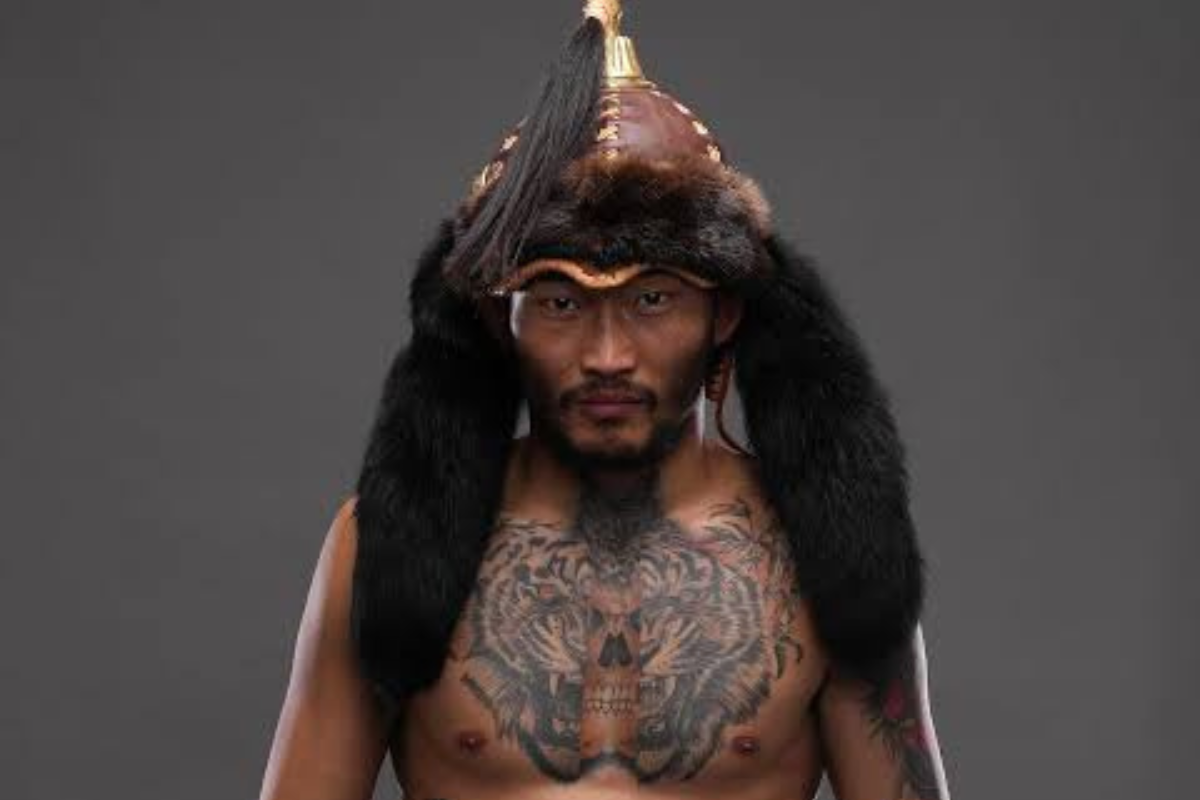
Animal tattoos have long marked fighters in the MMA world, from Conor McGregor to Ilia Topuria. Nyamjargal Tumendemberel continues this tradition with bold animal tattoos across his chest.
Most prominently, a roaring Siberian tiger stretches across his chest, symbolizing independence and raw power. Tigers hunt alone and rely on strength and strategy, just like a fighter must when the cage door closes. With this tattoo, Nyamjargal aims to grab the win at UFC 326.
Tattoo culture views the tiger as more than a symbol of physical might.
It represents courage, determination, and the fearlessness to face life’s challenges head-on.
Nyamjargal mirrors this symbolism by leaving his country, wife, and children to pursue his dream and make a name for himself. Placed near the chest, the tiger tattoo emphasizes the strength and bravery he carries into both life and sport.
The tiger is not alone, though.
‘Art of Knockout’ adds a skull tattoo between the tiger’s face. While some may call it “scary,” the skull reminds him that life is fleeting, urges him to live fully and without regret, and symbolizes rebirth and transformation through adversity.
View this post on Instagram
Nyamjargal Tumendemberel also has an owl tattoo on his chest, extending toward his Adam’s apple and weaving through the skull and tiger designs.
Although Mongolia’s national bird is the Saker falcon, Nyamjargal chooses the owl for its deep cultural and symbolic meaning. People associate the owl with wisdom, knowledge, and the ability to find clarity in uncertainty.
Tattoo culture also links the owl to intelligence, focus, and quiet diligence, allowing success to make the noise.
In Mongolian tradition, the owl serves as a sacred and protective symbol. Legend has it that an owl once saved Genghis Khan from enemy forces, connecting Nyamjargal’s tattoo to his ancestral roots. Each element on his chest – the tiger, skull, and owl – tells a story of strength, courage, and heritage.
Together, these tattoos reflect the fighter he has become and honor the lineage he carries.
Are there any other tattoos on Nyamjargal Tumendemberel’s body?
Yes, Nyamjargal Tumendemberel has several tattoos on his body, but for now, we will focus on the most highlighted ones.
On his right ribcage, he inked a minimalistic tattoo reading “999,” though some people might mistake it for the controversial “666.”
“666” projects a rebellious tone. In Western culture, people associate “666” with the “Number of the Beast” from the Book of Revelation and link it to the Antichrist. This connection gives the tattoo an aura of fear and intimidation, making it a perfect design to put an MMA opponent on edge.
But if the number is truly “999,” it carries a completely different meaning.
Numerology views the number 9 as a symbol of positive transformation and new beginnings. Many believe “999” can turn negative energy into positive, reflecting ‘Art of Knockout’s personal journey.
Ultimately, only Nyamjargal Tumendemberel can reveal the full significance of this tattoo.
Another one of the most striking pieces features a Japanese-inspired skull on his fist, paired with a Hannya-sei Oni demon mask on his bicep, both on his left. The mask shows a red face, a horn, and a haunting smile.
Japanese culture associates the Hannya mask with deep human emotions, especially those of female demons who transform into evil figures.
At first glance, the mask may seem angry or menacing, but in reality, it symbolizes transformation, self-awareness, and the struggle to overcome emotional challenges. He complemented the female demon design with a male demon counterpart, which represents strength and protection.
Interestingly, in UFC, rising heavyweight star Tailison Teixeira also wears a Hannya-Oni tattoo on his left arm, similar to Nyamjargal. Together, these tattoos emphasize power, resilience, and the deep cultural meaning behind this traditional design.
And now, we are all set to turn our attention to Mongolia’s rising flyweight star, Nyamjargal Tumendemberel, as he is scheduled to face a seasoned veteran, Cody Durden, at UFC 326 on March 7. This matchup could shape the trajectory of his career in the division. Stay tuned!