Imago
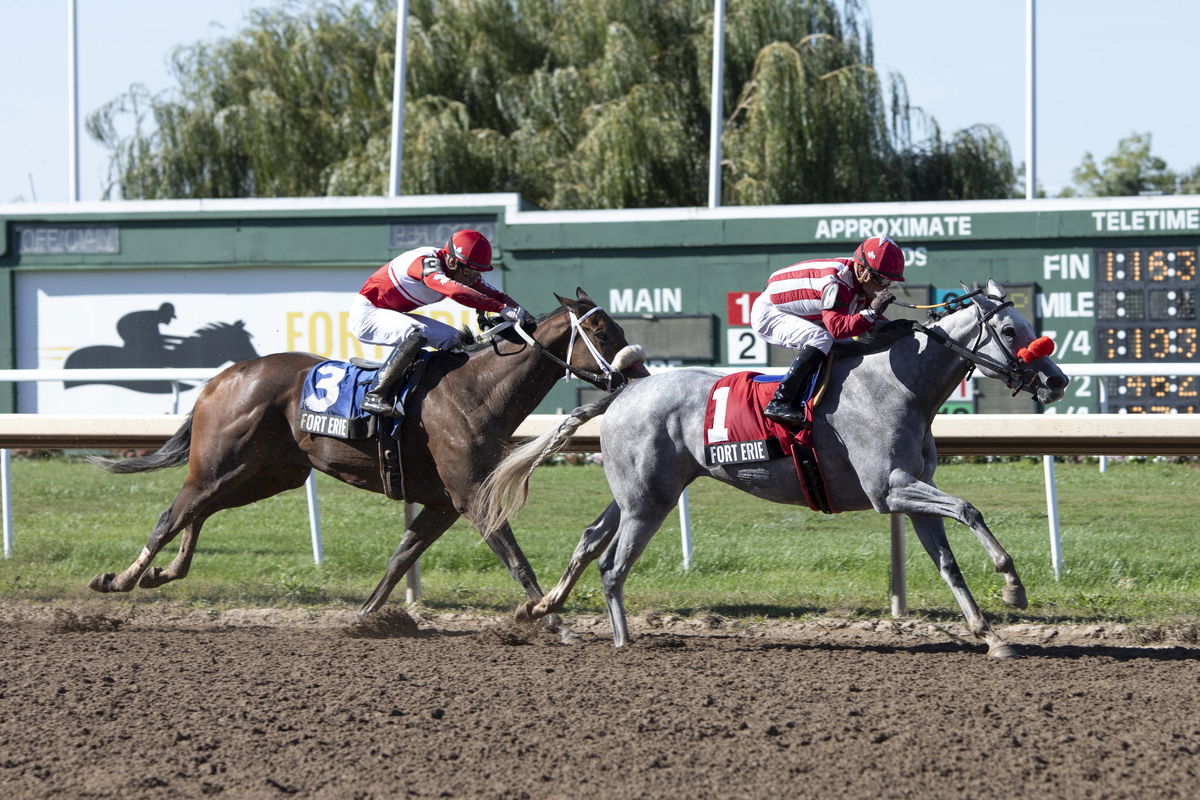
Horse Racing 2024: Prince of Wales Stakes Day SEP 10 September 10, 2024, Fort Erie, On, USA: Frac Amour 1 ridden by Justin Stein wins the Rondeau Bay Stakes on Prince of Wales Stakes Day at Fort Erie Race Track in Fort Erie Ontario, Canada on September 10, 2024. Rebecca Gullet/Eclipse SportswireCredit Image: Â Rebecca Gullett/Cal Media Fort Erie On USA EDITORIAL USE ONLY Copyright: xx ZUMA-20240910_faf_cs17_004.jpg RebeccaxGullettx csmphotothree293168
Imago
Horse Racing 2024: Prince of Wales Stakes Day SEP 10 September 10, 2024, Fort Erie, On, USA: Frac Amour 1 ridden by Justin Stein wins the Rondeau Bay Stakes on Prince of Wales Stakes Day at Fort Erie Race Track in Fort Erie Ontario, Canada on September 10, 2024. Rebecca Gullet/Eclipse SportswireCredit Image: Â Rebecca Gullett/Cal Media Fort Erie On USA EDITORIAL USE ONLY Copyright: xx ZUMA-20240910_faf_cs17_004.jpg RebeccaxGullettx csmphotothree293168
Imago
Horse Racing 2024: Prince of Wales Stakes Day SEP 10 September 10, 2024, Fort Erie, On, USA: Frac Amour 1 ridden by Justin Stein wins the Rondeau Bay Stakes on Prince of Wales Stakes Day at Fort Erie Race Track in Fort Erie Ontario, Canada on September 10, 2024. Rebecca Gullet/Eclipse SportswireCredit Image: Â Rebecca Gullett/Cal Media Fort Erie On USA EDITORIAL USE ONLY Copyright: xx ZUMA-20240910_faf_cs17_004.jpg RebeccaxGullettx csmphotothree293168
Imago
Horse Racing 2024: Prince of Wales Stakes Day SEP 10 September 10, 2024, Fort Erie, On, USA: Frac Amour 1 ridden by Justin Stein wins the Rondeau Bay Stakes on Prince of Wales Stakes Day at Fort Erie Race Track in Fort Erie Ontario, Canada on September 10, 2024. Rebecca Gullet/Eclipse SportswireCredit Image: Â Rebecca Gullett/Cal Media Fort Erie On USA EDITORIAL USE ONLY Copyright: xx ZUMA-20240910_faf_cs17_004.jpg RebeccaxGullettx csmphotothree293168
Everyone was ready. Trainers were pacing in the stables, jockeys were checking their boots, and crowds were buzzing with excitement for Wednesday, September 10. But then came the announcement that stopped everyone in their tracks: the races would not happen. Not because of rain, illness, or pandemic, but because British horse racing had decided, collectively and deliberately, to refuse to race. A sport steeped in tradition had pulled the plug in protest, leaving fans, participants, and the industry itself reeling. So, what’s the exact matter?
Watch What’s Trending Now!
It all comes down to the government’s plan to raise taxes on horse race betting. Right now, horse racing bets are taxed at 15%, but the proposal would raise that to 21%, the same rate paid by online casinos. Racing leaders like Brant Dunshea, Jim Mullen, and more warn that this isn’t just a small shift; it could cost the industry $447 million (£330 million) over five years and put thousands of jobs at immediate risk.
For a sport that employs 85,000 people and draws nearly 5 million fans every year, the potential fallout is enormous. And while the numbers are staggering, the bigger story is how much this could affect communities, livelihoods, and British culture. Horse racing isn’t just a sport; it’s a part of Britain’s heritage, supporting local economies and connecting communities. Because the stakes are so high, the industry decided to take a bold stand.
❌ British Racing is taking the unprecedented decision to cancel fixtures on Wednesday 10 September in protest at the Government’s racing tax plans.
Full details: https://t.co/rVJTQ6Kxid #AxeTheRacingTax pic.twitter.com/HtJ1Izoc9m
— British Horseracing Authority (@BHAHorseracing) August 17, 2025
On September 10, four major race meetings: Lingfield Park, Carlisle, Uttoxeter, and Kempton Park will be rescheduled, and leaders will take their protest straight to Westminster. This protest is being led by Brant Dunshea, CEO of the British Horseracing Authority (BHA), Jim Mullen, CEO of The Jockey Club, Martin Cruddace, CEO of Arena Racing Company, and Paul Johnson, Chief Executive of the National Trainers Federation, alongside owners, trainers, and jockeys. They are making it clear: this tax isn’t just about money, and the government needs to understand what’s truly at stake.
This is historic. It’s the first time in modern history that British horse racing has voluntarily refused to race. The “Axe the Racing Tax” campaign is pushing the government to scrap its plan to merge all online betting taxes into a single rate, which could otherwise devastate the sport both financially and culturally. So what next? When will the postponed races take place?


The three times Britain’s horse racing tracks went quiet
Horse racing isn’t a casino game. It doesn’t run every few seconds online; it carries far lower gambling risk. The cancellations aren’t just a one-day inconvenience. They are a warning shot meant to show the government exactly what’s at stake. The rescheduled fixtures are now: Lingfield Park on September 8, Carlisle on September 9, Uttoxeter on September 11, and Kempton Park on September 15. Officials moved an additional Kempton evening race to September 18. In the modern era, British racing has now been cancelled only three times.
The first modern disruption came in February 2019. An outbreak of equine influenza forced the British Horseracing Authority to suspend racing until at least February 13. Officials cancelled multiple race meetings, including events at Newbury, Southwell, and Warwick. They placed over 100 stables under lockdown to stop the virus from spreading. Then came the COVID-19 pandemic in March 2020, which brought unprecedented challenges to British racing.
On March 17, the BHA suspended all racing until the end of April due to government-imposed lockdowns. As the pandemic evolved, the suspension was extended indefinitely. Behind the scenes, the BHA worked to implement strict biosecurity measures, secure financial support for stakeholders, and plan a safe phased return. Racing eventually resumed in May 2020, but without spectators and under strict health protocols to protect participants and the public. These past disruptions show that while the horse racing sport can adapt, the current September 10 cancellation is unique. It is a deliberate, historic protest against government policy.