
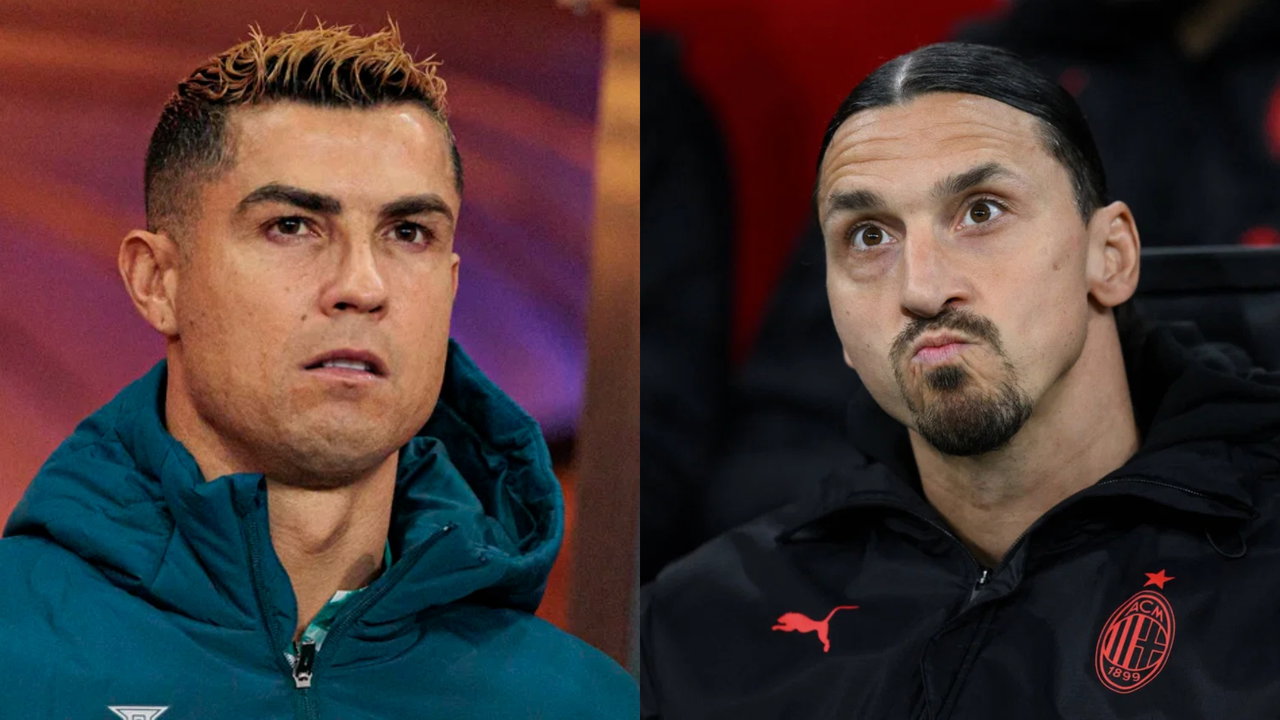
Cristiano Ronaldo’s Portugal exit came after he was left out of the team for two straight games, first against Norway and then Denmark. He had already spent the Norway match on the bench despite warming up, and after Jorge Jesus confirmed he would not start against Denmark, Ronaldo left the national team camp. Even after his departure, though, there was still one familiar reminder of the five-time Ballon d’Or winner around the Portugal squad: his famous No. 7 shirt. Now, that too has changed, and as the fallout continues, Zlatan Ibrahimović has reportedly weighed in on Ronaldo’s decision to leave the camp.
Watch What’s Trending Now!
“You don’t need to ruin the legacy you built with your ego. Leaving the Portugal camp without speaking to any of your teammates? That’s disrespectful,” Zlatan Ibrahimović said, as shared by @giraltpablo on X on October 1. Other reputed sources like Diario Mexico and Clare Sports also shared Ibrahimovic’s words.
He further added, “You need to understand that you’re no longer young. Look at Zlatan. I was young once. I competed and then I retired. Even lions know when the hunt is over.”
The tension around Ronaldo began with Portugal’s 2-1 Nations League win over Norway on September 27. He started the match on the bench, but there was initially a plan for him to play a part in the second half. Jesus later explained that he expected Ronaldo to come on for around 30 minutes. Ronaldo warmed up for roughly 20 to 30 minutes, seemingly preparing for his introduction, but the Portugal manager eventually changed his mind as the match unfolded.
After Gonçalo Ramos put Portugal back in front in the 54th minute, Jesus chose to keep his team on the pitch rather than make the planned change. Ronaldo therefore watched the rest of the game from the bench. The questions did not stop there. Ronaldo’s training involvement became another talking point around the Portugal camp, with reports suggesting that he had not trained with the squad.
Jesus pushed back against the idea that Ronaldo had refused to train, saying, “He did not refuse to train.” The coach explained that Ronaldo had instead completed gym work, mobility exercises on the pitch, and strengthening work at the hotel. Still, the situation left Ronaldo’s role for the Denmark game under the spotlight.
Then came September 30. Speaking ahead of Portugal’s next match, Jesus confirmed that Ronaldo would not start against Denmark. Gonçalo Ramos was set to lead the attack, while Ronaldo could only be considered from the bench if the situation required it. Jesus also made clear that Ronaldo’s reputation would not change his approach to selection. “The rules are the same for everyone,” he said.
But shortly after the press conference, the situation took another turn. Ronaldo spoke with Portuguese Football Federation president Pedro Proença and decided to leave the training camp in Copenhagen. According to reports, Jesus and Proença even went to the airport in an attempt to persuade him to stay, but Ronaldo went ahead with his departure and reportedly flew to Madrid.
Ronaldo later gave his side of the story through Instagram. Rather than announcing his retirement, he explained: “Following the national team manager’s press conference, and after a conversation with the President of the Portuguese Football Federation, I have decided to leave the national team’s training camp.” He then added: “In due course, I will tell the truth to all the Portuguese people about my reasons for leaving the national team, to which I have always been dedicated.”
And he ended by saying: “Now is the time to wish good luck to Portugal and to all my teammates, without exception.”
So far, there has been no announcement of an international retirement from Ronaldo. Instead, his own statement suggests that more details about the decision could come from him later. While Ronaldo’s future with Portugal became uncertain, another part of his international identity was already changing.
Cristiano Ronaldo’s iconic No. 7 gets a new wearer
Ronaldo’s connection with Portugal’s No. 7 began after Luís Figo’s international career came to an end. Before taking the number, Ronaldo wore No. 17 at Euro 2004 and the 2006 World Cup. He inherited the No. 7 in 2007, and it soon became one of the most recognizable parts of his Portugal career.
The number followed Ronaldo through major tournaments and some of the biggest moments in his international career. It also became part of the “CR7” identity that has been attached to him throughout his career. After almost two decades of seeing Ronaldo in the shirt, though, Portugal suddenly had a different player wearing it. For the Denmark match, Rafael Leão was given the No. 7 shirt.
It was a small change on the team sheet, but a noticeable one. Ronaldo had just left the camp, and now the shirt that had become his brand was being worn by someone else. Portugal then went on to beat Denmark 4-2 in Copenhagen without Ronaldo. The result gave the team a positive night on the pitch, even as the questions surrounding its captain continued off of it.