Imago
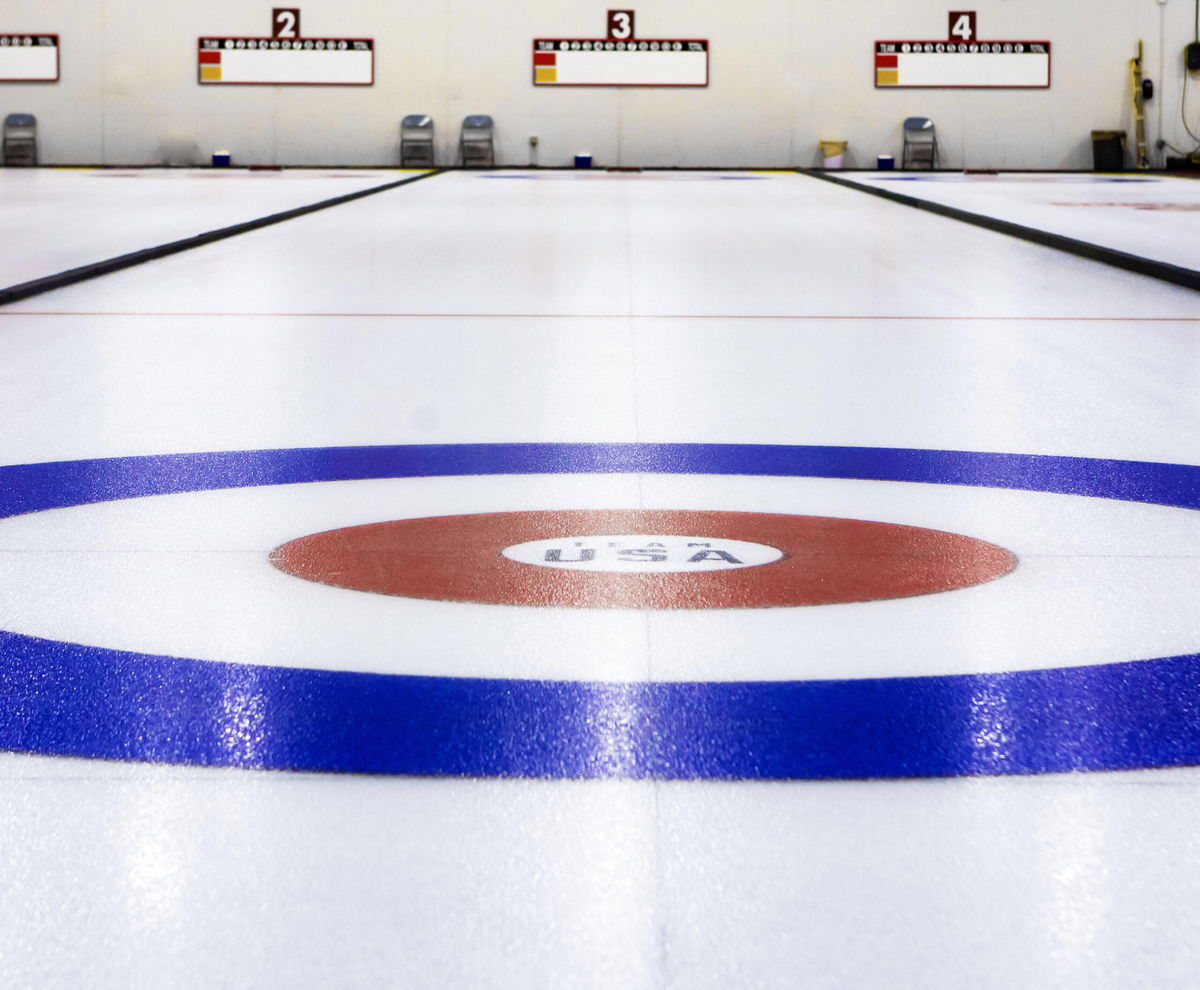
Curling center near Hibbing, Minnesota United States, Minnesota, Hibbing CR_MAMO240608-1454055-01
Imago
Curling center near Hibbing, Minnesota United States, Minnesota, Hibbing CR_MAMO240608-1454055-01
It’s time for ‘Chess on Ice’ to dazzle everyone at the Milan Winter Olympics. The game, based on strategy and patience, has some very complicated rules that fans might not understand. While one may be familiar with the rules of traditional four-person-to-a-team curling, there are some differences in the mixed doubles game. Let’s understand the Power Play in mixed doubles curling and how it can completely shake up the game.


What Is the Curling Power Play and Why Was It Introduced?
Watch What’s Trending Now!
Introduced in 2018, the Power Play is one of the most recent rule changes. Unlike the four-person curling format, the mixed doubles have two pre-placed stones already on the ice. When a team opts for a power play, each team decides on the placement of the stationary stones.
According to the rulebook, “The in-house stone (B), which belongs to the team with the last stone in that end, is placed on either side of the house with the back edge of the stone touching the tee line, at the point where the 8-foot and 12-foot circles meet. The guard stone (A) is positioned to the same side of the sheet, the same distance that was determined for the centre guards.”
It can only be used once per game by each team. However, if the game goes to an extra end/round, it is not allowed. It was introduced to promote more scoring and add variance to the strategy. The essence of the mixed doubles is its fast-paced nature, and the powerplay adds a unique flavour to it. A game can suddenly open up if a team uses its powerplay.
How Does the Power Play Work in Curling Matches?
In most ends, the pre-placed stones will be positioned so that the team with the last stone advantage will start the end with one stone at the back of the four-foot circle. The team without the last stone advantage will start with a centre guard.
When a power play is being used, the pre-placed stones will be moved out to one of the sides, and placed as a corner guard and a stone behind it, with the back of the stone against the tee line. In practice, it has both attacking and defensive uses. It provides more room to score with the hammer, increasing the chances of getting two or three points with a lower risk of a steal. On the defensive side, a team can use it to avoid a steal, making it difficult for their opponents to hide their stone.
Imago
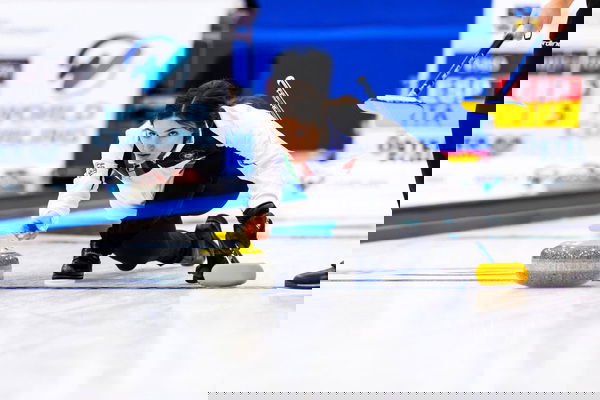
240420 Stefania Constantini of Italy in a curling match between Italy and Spain during day 1 of World Mixed Doubles Curling Championship on April 20, 2024 in Ostersund. Photo: Johan Axelsson / BILDBYRAN / COP 245 / JA0191 curling landslaget national team, Nationalteam bbeng world mixed doubles curling championship *** 240420 Stefania Constantini of Italy in a curling match between Italy and Spain during day 1 of World Mixed Doubles Curling Championship on April 20, 2024 in Ostersund Photo Johan Axelsson BILDBYRAN COP 245 JA0191 curling landslaget national team bbeng world mixed doubles curling championship PUBLICATIONxNOTxINxSWExNORxAUT Copyright: JOHANxAXELSSON BB240420JA030
While the rule sounds tactical on paper, its true impact is best understood when it unfolds in high-pressure Olympic moments. For example, at the Milano Cortina Olympics 2026 game of the USA vs Canada, it proved to be a critical point. Team USA had a 4-3 edge going into the 6th end. Canada decided to use its power play, but it wasn’t as successful as they might have wanted it to be.
A pivotal hit and roll forced Canada to settle for a single on the last stone draw. The USA had a much better powerplay. Canada was inches light on three freeze attempts. It led to the USA’s key double-takeout that set up the pivotal 3 for the Americans. The USA managed to win 7-5. Moments like these highlight how teams can treat their lone Power Play as a potential game-changer rather than just another tactical option.
Why Do Curling Stones Have Lights on Them?
The lights ensure that the athletes don’t cross the hog line before releasing the stone. It is a foul if they do so. Along with the lights on the stone, a heat sensor is fitted in the ice. It alarms if the player’s hand continues to hold the handle beyond the red line. If a team commits this infraction, it is forced to remove that stone from the play. Thus, playing with a huge handicap. It’s unlikely to happen at the highest level, like the Winter Olympics, but pressure can do some crazy things to even the elite athletes.
How Much Does a Curling Stone Weigh?
The weight of the stone is arguably the most important aspect of the sport. It affects the trajectory and the force required. According to the rulebook, “A curling stone is of circular shape, having a circumference no greater than 914 mm. (36 in.), a height no less than 114 mm. (4.5 in.), and a weight, including handle and bolt, no greater than 19.96 kg. (44 lbs.) and no less than 17.24 kg. (38 lbs.).” The stones are made of a special type of granite. That is found on the island of Ailsa Craig in Scotland.
