Imago
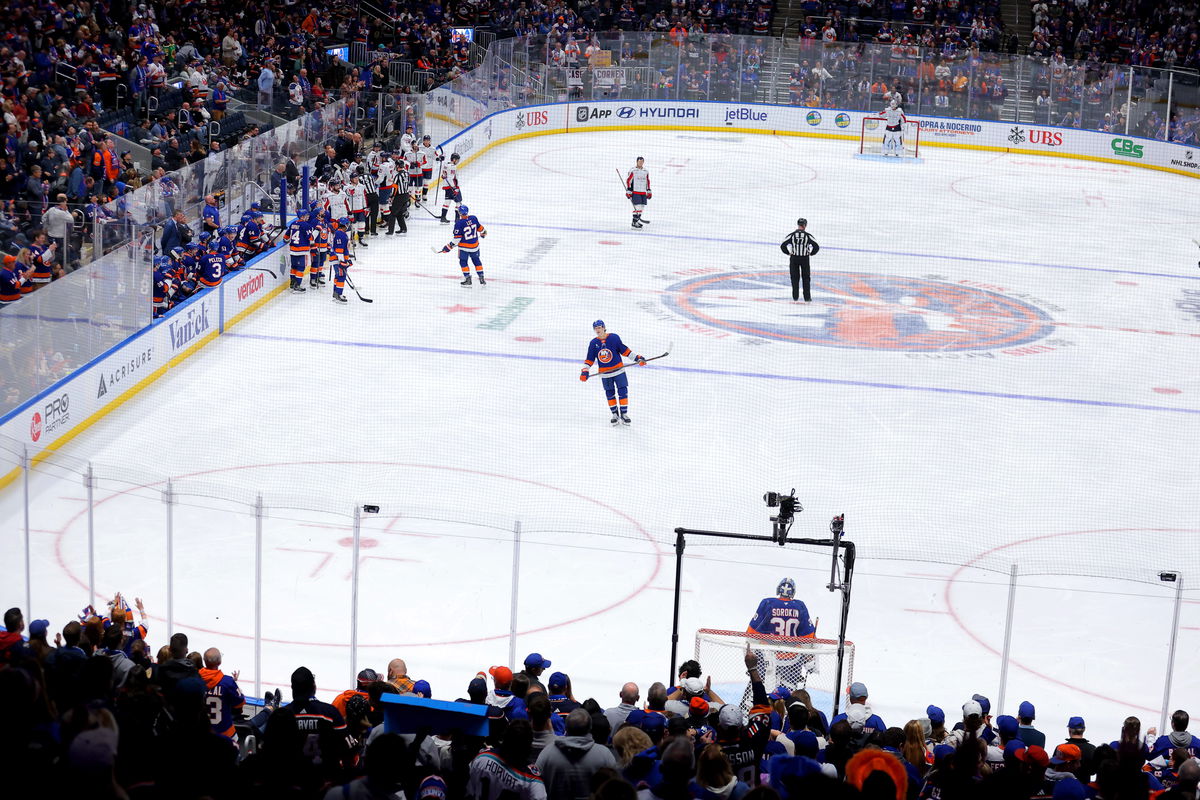
NHL, Eishockey Herren, USA Washington Capitals at New York Islanders Oct 11, 2025 Elmont, New York, USA New York Islanders defenseman Matthew Schaefer 48 celebrates his goal against the Washington Capitals during the third period at UBS Arena. The goal was the first of his NHL career. Elmont UBS Arena New York USA, EDITORIAL USE ONLY PUBLICATIONxINxGERxSUIxAUTxONLY Copyright: xBradxPennerx 20251011_bjp_ae5_030
Imago
NHL, Eishockey Herren, USA Washington Capitals at New York Islanders Oct 11, 2025 Elmont, New York, USA New York Islanders defenseman Matthew Schaefer 48 celebrates his goal against the Washington Capitals during the third period at UBS Arena. The goal was the first of his NHL career. Elmont UBS Arena New York USA, EDITORIAL USE ONLY PUBLICATIONxINxGERxSUIxAUTxONLY Copyright: xBradxPennerx 20251011_bjp_ae5_030
There are some exciting times for hockey fans ahead, but it comes with a caveat. The IIHF has confirmed an unwanted twist for ice hockey at the 2026 Milano-Cortina Olympics: NHLers may be back, but NHL-sized rinks are conspicuously absent. Players will be skating on a smaller rink, and fans are not thrilled about it.
Watch What’s Trending Now!
Chris Johnston from The Athletic dropped the news earlier today on X. “The IIHF confirms the ice surfaces for the Milan Olympics will be shorter than a typical NHL building—196.85 ft. x 85.3 ft.—and defends the decision: ‘The differences in rink specifications are insignificant and should not impact either the safety or quality of game play.’” What does that really mean?
According to The Athletic, the Santagiulia Arena rink will measure 60 by 26 meters—roughly 196.85 by 85.3 feet. That’s just over three feet shorter and only slightly wider than a standard NHL rink. And under Johnston’s tweet, fans didn’t hold back.
ADVERTISEMENT
LOL giving the best skaters in the world less surface to play on will definitely have 0 implications!
This is a joke.
— Ariel Givner (@GivnerAriel) December 8, 2025
And neither did players. Turns out, Team Canada has known for quite a while and several players have already spoken about it.
Colorado Avalanche star Nathan MacKinnon, locked into the Canadian roster, told The Athletic the team has “known since the summer,” and said, “If you have a foot less space, it can be a big difference. If you get a foot closer in the slot, I think that could be a big difference. But it’s the same for everybody.”
ADVERTISEMENT
Other players echoed that sentiment. Jonathan Drouin said the difference “might not seem like a lot, but it is a lot,” especially for highly skilled defensemen and forwards. “Those guys need every little inch of room they can get to make those moves. Same thing with (MacKinnon), Connor (McDavid),” he added.
Meanwhile, Bo Horvat predicted a more physical style, saying, “Time and space is so limited already, and to take that away is going to be even more… It’ll be tight-checking hockey for sure.”
ADVERTISEMENT
Not everyone is happy with how the change was handled. German Olympian Nico Sturm didn’t hold back, saying, “I’m just flabbergasted a bit at how they handled that. It’s just an arbitrary size. Either you make it Olympic or you make it NHL-sized. Now it’s neither.”
But now it’s official. Fans can start imagining a faster, tighter Olympic game. But is that really what they want?
ADVERTISEMENT
NHL fans call out the rink changes ahead of the Winter Olympics
One fan wrote, “Lmao. NHL literally asked for a smaller surface. The only difference is 1 meter shorter neutral zone which is a standard for any IIHF tournament.” There’s some truth to that. The 2026 Olympic rink will measure 60 meters by 26 meters. Slightly shorter than the NHL’s traditional 200-foot surface, but still within the IIHF’s long-established regulation range.
In fact, that exact size appeared at the 2022 Beijing Games, though NHL players were barred from participation just as they were in 2018. The IIHF rulebook allows rinks between 60–61 meters long and 26–30 meters wide. That means this new setup isn’t a novel change, just the smallest approved option. Still, another fan fired back, “Nonsense. It is 3 feet shorter and 4 inches wider than an NHL rink.”
Top Stories
Mysterious Health Issues Force 3 PGA Tour Pros to Exit $9.2M Tournament Midway

Prayers Pour in for PGA Tour Champions Star as Cancer Diagnosis Comes to Light

Josh Allen’s Stance on Brian Daboll’s Hiring Confirmed as Bills Mafia Signs Petition for Sean McDermott’s Return

PGA Tour Faces Backlash as Fans Complaint About American Express Coverage Nightmare

Patrick Mahomes Bids Emotional Goodbye as Chiefs Part Ways With Longtime Coach

Iconic Winston Ownership Returns to NASCAR as $50B Partner Inks Multi-Year Deal Ahead of 2026

Not all fans are thrilled. One joked, “Just pretend you’re playing inside the old Boston Garden. LOL. 🎃” The Garden’s ice surface measured about 191 feet by 83 feet instead of the usual 200 by 85.
ADVERTISEMENT
Another veteran fan added their own nostalgic note. “Lol. As someone who is old as dirt, big Olympic ice surfaces ALWAYS made a difference. That was the whole point, game changes a lot.”
Historically, Olympic ice has been much larger than NHL ice, and that difference has always shaped how the game unfolded. Olympic-style rinks usually measure 200 feet by 100 feet compared to the NHL’s 200 by 85. That’s roughly fifteen extra feet of width to work with.
With that added space, the style of play transforms. Reliable sources note that larger rinks bring more skating, wider passing lanes, and longer puck possession. The game becomes more about finesse, positioning, and movement and less about board battles and bruising hits. Defenders cover more ground. Offensive plays stretch and take time to develop.
ADVERTISEMENT
Meanwhile, another fan tossed in their own sharp comparison. “I think they should go with a 98.85 metre long track for the next 100 metres final. See if that will be ‘insignificant.’” It’s a clever jab.
In sprinting, a difference of just over a meter in a 100‑meter race would completely change times and strategies. What seems minor on paper turns major in performance. Even small tweaks to a playing surface can shift everything.
The Winter Olympics 2026 kick off on February 6. That’s just two months away. The reaction to the rink may not be what organizers expected, but the return of NHL players after over a decade may be enough to override any concerns about a smaller rink. What’s your take on this whole situation? Tell us in the comments below!
ADVERTISEMENT
ADVERTISEMENT
ADVERTISEMENT
ADVERTISEMENT