Imago
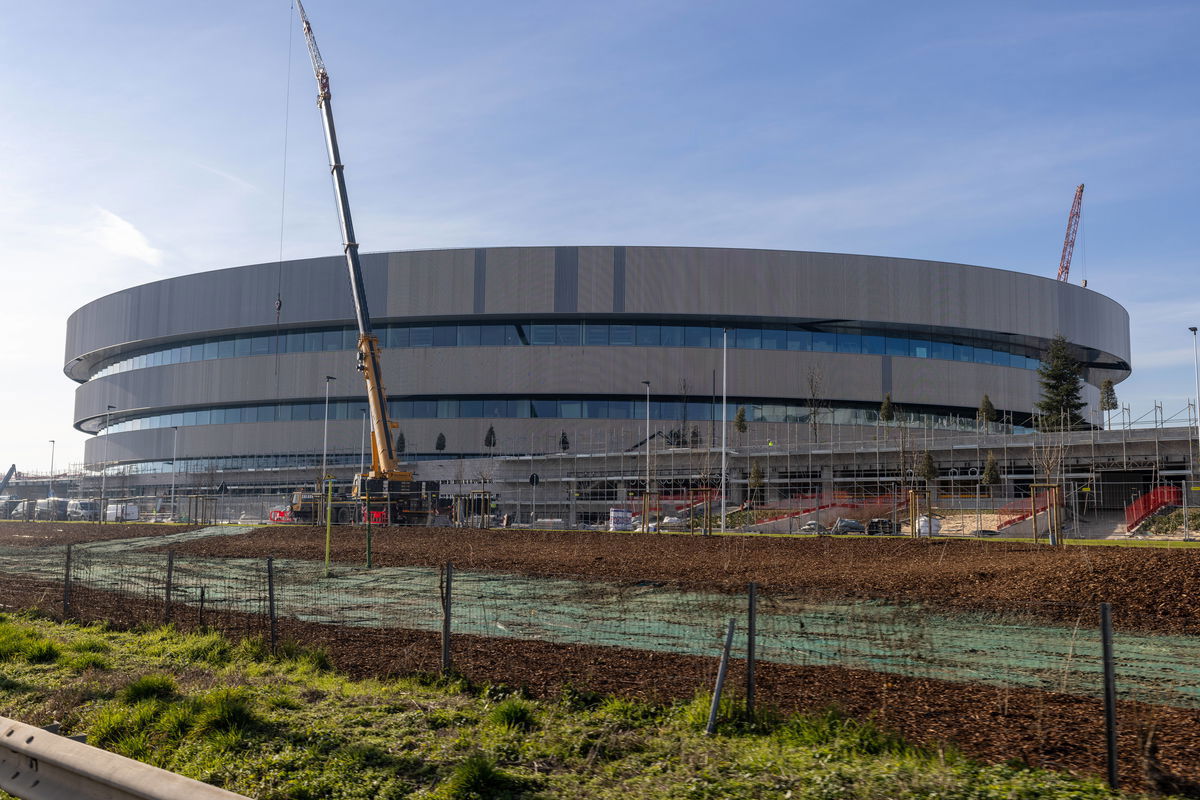
Milan Cortina 2026 In Milan, Italy, on January 6, 2026, the Milano Santagiulia Ice hockey, Eishockey Arena, located in the Santa Giulia district, inaugurates a new multi-purpose arena in time for the 2026 Olympic Games, Olympische Spiele, Olympia, OS This venue has a capacity of 10,000 spectators, allowing fans to watch the best national teams and top international stars in ice hockey and para ice hockey. Milan Italy PUBLICATIONxNOTxINxFRA Copyright: xMauroxUjettox originalFilename:ujetto-milancor260106_npQKr.jpg
Imago
Milan Cortina 2026 In Milan, Italy, on January 6, 2026, the Milano Santagiulia Ice hockey, Eishockey Arena, located in the Santa Giulia district, inaugurates a new multi-purpose arena in time for the 2026 Olympic Games, Olympische Spiele, Olympia, OS This venue has a capacity of 10,000 spectators, allowing fans to watch the best national teams and top international stars in ice hockey and para ice hockey. Milan Italy PUBLICATIONxNOTxINxFRA Copyright: xMauroxUjettox originalFilename:ujetto-milancor260106_npQKr.jpg
Imago
Milan Cortina 2026 In Milan, Italy, on January 6, 2026, the Milano Santagiulia Ice hockey, Eishockey Arena, located in the Santa Giulia district, inaugurates a new multi-purpose arena in time for the 2026 Olympic Games, Olympische Spiele, Olympia, OS This venue has a capacity of 10,000 spectators, allowing fans to watch the best national teams and top international stars in ice hockey and para ice hockey. Milan Italy PUBLICATIONxNOTxINxFRA Copyright: xMauroxUjettox originalFilename:ujetto-milancor260106_npQKr.jpg
Imago
Milan Cortina 2026 In Milan, Italy, on January 6, 2026, the Milano Santagiulia Ice hockey, Eishockey Arena, located in the Santa Giulia district, inaugurates a new multi-purpose arena in time for the 2026 Olympic Games, Olympische Spiele, Olympia, OS This venue has a capacity of 10,000 spectators, allowing fans to watch the best national teams and top international stars in ice hockey and para ice hockey. Milan Italy PUBLICATIONxNOTxINxFRA Copyright: xMauroxUjettox originalFilename:ujetto-milancor260106_npQKr.jpg
With the 2026 Winter Olympics just weeks away, all eyes are on the Milano Santagiulia Ice Hockey Arena. This new 16,000-seat stadium on the outskirts of Milan is set to host most of the men’s and women’s hockey games. But as the calendar ticks closer to February, the arena is still under construction, and organizers are racing against time to finish it.
Watch What’s Trending Now!
Even with delays, the basics will be ready on time. The ice surface, practice rinks, and locker rooms are set to be completed before the start of the men’s tournament on Feb. 11. However, not all necessary finishing work is expected to be finished before the women’s tournament commences on Feb. 5. “We can be confident on that,” IIHF President Luc Tardif said. “You’re not going to go to Milano for nothing.”
According to a recent CNN report, seating capacity will also be slightly lower than planned. Instead of 16,000 fans, the arena will hold around 11,800. “That’s a little bit short,” Tardif admitted. “But it will be a nice setup for the Olympic Games.”
Deputy Commissioner Bill Daly has voiced concerns about ice quality and player safety, warning, “If the players believe that ice isn’t safe, then we’re not going to play. It’s as simple as that.”

Imago
NHL, Eishockey Herren, USA Preseason-Ottawa Senators at Montreal Canadiens Oct 4, 2025 Montreal, Quebec, CAN Montreal Canadiens defenseman Lane Hutson 48 plays the puck against the Ottawa Senators during the third period at Bell Centre. Montreal Bell Centre Quebec CAN, EDITORIAL USE ONLY PUBLICATIONxINxGERxSUIxAUTxONLY Copyright: xDavidxKirouacx 20251004_tbs_iq8_241
But Tardif reassured that he will travel to Italy with officials from the NHL and the NHL Players’ Association from January 9-11 for the test event. This is a crucial trial run that could settle questions about both the ice and the venue of the Winter Olympics. But what if it failed?


“I’m confident about the quality of the infrastructure,” he said. “We would have liked to sleep much better … I think we will have a good competition, but maybe you can ask me again after this week.”
In case you don’t know, if the test event failed, there’s no backup plan for the organizers. But with each day, the pressure keeps on rising. After all, this event is happening after 12 years!!!
NHL stars are back, but Winter Olympics rink dimensions pose a new challenge
The last time we saw NHL stars in the Winter Olympics was in Sochi 2014. Following this, they did not participate in the 2018 and 2022 Games as the league and Olympic organizers failed to agree on the terms of travel, insurance, timing, and expenses. Moreover, the 2022 plan was interrupted by COVID-19, as well, and with no deal finalized, the NHL decided not to break its season to go to the Olympics.
However, in July of 2025, the NHL, NHL Players’ Association (NHLPA), International Ice Hockey Federation (IIHF), and International Olympic Committee (IOC) reached an agreement to make NHL players eligible to participate in the 2026 Olympic Games, Milano-Cortina. The deal encompasses insurance, traveling, and all other logistical obstacles that had plagued participation in previous Games.
But even with the stars back, another concern has emerged: the size of the Winter Olympics rinks.
The ice surfaces on which the Olympic matches will be held are Milano Santagiulia Ice Hockey Arena and the secondary Rho Fiera arena, which have the dimensions 60.0 m × 26.0 m, perfectly in line with IIHF regulations. On the surface of it, the numbers are simple enough, but to the fans in North America, there lies a slight twist.
The size of NHL rinks is 200 ft x 85 ft, which means that Olympic rinks are shortened by approximately three feet, but they are almost the same in width. But these small variation reduces the neutral zone, which provides players with fewer spaces in the middle of the ice.
Coaches and hockey experts have raised red flags over the change as it might affect speed, space, and collision mechanics. But players have to adapt it as the officials of the Winter Olympics insist that the rinks should be of international standards and should be safe to hold the highest level of competition.