
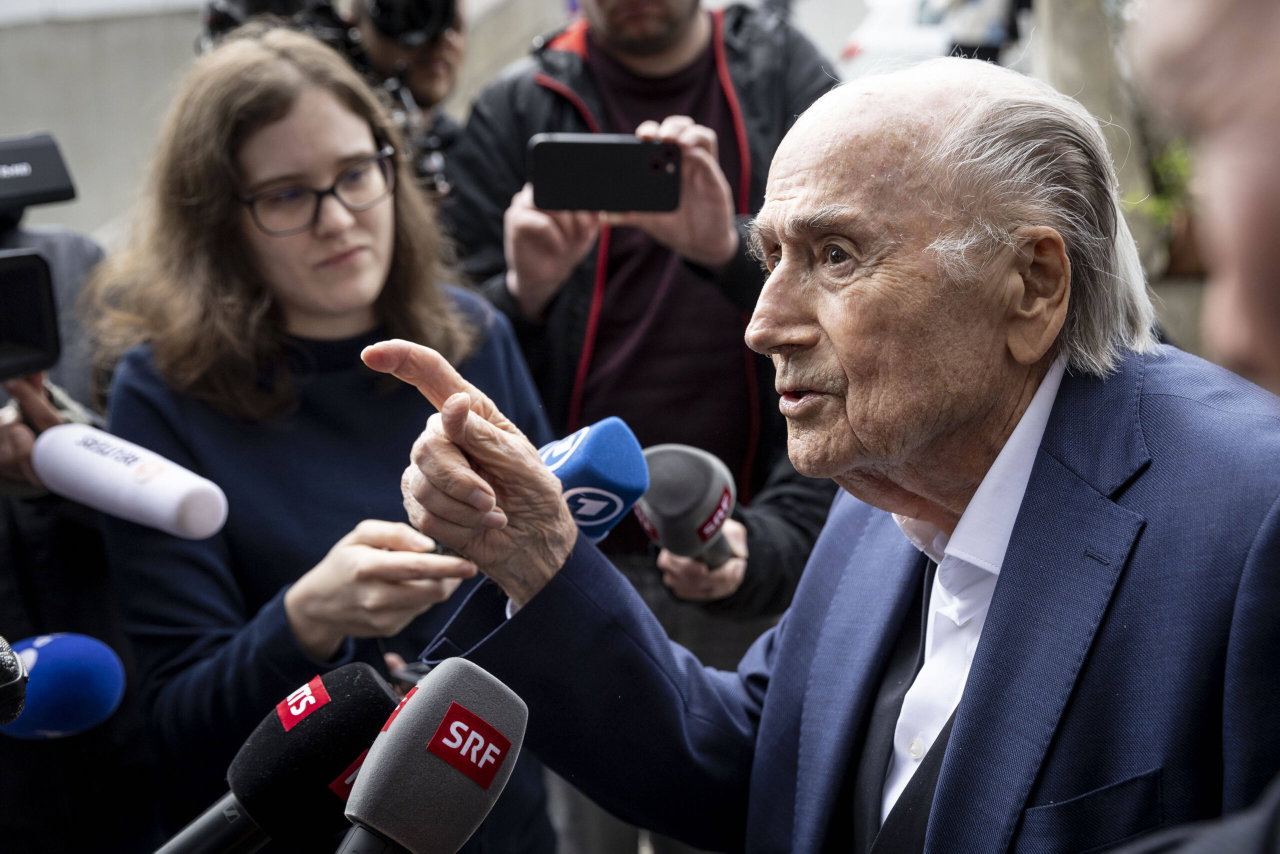
The three-minute hydration break introduced in the 2026 World Cup invited a lot of criticism despite FIFA confirming that the objective was to beat the extreme heat in a few venues. However, FIFA didn’t stop there. They have now gone on to introduce a massive Super Bowl-style halftime show at the MetLife Stadium in New Jersey. While that surely increased its entertainment value, former FIFA president Sepp Blatter thinks it’s just one step more towards the Americanization of soccer.
Watch What’s Trending Now!
“The hydration breaks were just the start. On Sunday, the World Cup final will see the highlight of the tournament – the longest half-time-break in football history. The World Cup final is a copy of the Super Bowl. Quo vadis, FIFA?” The Touchline quoted Blatter.
For the first time in FIFA’s history, a mid-match entertainment show is going to happen. The historic mid-match entertainment will be headlined by global icons BTS, Madonna, Justin Bieber, and Shakira. Alongside the headliners, acts will feature Burna Boy (performing with Shakira), conductor Gustavo Dudamel, the PS22 Chorus with Coldplay, and special appearances from The Muppets.
To accommodate the production, the typical 15-minute halftime break has been controversially extended. Broadcasting networks are planning for a 25- to 30-minute mid-match interval. This is now looking more like a Super Bowl, which is traditionally known for a perfect blend of one-field thrillers and entertainment doses.
Previously, Blatter famously summarized his opposition by cautioning that the game was being Americanized to mimic sports like the Super Bowl. FIFA’s plan with the final may just have confirmed Blatter’s warning.
According to FIFA’s code of conduct, which is governed by IFAB (the International Football Association Board), football matches cannot have intervals lasting longer than 15 minutes (barring unavoidable circumstances like adverse weather conditions). So, a 30-minute break in the finals means FIFA is going against its own rulebook.
The 2026 World Cup was full of controversies. From reversing Folarin Balogun’s red card suspension to referees being accused of favoritism, and a championship ring to the winners, the tournament saw it all. However, just at its last leg, soccer’s global body is getting accused of making the game more American than ever. Soccer purists raised player welfare concerns due to extended player inactivity during the high-stakes final.
FIFA is already on the edge of facing legal actions by a few European nations, like Belgium. Inviting more controversies could increase the challenge for them after the tournament is completed.