
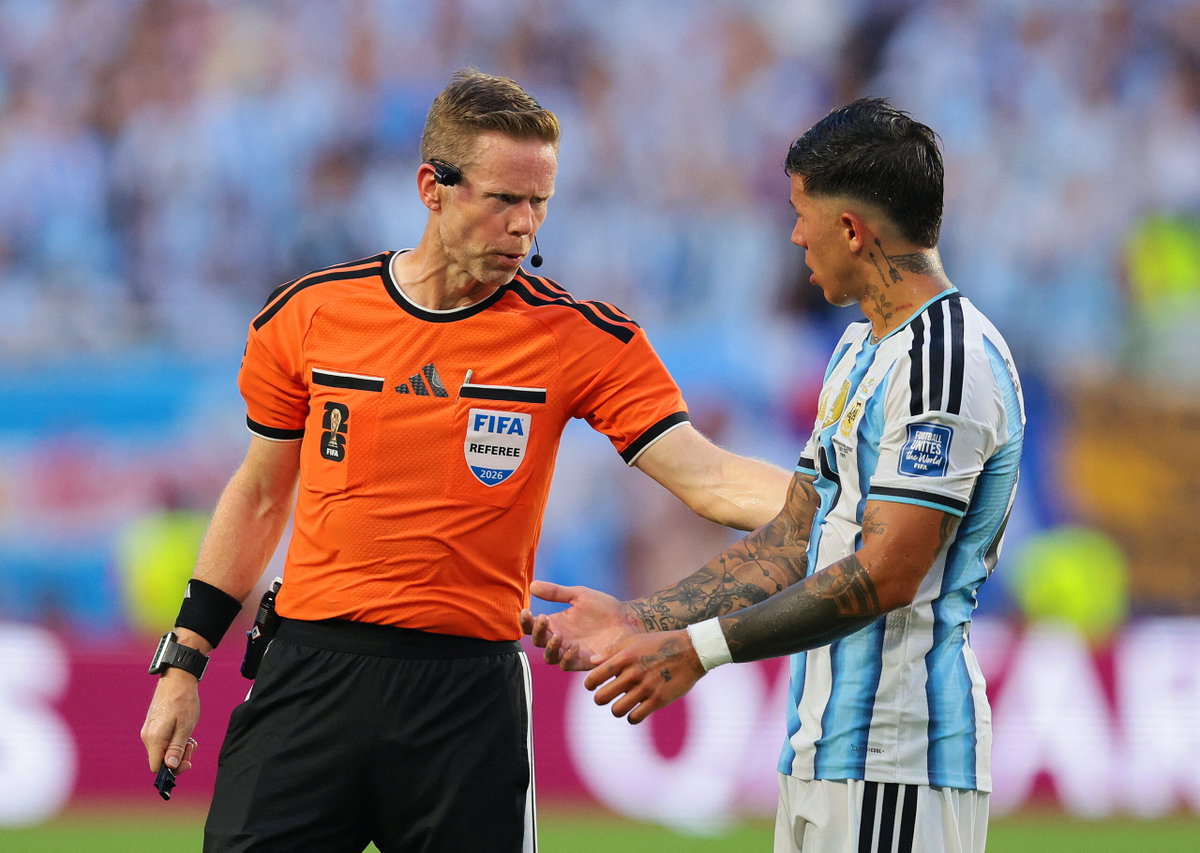
Cape Verde was frantically chasing Argentina in the second period of extra time and eager to take a corner kick, but they were forced to wait before resuming the play. Canadian referee Drew Thomas Fischer halted the play as an Argentinian defender headed to the sidelines to receive treatment. Both the players and fans were shocked when the injured player returned to the field even before the play resumed. The referee, Fischer, was accused of flouting a law in favor of Argentina.
Watch What’s Trending Now!
The alleged incident occurred late in the game when Argentina was defending a 3-2 lead, and Cape Verde had a corner kick. Argentina’s Nicolas Tagliafico suffered an injury after colliding with Emiliano Martínez. As Tagliafico headed to the sidelines to receive treatment and change his shirt, Cape Verde waited until the defender immediately made it onto the pitch after receiving first aid.
“An outfield player who is assessed and/or treated on the field of play, or whose injury causes play to be stopped, is to leave the field of play and remain off it for a period of one minute after the restart,” Law 5 of IFAB says about the off-field treatment protocol.
Since the play did not restart, Tagliafico did not need to serve a minute off the field as he left and re-entered the pitch. But the referee’s decision to hold the play off and not allow a restart for almost 90 seconds remains questionable, as Cape Verde would’ve had a man advantage for the setpiece.
Meanwhile, VAR reviewed the incident, agreeing with the on-field referee’s decision, and awarded no penalty.

Llevo viendo fútbol 20 años y siempre cuando un jugador sale a ser atendido el partido sigue con 1 menos. Pues aquí el árbitro esperó a que volviese el argentino para reanudar el juego. x.com/tmr6dlr/status…
Once the play resumed, Argentina dealt with the threat. Cape Verde tried to hit back but ultimately fell short as the game ended 3-2 in Argentina’s favor, as the defending champions escaped a huge scare to progress into the round of 16.
When Lionel Messi scored on his record-breaking 30th World Cup appearance, it looked like just another day at the office for Argentina. But Cape Verde’s fightback and defensive resilience saw them take the game to extra-time. The African team equalized once again in extra time, and just when penalties looked a real prospect, an own goal by Diney Borges in the 111th minute ended their hopes.
The game had plenty of controversial moments, from Lisandro Martinez’s goal in extra time to multiple fouls not called in Cape Verde’s favor. This has been a theme in all of Argentina’s games, as they’ve been accused of being refereed differently.
Algeria filed an official complaint to FIFA after the fouls weren’t called their way. Argentina’s victory against Austria also had similar instances, but in the knockouts, these issues amplified. Inconsistent refereeing has been a theme of the tournament, as multiple VAR controversies and refereeing decisions have often overshadowed the games on the pitch.
Argentina will now head into the round of 16, where they face Egypt. Cape Verde’s iconic World Cup debut, though, ends in a late heartbreak.