
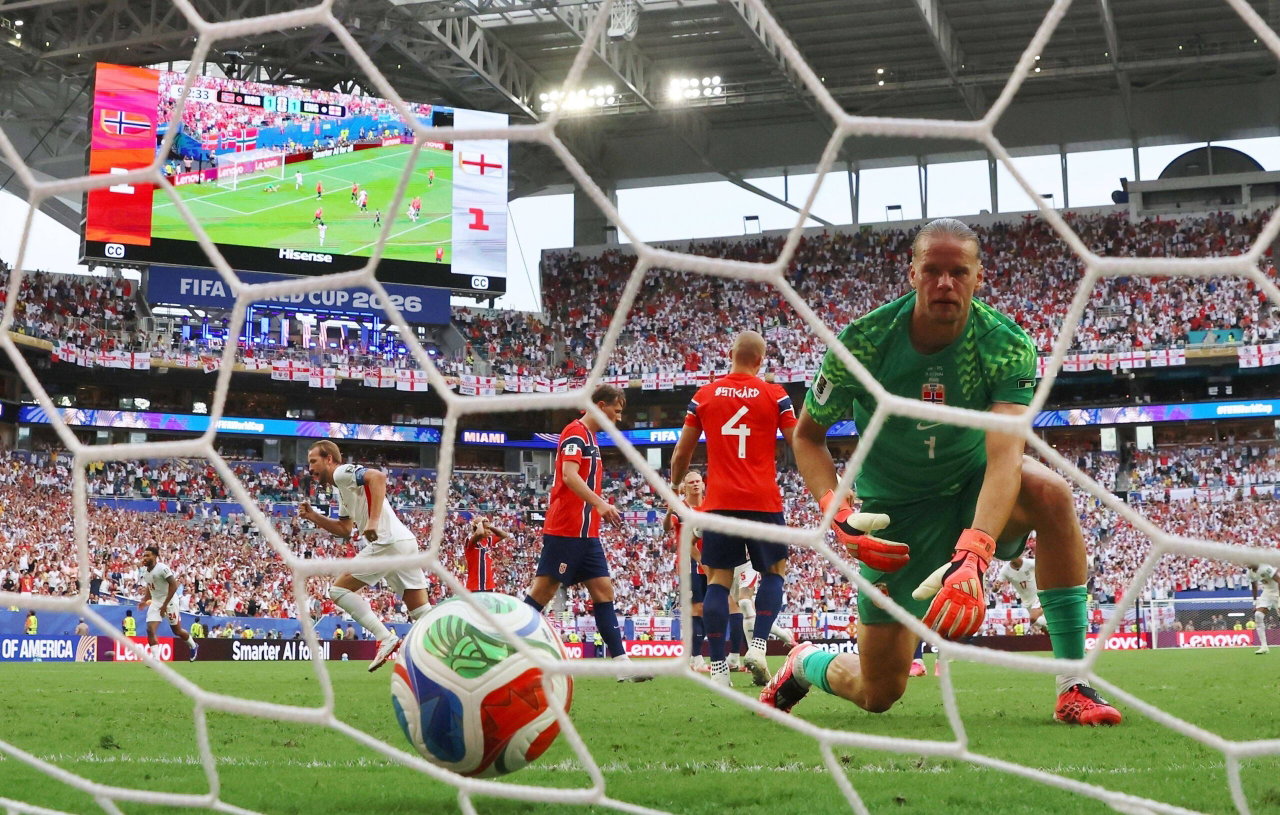
FIFA’s statement on the controversial first goal didn’t clear any doubts; instead, it challenged the viewers, analysts, and pundits, causing even more outrage. A former player believed that only an unbelievable force of nature could’ve impacted the play if not for an obvious decision that FIFA failed to recognize at the World Cup.
Watch What’s Trending Now!
England scored within three passes after Orjan Nyland’s goalkick dropped kindly for Elliot Anderson, who shifted it for Anthony Gordon. Gordon then found an onrushing Jude Bellingham, who scored an outrageous goal. Despite a few protests from players and coaches, the goal stood, making it 1-1 before the break.
But replays showed at halftime that the ball did touch the spidercam, but FIFA officially explained there was no contact using their heartbeat sensor and claimed there was no proof of the ball touching the cable.
“They are saying there’s no proof,” Nedum Onuoha, a former Premier League star, said on ESPN FC. “What is the video then? Does the video not exist? The only way to see if it’s hit the wire is if there’s a snickometer or whatever.”
Onuoha referred to the official statement put out by FIFA Media that said “no evidence that the ball touched the overhead wire,” after the sensor in the ball showed no peak.
“Elliot Anderson had the ball drop down to him in the middle of the field when he was not expecting it,” he said. “There were people jostling, ready for the header, and then it goes 15 yards short; it’s obviously touched something, or it is the biggest gust of wind you’ve seen in your lifetime.”
“I think the players saw it,” he questioned. “It’s going to be very hard to say that it did not matter. FIFA is telling you not to believe what you’ve seen because they got something else instead. That is an insane position to be in. Are we stupid now?”
The sensor technology already played a deciding role in the Croatia-Portugal clash when it confirmed that the ball touched the hair strand of an offside player and canceled Croatia’s late goal. However, many were upset that a major deflection was not flagged by such a technology with a high accuracy level.
With the goal standing, England had another reprieve as VAR cancelled Norway’s second goal due to a dubious foul. Bellingham scored in extra time to steal a 2-1 victory. They prepare to face England in the semifinals as Norway heads home after a historic World Cup run.
But the question about the usage of VAR technology remains as we prepare for the semifinals in the World Cup.