
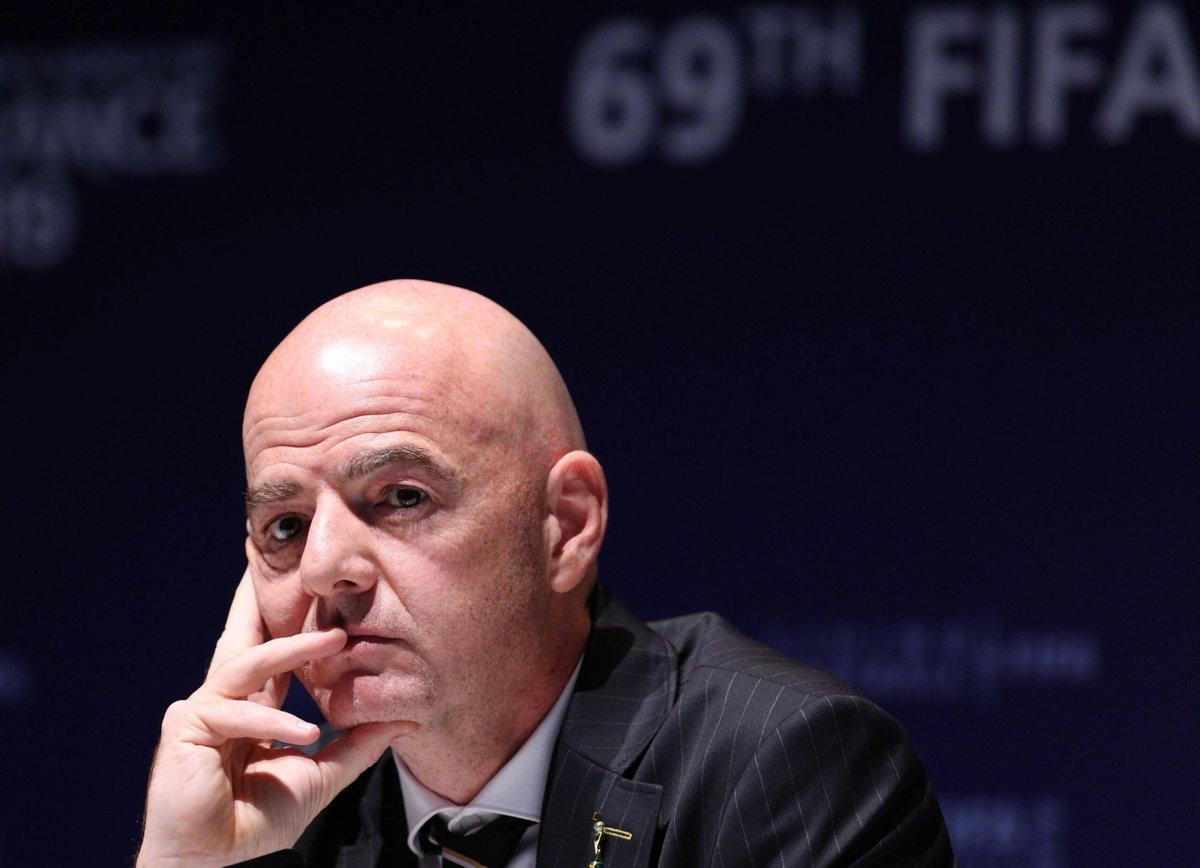
One phone call has brought Gianni Infantino’s leadership of FIFA under renewed scrutiny. According to a new report, the FIFA president assured Donald Trump he would resolve the controversy surrounding Folarin Balogun’s World Cup red card, raising fresh questions about political influence over football’s disciplinary process. The allegations arrive just as Infantino prepares to face mounting criticism from senior officials ahead of the 2027 presidential election.
Watch What’s Trending Now!
The controversy began on July 1, when Balogun received a red card during the United States’ 2-0 victory over Bosnia and Herzegovina in the World Cup round of 32. Balogun’s red card meant automatic suspension and a likely absence from the Belgium match.
However, FIFA’s Disciplinary Committee reversed course, clearing Balogun to play Belgium. The United States ultimately suffered a 4-1 defeat, but the decision to make the striker available had already sparked anger and accusations of unequal treatment. The New York Post has now added another layer to the controversy.
Citing four sources briefed on the matter, the newspaper reported that Infantino assured Trump during a July 1 phone call that he would take care of the situation. One source reportedly described the outcome as immediate, claiming the president’s intervention was followed by the decision to lift the suspension.
Trump had publicly acknowledged contacting Infantino to request a review of the punishment. However, the allegation that Infantino personally promised to overturn it has intensified questions about whether the governing body maintained the independence of its disciplinary process.
FIFA denied the allegation, with a spokesperson telling the Post the organization’s stance hadn’t shifted. Infantino has also maintained that FIFA’s judicial bodies operate independently, arguing that he respects their decisions regardless of whether he agrees with them.
The dispute is now moving beyond Balogun’s eligibility. FIFA is preparing a proposed amendment to its disciplinary code that would prevent automatic one-match red-card suspensions from being suspended in future cases. The proposal is expected to come before the FIFA Council in Zurich.
The Balogun affair is only one of several issues threatening to overshadow Infantino’s presidency. On Thursday, October 15, the FIFA president will lead the 37-member Council meeting in Zurich, where senior officials are expected to seek answers about his leadership and decision-making.
Another major point of contention is the abandoned FIFA Forward Enterprise proposal. The plan reportedly sought private investment in FIFA’s commercial business, including rights linked to its flagship tournaments, through a deal involving Joshua Kushner’s Thrive Capital. The proposal faced resistance from football officials who questioned why such a major decision had advanced without adequate consultation.
UEFA, CONCACAF, and the Asian Football Confederation have all challenged Infantino’s leadership, with UEFA’s Aleksander Ceferin demanding transparency. An independent review of FIFA’s governance has been promised, but questions remain about its scope and independence.
The Council is also expected to discuss the FIFA Peace Prize awarded to Trump last December. Infantino’s close relationship with the US president has attracted criticism, particularly as the Balogun decision has placed their communication under renewed scrutiny. Norwegian football officials have already lodged complaints concerning Infantino’s conduct and FIFA’s political neutrality.
Financial transparency has added to the pressure. Reports based on US tax filings indicate that a FIFA subsidiary connected to the 2026 World Cup paid Infantino an additional $1.76 million in 2024, beyond the compensation disclosed in FIFA’s annual report. FIFA has denied wrongdoing, saying its compensation arrangements comply with reporting requirements and applicable regulations.
Who could possibly be Gianni Infantino’s biggest challenger at the presidential election in 2027?
Despite the growing criticism, Infantino remains a formidable candidate ahead of the next FIFA presidential election, scheduled for March 18, 2027, in Rabat, Morocco. He is seeking another term, while the November 18 deadline for candidates to declare their intentions is approaching.
Former Arsenal manager Arsène Wenger has reportedly emerged as a possible alternative after senior figures in football sounded him out about challenging Infantino. Wenger, who joined FIFA as chief of global football development in 2019, has denied involvement in the disputed commercial investment plan and welcomed its withdrawal. However, he has not confirmed a presidential bid, leaving uncertainty over whether opposition figures can unite behind a challenger.
Infantino also retains support across several regions, meaning criticism from European and North American officials does not automatically translate into a viable election challenge. His proposed increase in football development funding could further shape discussions with member associations as FIFA considers how to distribute its reserves over the 2027-2030 cycle.
For now, the Balogun case has become a test of FIFA’s credibility. The question is no longer simply whether the American striker should have been allowed to play against Belgium. It is whether the organization can demonstrate that its rules apply consistently, regardless of who makes the call.
As Infantino faces the Council, that question may prove harder to silence than any criticism surrounding a single red card.