
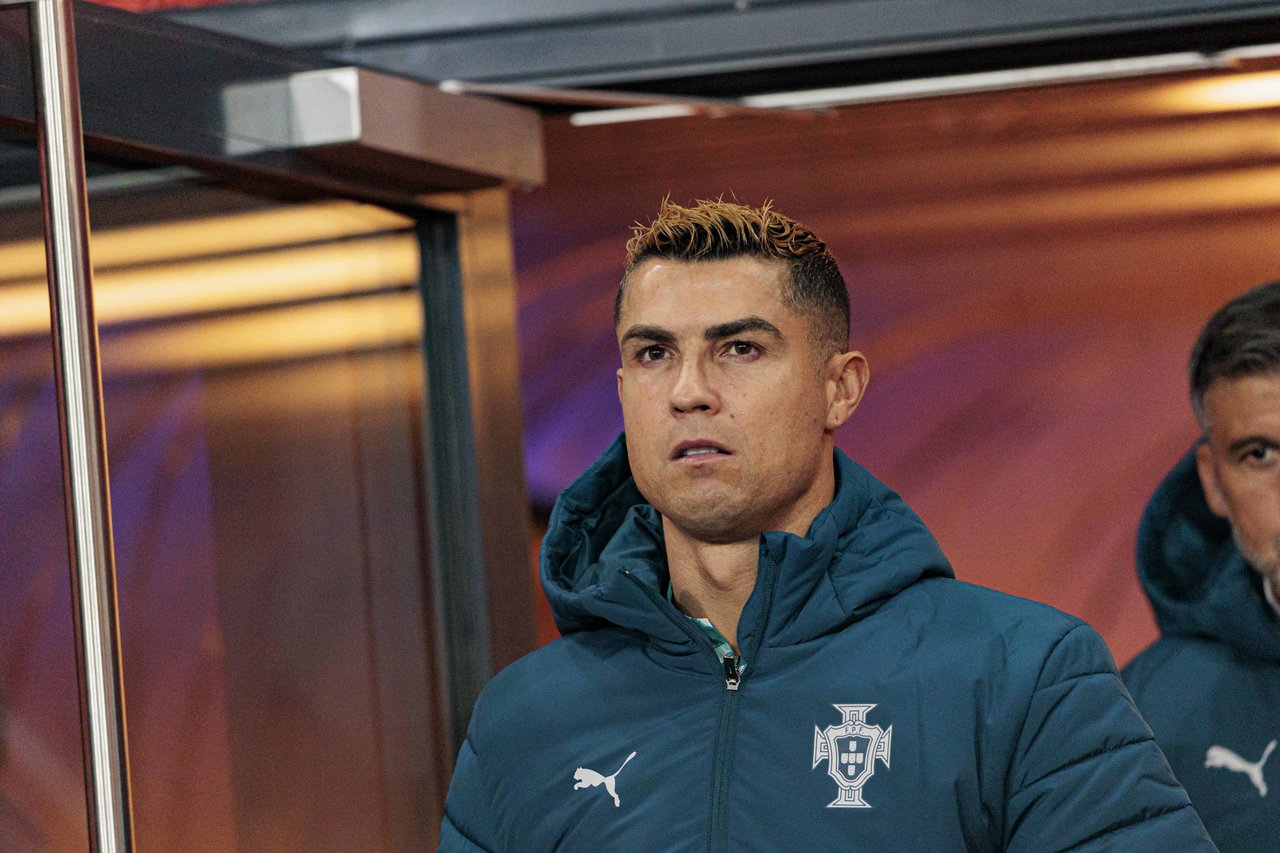
Cristiano Ronaldo has spent much of his career refusing to come off the pitch. But even his former Portugal colleagues believe there were moments when the team needed him to make way. Ricardo Carvalho, who worked alongside Roberto Martinez, has now admitted that the Portuguese captain should have been substituted earlier during the World Cup.
Watch What’s Trending Now!
Speaking to former Chelsea midfielder John Obi Mikel, Carvalho acknowledged the difficult position Martinez faced while managing a 41-year-old Ronaldo. The forward remained fit enough to complete matches, but his influence without the ball and the demands of international football raised questions about whether Portugal would have benefited from an earlier substitution.
When Mikel asked whether Martinez should have been braver and taken Ronaldo off for the team’s benefit, Carvalho did not dodge the question. “In my opinion, he [Roberto Martínez] should have taken him off,” he admitted. However, he also explained why the decision was never straightforward. “If you know him, he’s a player who always wants to play. He was successful because he always wants to be there, because he feels he can score.”
Carvalho pointed out that Ronaldo’s belief in his ability to change a game made it difficult for the coach to leave him out. Even when tired, the forward would continue to expect a decisive opportunity, whether from open play or a free kick. Martinez also had to consider everything Ronaldo had contributed to Portugal over the previous three or four years. Carvalho felt the coach did not want to take away the spotlight from a player who had given so much to the national team.
One incident from Portugal’s 5-0 group-stage victory over Uzbekistan offered a glimpse into that challenge. Ronaldo had already scored twice, and Martinez was considering taking him off. But the captain had other plans. According to Carvalho, Ronaldo told the coach, “I’ve only just started scoring goals; I want more.”
Two goals were not enough for a player still chasing new milestones. Carvalho recalled how Ronaldo wanted three or four, reflecting the mentality that had driven his career and his pursuit of 1,000 career goals. Yet that same determination created a selection dilemma. With 26 players in the squad, Martinez also had to consider the other forwards waiting for opportunities and maintain a sense of fairness within the group.
Carvalho’s own experience gave him a different perspective on the situation. He believes managing an older player requires recognising when their energy begins to fade, even if they still feel capable of influencing the match.
“If it was me, I would understand that there would come a moment when he has to come off,” Carvalho explained. “From my experience, when you get older, the later you come off, the worse it is, because you get more tired, you don’t arrive on time.”
He added that Ronaldo should have been substituted earlier, although he acknowledged that the final decision belonged to Martinez. Carvalho also recalled that Portugal had taken Ronaldo off only once during that period, against Croatia, when Gonçalo Ramos came on and scored.
Things became gloomier for Cristiano Ronaldo and Portugal after Martinez’s departure
Carvalho’s comments also bring back the question of how Portugal should manage the transition away from Ronaldo. Martinez had consistently defended the forward’s importance, even when questions emerged about his role and playing time.
The former Portugal coach once described Ronaldo as the “perfect captain” and praised not only his goals and assists but also his daily commitment. Martinez believed the veteran’s professionalism set an example for the entire dressing room. He also argued that Ronaldo’s influence as a No. 9 went beyond finishing, highlighting his movement, timing, and ability to create space for teammates.
That importance was rooted in Portugal’s recent history. Martinez pointed out that the country had qualified for seven consecutive World Cups since Ronaldo joined the national team, giving the side remarkable continuity at major tournaments. He also admitted that replacing the forward’s numbers would be impossible through a like-for-like substitution. Portugal would have to find different attacking solutions rather than expect another player to reproduce his contribution.
However, the atmosphere around the national team became more complicated following Martinez’s departure and Jorge Jesus’s arrival. Ronaldo initially welcomed Jesus, with whom he had previously worked at Al Nassr, and publicly said he was willing to accept any role the new coach needed him to fill. He even started Portugal’s match against Wales before being substituted with 23 minutes remaining, leaving the pitch without an apparent disagreement.
The situation changed during the following match against Norway. Ronaldo expected to feature after Jesus had reportedly discussed bringing him on, but the coach ultimately decided against it once the game unfolded. Portugal won, but the decision triggered a disagreement between the two men. Ronaldo later accused Jesus of breaking his word, while the coach insisted that he had the final say over substitutions.
The disagreement escalated when Ronaldo left the national team’s training camp in September. He subsequently published a lengthy statement describing the situation as a breach of trust, although he also apologized to his teammates and Portuguese supporters for his departure. The Portuguese Football Federation handed him a 30-day suspension, backdated to the day he left camp.
Despite the controversy, Ronaldo’s return remained a possibility. His inclusion in Portugal’s provisional squad for the November international window suggested that communication between the player and federation had not completely broken down. The final selection, however, remained in the hands of Jesus.
For Portugal, the bigger challenge remains finding the right balance between respecting a legendary career and preparing for life beyond it. Carvalho’s admission shows that even those who understand Ronaldo’s competitive instincts recognize that the team sometimes needs a difficult decision. And as the veteran approaches the closing stages of his international career, that question is unlikely to disappear.