
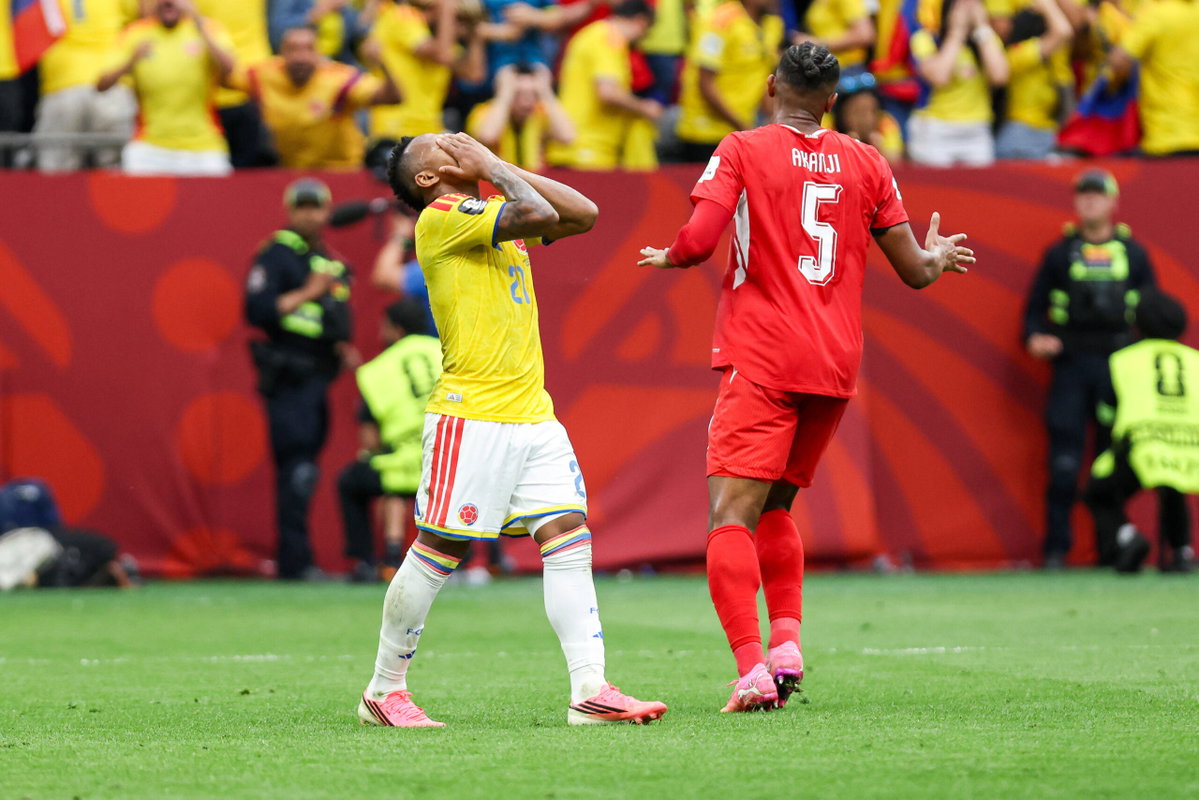
On Tuesday night in Vancouver, Jáminton Campaz picked off a poor pass from Granit Xhaka in the 115th minute of extra time, with Colombia and Switzerland level and the tie still there to be won. His left-footed effort went wide. He recovered enough to convert his penalty in the shootout, but Colombia lost anyway, 4-3. Three days later, the 26-year-old was getting threats serious enough that his country’s football federation asked the government to investigate.
Watch What’s Trending Now!
“No athlete, nor any member of their inner circle, should be subjected to intimidation for representing their country in a sporting arena,” the Colombian Football Federation said in a statement.
Its executive committee further asked that the Attorney General “advance, as quickly as possible, the necessary investigations to identify, bring legal action and sanction those responsible for these acts.”
Campaz also responded: “Football is also made up of difficult moments,” he wrote in an Instagram post. “My Colombia, please let us never lose sight of respect. We can think differently, feel frustration or sadness, but no passion justifies hatred or living in fear.”
The threats came down to one moment, even as Colombia had actually had a decent tournament up to that point. Campaz scored in a 3-1 group-stage win over Uzbekistan and came on as a late substitute in the round-of-32 win over Ghana. Against Switzerland, the game was still scoreless after 120 minutes, and his miss in the 115th minute was the clearest chance either team created in extra time. He made his penalty when it mattered in the shootout. The loss wasn’t really on him, but the missed chance gave people someone to point at.
Once the match ended, Campaz found his social media accounts overrun with abuse, some of it explicit d—- threats. He responded by shutting off comments on his accounts. He also skipped the flight home with the rest of the squad, choosing to stay behind rather than travel back with his teammates.
The federation’s urgency makes more sense once you know the history. Days after scoring an own goal against the United States at the 1994 World Cup, Colombia defender Andrés Escobar was m——- while sitting in his car in Medellín. Colombia was in the middle of serious cartel and armed-conflict violence at the time, and had just finished last in its group.
As the federation put it: “Soccer must be a space of unity, respect and hope, never a stage for hate, intimidation and violence.”