
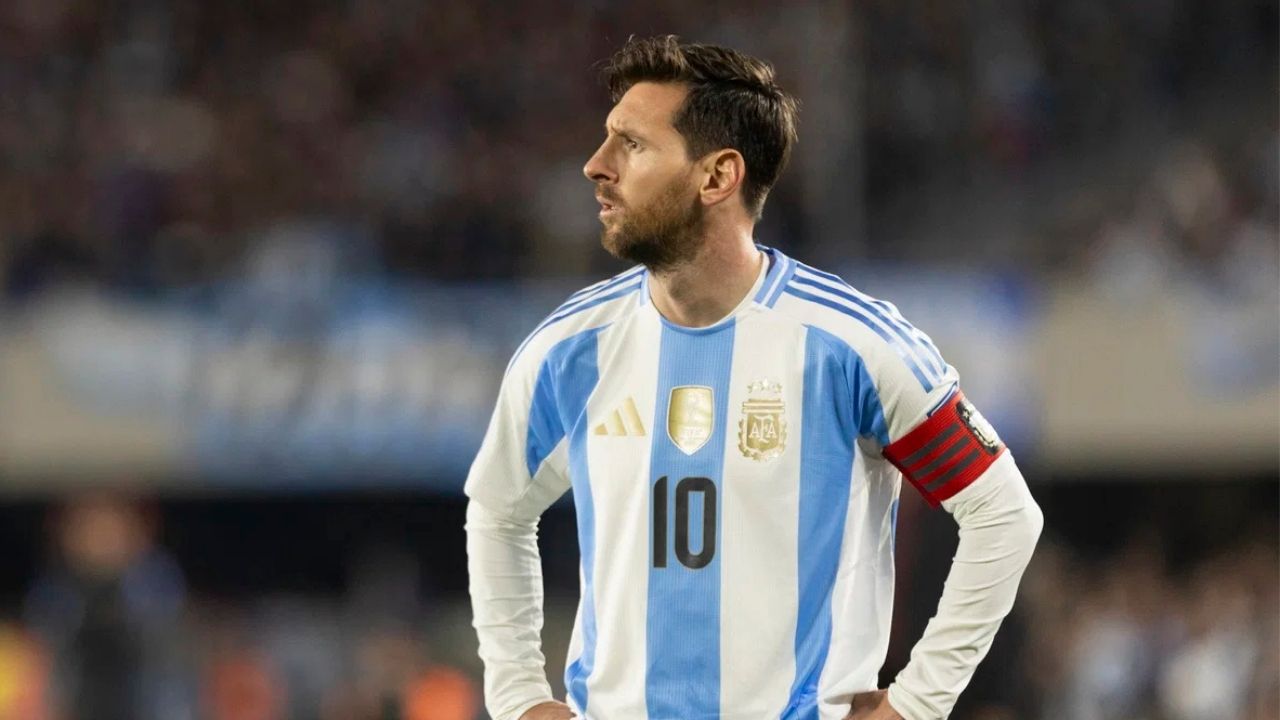
Lionel Messi’s relationship with the Argentine Football Association (AFA) seems to be heading towards a difficult period. The Inter Miami star helped Argentina win the 2022 FIFA World Cup. However, he has reportedly taken legal advice over the federation’s use of his name and image for commercial purposes. This latest issue has also brought two earlier disputes involving AFA president Claudio “Chiqui” Tapia back into the spotlight.
According to Argentine journalist Nicolás Wiñazki, Messi wants the AFA to stop using his image for business activities without his permission. On Nov. 16, A24 reported that Messi’s representatives were preparing a formal legal notice against the AFA leadership. Some reports say they have already sent the notice, while others say they are still preparing to send it. So its exact status remains unclear.
The dispute mainly involves two issues: a sponsorship deal with a beer company and a separate alleged breach of contract over Argentina’s international friendly matches.
One of the main reasons behind the reported dispute is Messi’s exclusive sponsorship deal with American beer brand, Michelob. The Argentine captain has a commercial partnership with the company and appears in its advertisements.
However, according to Wiñazki’s report on A24, an Argentine beer company that sponsors the national team used Messi’s image in an advertising campaign. The campaign also featured Argentina’s national team branding.
The problem was that Messi reportedly did not know about the campaign. His existing agreement with Michelob also gave the American brand exclusive rights in the beer category.
Wiñazki explained the situation on A24, saying, “Messi didn’t know about this. Who had allowed it? Claudio Tapia had authorised an Argentine beer sponsor to use Messi’s image when Messi had exclusivity with another beer brand in the United States.”
The campaign reportedly created problems between Messi’s representatives and his American sponsor. Michelob contacted Messi’s team and asked them to explain why a competing beer brand had used his image.
This made the matter more serious. Sponsorship deals often give companies exclusive rights in a particular product category. If another company uses the same athlete’s image to promote a competing product, it can affect the value of the original deal.
So, Messi’s reported objection is not just about the AFA using his photograph in an advertisement. He wants to know who has the right to use his image for business purposes and whether the federation can give those rights to a company without asking him first.
The beer sponsorship issue is not the only reported problem between Messi and Tapia. Another dispute involves Argentina’s Oct. 2025 friendly matches against Venezuela and Puerto Rico in the United States.
A Miami-based event promoter, VID Music Group, had signed an agreement with the AFA to organise and promote both matches. The agreement was worth around $7 million.
The deal reportedly included a condition that Messi had to play at least 30 minutes in each match. The only exceptions included an injury or other specific situations mentioned in the agreement.
However, Lionel Messi did not play in Argentina’s match against Venezuela on Oct. 10, 2025. Instead, he watched the game from a VIP suite at Hard Rock Stadium in Miami.
The next day, he played for Inter Miami against Atlanta United and scored twice. He then returned to Argentina’s team for its 6-0 win over Puerto Rico on October 14.
According to the Associated Press, VID Music Group claimed that Messi and the AFA had broken the agreement. The promoter also said Messi’s absence from the Venezuela match caused financial losses because his participation played a major role in the commercial value of the event.
The lawsuit named Messi, the AFA, and sports executive Julián Marcos Kapelán. However, these are allegations made by the event promoter. A court has not established that any of the parties committed wrongdoing.
When the Associated Press reported the case in April 2026, neither Lionel Messi nor the AFA had publicly responded to the allegations. In August, a US judge dismissed the claims against Messi.
For now, the latest report points to disagreement involving image rights, sponsorship deals and the organisation of Argentina’s friendly matches. Messi’s reported decision to take legal action could mark a major change in his relationship with the federation’s leadership.
After years of success together with Argentina, the two sides now face serious questions over their commercial relationship.
Will this remain a dispute over sponsorship and legal rights? Or could it lead to a bigger breakdown between Argentina’s biggest football star and its football federation?