
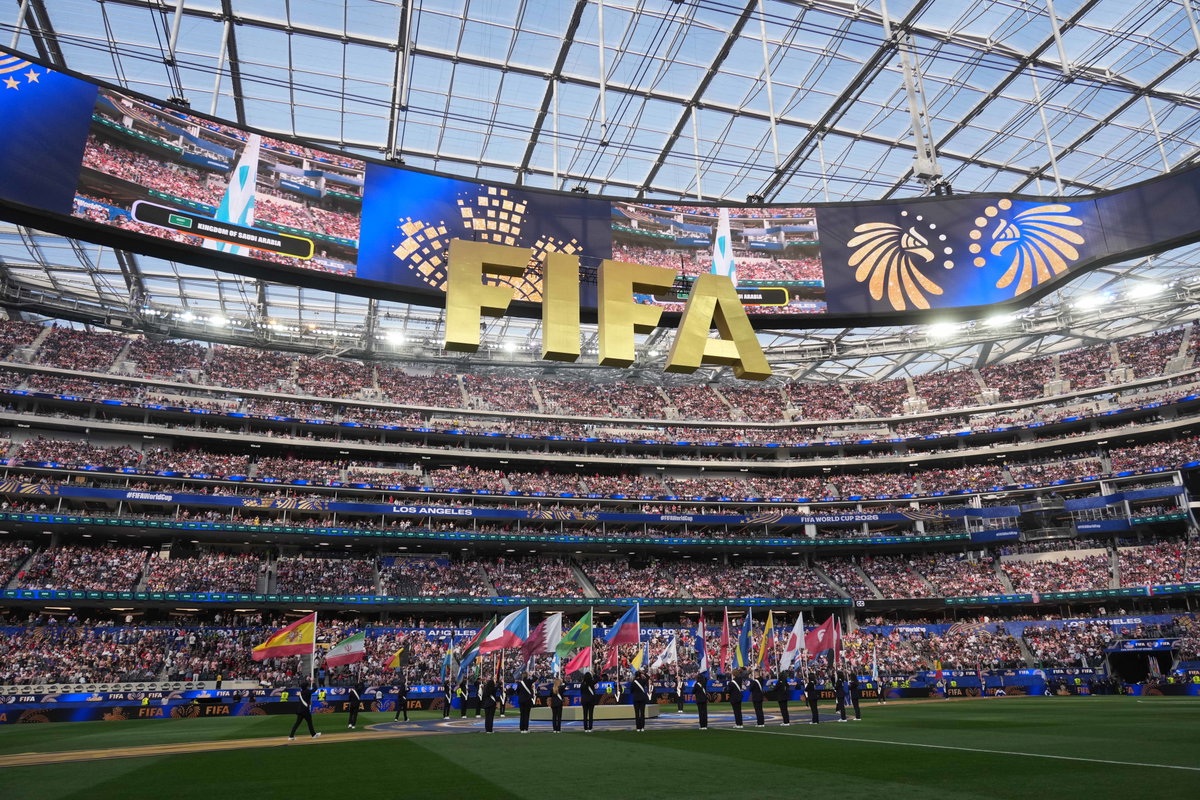
This year in the FIFA World Cup, there were plenty of moments that left fans arguing long after the final whistle. The same happened in England’s win over Norway, while Argentina also had to fight hard against Switzerland. Both quarterfinals featured intense action, controversial referee decisions, and VAR reviews that kept fans hooked. Now, let’s break down those moments.
Watch What’s Trending Now!
Game 1: England vs. Norway
England beat Norway 2-1 after extra time as Jude Bellingham scored both of England’s goals and helped the Three Lions reach the World Cup semifinals, where they will play Argentina.
Cable hit drama
England’s Jude Bellingham scored the equalizer just before halftime, but then Norway argued that the ball had hit a cable attached to one of the overhead TV cameras after goalkeeper Orjan Nyland took a goal kick. The ball appeared to touch the cable before falling back onto the field. England then made two passes, and Bellingham scored to make it 1-1.
After the goal, FIFA checked whether the ball had really hit the cable. In a statement, FIFA said it had “checked the data and no peak on the graph from the connected ball heartbeat sensor,” which meant the technology found no evidence that the ball touched the cable. Because of that, FIFA allowed Bellingham’s goal to stand.
This specific moment got a lot of hate from England fans, and even Erling Haaland’s father, Alf-Inge Haaland, strongly criticized the officiating.
“Saved by the referee,” Alf-Inge Haaland said on X. “Hope [England] win the WC [World Cup] now. But feel we got robbed today.”
He later added in another response, saying, “Well done, Bellingham and referee.”
Controversial goal decisions
- England went behind when Andreas Schjelderup scored for Norway in the 36th minute. Just before the goal, Harry Kane believed Patrick Berg had pushed or clipped him from behind while taking the ball away. Kane held his ankle and asked referee Clément Turpin to call a foul and cancel the goal. However, the referee did not think Berg had committed a foul and allowed play to continue. Norway kept attacking, and Schjelderup’s shot, which looked more like a cross, went in off the post to give Norway the lead.
- Then came another drama when Norway thought it had taken the lead again in 10 minutes after halftime when Torbjørn Heggem scored from a corner taken by Martin Ødegaard. The ball bounced off a few players before reaching Heggem, who kicked it into the net. The Norwegian players celebrated, but VAR checked the play before the goal. The replay showed that Erling Haaland had pushed Elliot Anderson to the ground before the corner was even taken. The VAR team asked referee Clément Turpin to review the incident. After watching the replay, Turpin ruled that Haaland had committed a foul, so the goal was canceled, and Norway did not get its second goal.
- During extra time, Jude Bellingham scored another goal to give England a 2-1 lead over Norway. A short time later, Djed Spence went down inside Norway’s penalty box, and England believed he had been fouled. The team expected the referee to award a penalty, which could have given England a chance to make the score 3-1. This time, referee Clément Turpin watched the incident again using VAR. After reviewing it, he decided no foul had happened, so he did not give England a penalty. Even without the penalty, England kept its 2-1 lead, won the match, and advanced to the FIFA World Cup semifinals.
The same intense moments took place in the Argentina Vs Switzerland game.
Game 2 Argentina vs. Switzerland
Argentina and Switzerland played a very close and exciting 2026 FIFA World Cup quarterfinal. The score was 1-1 after 90 minutes, even though Switzerland had only 10 players for much of the match. In extra time, Argentina scored two quick goals to win the game and reach the semifinals. Lionel Messi also had a difficult game. For the first time in this World Cup, he did not score a goal.
That said, there was a different incident which grabbed attention: Lionel Messi’s argument with the referee.
Lionel Messi got into a brief argument with referee Joao Pedro Pinheiro during the first half of the match. The moment happened just before Switzerland took a free kick. Messi was standing in Argentina’s defensive wall when referee Pinheiro told him to move farther back. Messi felt the referee disrespectfully spoke to him, so he immediately answered back.
“Speak to me properly,” Messi said. “Speak to me properly. Don’t disrespect me. Speak to me properly; I spoke to you properly.”
The fight was never about not moving back, but instead about how the referee spoke to him.
Breel Embolo: The Swiss player who got a red card
Breel Embolo went through one of the heartbreaking moments of the 2026 FIFA World Cup game against Argentina. The incident started in the 72nd minute when Embolo looked like he had been fouled by Argentina midfielder Leandro Paredes. The referee first believed Paredes had committed the foul and showed him a yellow card. But VAR asked the referee to watch the replay.
The replay showed that Embolo had already started falling before Paredes made contact, so the referee decided that Embolo had dived to try to win a free kick. Under FIFA’s new mistaken identity rule, referees can change a booking if they realize they punished the wrong player. After watching the replay, Joao Pinheiro took away Paredes’ yellow card and gave the yellow card to Embolo instead for diving.
Because Embolo had already received a yellow card earlier in the game for another foul, the second yellow automatically became a red card, forcing him to leave the match. Despite that, they gave Argentina a tough fight.
Argentina faced a tough battle against Switzerland
Even after going down to 10 players, Switzerland kept fighting and stopped Argentina from scoring until the 112th minute. Then, Julian Alvarez scored a brilliant long-range goal to give Argentina the lead. Nine minutes later, Lautaro Martinez scored another goal to secure a 3-1 win.
The loss ended Switzerland’s first quarterfinal appearance since 1954. The team came very close to reaching the World Cup semifinals for the first time in its history, but finished one win short.
In the first half, Switzerland attacked more than Argentina. The Swiss reached Argentina’s attacking area 29 times, while Argentina did it only 17 times. Switzerland also spent almost two minutes in that area, compared to only about 30 seconds for Argentina.
As the match stayed tied later on, Argentina became frustrated because it could not score again. Coach Lionel Scaloni decided to make his team more attacking. He brought on Nicolás González in the 78th minute. In the 85th minute, he sent on Lautaro Martínez and Gonzalo Montiel. At the start of extra time, Thiago Almada came into the game, and later Nicolás Otamendi replaced Cristian Romero. These changes gave Argentina more attacking options, and they ultimately won.
Both games ended with a lot of controversy.