
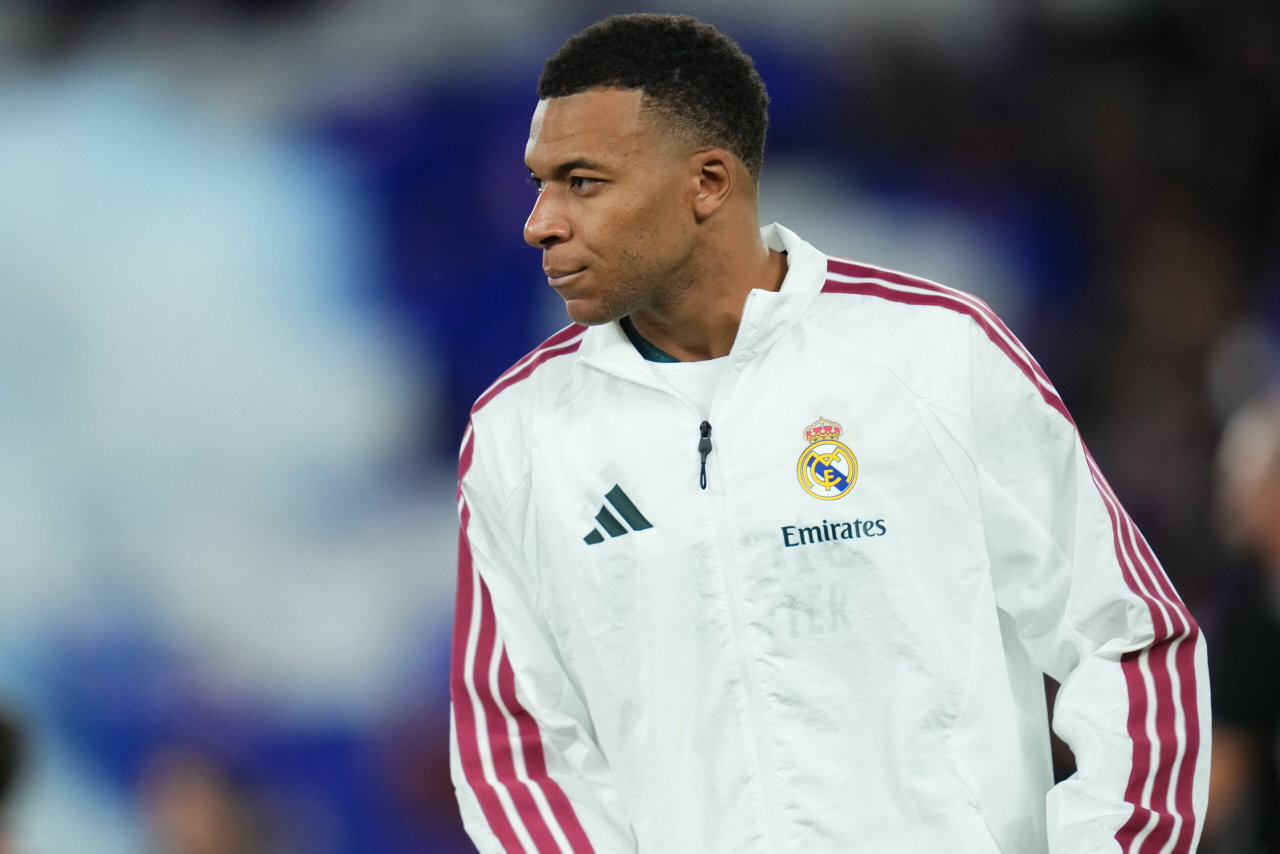
A joke that went too far has put Real Madrid’s relationship with China under pressure. After Kylian Mbappé’s remarks about a meme depicting him as Chinese leader Mao Zedong triggered a backlash, the Spanish giants have issued a public apology, hoping to repair the damage to a relationship that extends far beyond football.
In a statement posted on Wednesday, October 28, Real Madrid apologized to the Chinese people for any offense caused by its French forward’s comments. “Our club holds deep respect for China, its history, its culture, and its citizens, as well as for the millions of Chinese fans who feel affection and admiration for Real Madrid,” the club said. It also backed Mbappé’s earlier apology and reaffirmed its commitment to respect and understanding between cultures.
The statement came after the controversy escalated beyond social media. China Media Group (CMG), the state broadcaster responsible for LaLiga coverage, suspended broadcasts, while Chinese companies began cutting commercial ties with Mbappé. With the dispute threatening the league’s relationship with a major international market, Madrid’s apology marks an important step toward reconciliation. However, it remains unclear whether the gesture will be enough to reverse the measures already taken.
The controversy began with a clip from the French podcast The Bridge, in which Mbappé discussed a meme featuring his face superimposed on a political leader. The Real Madrid forward referred to the person in the image as “some guy – I think he’s a Chinese dictator.” The remark drew criticism because it was interpreted as a reference to Mao, who led China from 1949 until his death in 1976.
Mbappé subsequently acknowledged that his words had been poorly judged. “My comment was ill-judged, and I now understand that it hurt many people in China and in Chinese communities around the world,” he said in his apology. “I apologize to everyone my words have upset. This was absolutely not my intention.”
Yet the apology did not immediately settle the matter. CMG had demanded an appropriate public apology from Real Madrid before considering further discussions, rejecting earlier explanations that Mbappé had not intended to offend anyone. The broadcaster later confirmed that it had received the club’s statement, but it did not announce a resumption of LaLiga coverage.
As per LE MONDE’s Jordan Puille report, Real Madrid “had about 97 million fans in China.” This makes China its leading overseas market. Surely, this incident has now had a severe impact not only for the league but also for the club.
However, Chinese Foreign Ministry spokesperson Guo Jiakun also acknowledged Mbappé’s apology. “We take seriously the apology that the person has made,” he said, without indicating whether the government would support lifting the restrictions.
The response reflects how quickly a celebrity controversy can become a commercial problem in China. Dairy companies Mengniu and Shanghai Milkground Food Tech, along with beverage company Eastroc, announced that they were ending their partnerships with Mbappé. Reports also indicated that advertisements featuring the Frenchman had been removed from Chinese platforms, although the full extent of the restrictions remains unclear.
La Liga scrambles to protect its Chinese market
As the fallout grew, LaLiga moved to limit the damage. President Javier Tebas established a crisis unit and met Chinese ambassador Yao Jing to discuss the situation. Tebas also apologized publicly, stressing the importance of preserving the league’s long-standing relationship with Chinese supporters.
“Our commitment is to keep working together so that an individual episode does not harm the important advances achieved nor affect the millions of Chinese fans who follow our competitions,” Tebas said. He described China as a strategic partner for LaLiga and emphasized the need to move beyond the dispute.
The intervention was particularly significant given the strained relationship between Tebas and Real Madrid in recent years. Both sides have previously clashed over Spanish football’s leadership, but the potential financial consequences of the controversy have created a common concern. Losing access to Chinese audiences could hurt broadcast revenues, sponsorship opportunities, and the league’s wider commercial ambitions.
The situation has also raised questions for Mbappé’s sponsors. Swiss sportswear company On Holding, which signed the French star in September after his long association with Nike, welcomed his apology and reiterated its respect for China. The company’s exposure to the Chinese market makes the controversy particularly sensitive, although the long-term impact on its business remains uncertain.
For now, neither Madrid’s apology nor the earlier statements from Mbappé and Tebas have secured a confirmed return to normal broadcasting. Reports of restrictions on the forward’s presence on Chinese gaming platforms have added another dimension to the fallout, but the precise scope of those measures has not been independently established.
Real Madrid has made its position clear: the club wants to preserve its bond with Chinese fans and repair the damage caused by the remarks. Whether that commitment translates into restored broadcasts and renewed commercial partnerships will depend on what happens next. For Mbappé, meanwhile, the episode serves as a reminder that words spoken in jest can carry consequences far beyond the moment in which they are uttered.