
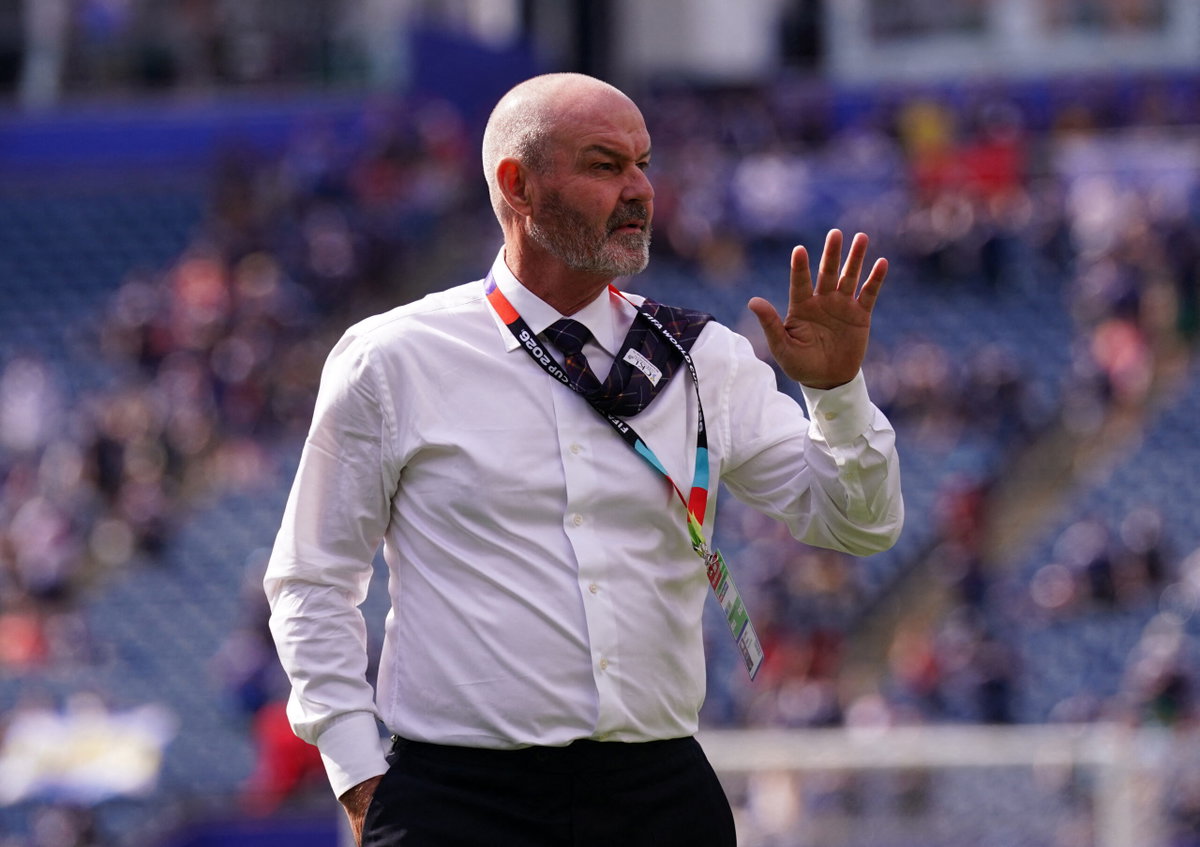
Scotland head coach Steve Clarke announced his decision to step down after Scotland’s elimination from the FIFA World Cup was confirmed following Croatia’s 2-1 win over Ghana on Saturday. Ghana’s defeat meant the remaining third-placed qualification spots slipped beyond Scotland’s reach, leaving Clarke’s side 11th in the ranking of third-placed teams and ending their tournament.
Watch What’s Trending Now!
The announcement marked a stunning turnaround. Clarke had signed a new four-year contract extension with the Scottish Football Association less than five weeks earlier, committing his future through 2030. But the coach of seven years, who ended Scotland’s long wait for appearances at major European and World tournaments, decided it was the right time to walk away.
The decision was also confirmed by the official account of the Scotland National Team on X. Clarke addressed the Scottish supporters in an open letter and expressed his immense pride in his achievements with the squad.
“The most emotional part of this goodbye is for my players, without whom we wouldn’t have had any of the memories that we’ve accumulated from 2019 until now. They deserve all the praise and adulation that they receive, and it was truly an honour to be called their Gaffer. Thanks for having me, and good luck to my successor,” a part of his letter read.


Scotland Men’s Head Coach Steve Clarke has stepped down from his role. Our most successful National Team Head Coach has called time on his seven years in charge following our participation at the FIFA World Cup 2026.
Scotland opened their World Cup campaign positively with a 1-0 win against Haiti. Despite not being at their fluent best, they got the job done. But a 1-0 defeat to Morocco in the second game put them in an awkward position. They needed to either draw or win against a strong Brazilian team. The South American team put them to the sword by inflicting a 3-0 defeat.
It left Scotland with just three points and a goal difference of -3 as they finished third in Group C. There was still hope, however, because the eight best third-placed teams across the tournament advanced to the knockout stage.
Scotland’s fate then depended on results elsewhere, including the final Group D fixture between Croatia and Ghana. Croatia’s 2-1 victory meant Ghana stayed on three points, but other third-placed teams had already reached four points or held superior goal differences. Senegal, which claimed the final qualifying spot among the third-placed teams, also finished on three points but with a significantly better goal difference of +2, leaving Scotland outside the cutoff in 11th place.
Scotland ultimately ranked 11th in the mini-table and faced a group stage exit on their return to the World Cup after 28 years.
At the time of signing an extension, Clarke said that it would provide “certainty ahead of the World Cup” while helping lay “foundations for the long term.” Despite that long-term commitment, Scotland’s early World Cup exit prompted the 61-year-old to reconsider his future and bring his tenure to an end.
Clarke ended Scotland’s major tournament drought
After a poor start to the Euro 2020 qualifying campaign, Scotland decided to part ways with Alex McLeish. Steve Clarke was hired midway through the campaign in 2019. After guiding them to a playoff position, Clarke worked wonders in the playoffs. His team held their nerve in two consecutive penalty shootouts to beat Israel and Serbia and qualify for Euro 2020.
It marked their first major tournament appearance since their 1998 World Cup qualification. It was also their first Euro finals appearance since 1996. Clarke made qualification a norm when his team finished as the runners-up in the qualification group and made it to Euro 2024.
His biggest challenge was guiding them to the World Cup. Placed in Group C alongside Denmark, Greece, and Belarus in a strong group, Scotland played their best soccer in years. With 13 points, they finished as group winners and returned to the biggest stage in the world after nearly three decades.
There was genuine optimism heading into the tournament after Scotland rounded off their preparations with an emphatic 4-0 victory over Bolivia in their final warm-up match. Clarke even described it as a performance in which he got “everything I asked for,” while the squad entered the World Cup believing it could finally make history by reaching the knockout rounds.
However, despite achieving marvelous qualifications in his seven-year tenure, his teams massively underperformed at the finals. They managed to win only one game across those three major tournaments. Having faced all disappointing group-stage exits, Clarke believed it was the right time for him to step down and let a new coach build on his good work.
“While we are all disappointed to have exited the World Cup at the group stage, we must not lose sight of the undeniable progress made during Steve’s seven years in charge,” Ian Maxwell, Scottish FA Chief Executive, added.
The Scottish FA will now begin its search for a new head coach tasked with building on Clarke’s work, one that restored Scotland as a regular qualifier for major tournaments, but ultimately fell short of delivering a breakthrough on the biggest stage.