
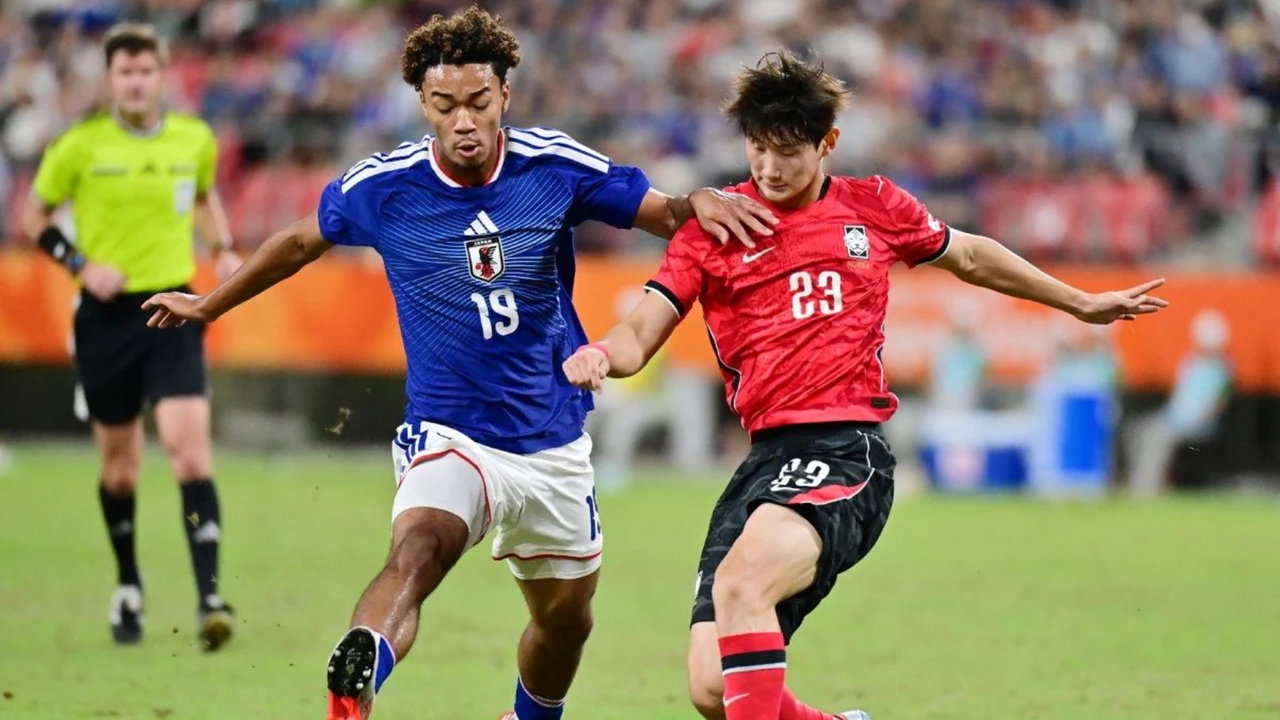
South Korea’s men’s football team had every reason to celebrate after beating Japan 1-0 in the 2026 Asian Games final and winning its fourth straight gold medal. The win made 20 of the 23 players eligible for South Korea’s alternative military-service system. But the celebrations soon caused backlash after some players made comments and gestures about the benefit. Now, the controversy has reached the government, with lawmakers and officials considering changes to the military-service benefit for Asian Games gold medalists.
Watch What’s Trending Now!
On October 7, People Power Party lawmaker Joo Ho-young proposed an amendment to the Military Service Act that would abolish the military-service benefit specifically for Asian Games gold medalists. His proposal came as calls grew for a broader overhaul of the system, with some lawmakers pushing for the special arrangement to be scrapped altogether.
People Power Party lawmaker Lim Jong-deuk called for the entire system to be eliminated, saying, “Abolish the military exemption system entirely. Scrap it all, and if there are necessary elements, handle them through a different system.”
Fellow People Power Party lawmaker Cho Eun-hee also questioned whether the current system is fair to ordinary South Korean men. “Young men have their studies and careers interrupted for a year and a half. Yet professional athletes continue their careers with high salaries and even receive military exemption benefits. Is this really fair?” she said.
The move comes after Defense Minister Kang Shin-chul said the ministry’s goal is to “gradually reduce” the system and “ultimately abolish” it. The Defense Ministry had already signaled its plans a day earlier. During a regular press briefing, ministry spokesperson Chung Binna said, “Ultimately, we have plans to cut back or scrap the supplementary service, including one designed for artists and athletes, and reflect it in the basic outline for defense reforms.”
The ministry will take into account fairness for those who are required to serve in the military, the number of people who are not available for military service, and public opinion in determining a future course of action, Chung said.
The policy debate followed a backlash involving several members of South Korea’s national men’s football team, whose comments were interpreted by critics as placing the military-service benefit ahead of the gold medal itself. On October 3, 2026, South Korea’s men’s football team beat Japan 1-0 in the Aichi-Nagoya Asian Games final to win its fourth consecutive Asian Games football gold medal. The result also had a major personal impact on the squad, with 20 of the 23 players becoming eligible for South Korea’s alternative military-service system.
South Korea requires most able-bodied men to complete mandatory military service, with normal service generally lasting between 18 and 21 months depending on the type of service. However, certain elite athletes and artists can qualify for a supplementary-service arrangement. Under the current rules, athletes who win an Asian Games gold medal or an Olympic medal can receive military-service benefits.
The benefit does not mean eligible athletes have no military-related obligations. Instead of ordinary active-duty service, they enter the supplementary-service system, which includes about three weeks of basic military training and 544 hours of community service over 34 months. For the football players, winning the Asian Games gold meant they would not have to complete the normal active-duty service that otherwise would have applied to them.
The issue first drew major attention when captain Lee Ki-hyuk made a comment about military service while celebrating the victory. Asked about the subject, Lee said, “I’m not going to the military.” Lee later explained that he had been joking with teammates before the final about having to enlist soon if they failed to win the tournament.
He apologized the following day, saying he had been caught up in the emotion of the victory and should have been more careful with his words. He also apologized to people currently serving in the military. However, the controversy did not end with Lee’s apology.
The backlash grows after more player comments
Another player, Yang Min-hyuk, also faced criticism for his comments after the final. When asked about receiving the medal, he said, “Honestly, I don’t think medals or trophies really mattered. What we are truly rewarded with is the exemption from military service, so I think I played with that one thing in mind.” His comments sparked further backlash, with critics accusing him of treating the gold medal as a way to avoid military service.
However, he later apologized and clarified that the military-service benefit was only one of several motivations for him to perform well. The situation became even more controversial when Park Seung-soo posted a photograph on social media wearing a cap associated with people who have completed military service. Because Park had just become eligible for the military-service benefit after winning the Asian Games gold, critics interpreted the post as a celebration of avoiding regular military duty. He later deleted the post and apologized.
Lee, Yang and Park’s actions sparked a far broader discussion as to whether top-level sportspersons should be entitled to special military-service benefits for their achievements.
It is a sensitive topic in South Korea because military service is a legal obligation for most able-bodied men. The debate has also brought comparisons with BTS into the discussion. Members of the globally successful South Korean group have been subject to the country’s military-service requirements, prompting some people to question why certain athletes can receive benefits based on medals while internationally recognized entertainers remain subject to ordinary military obligations.
For now, the existing system remains in place. The government has not removed the benefit from the players who qualified under the current rules.