
The 2026 World Cup drew as much attention for its controversy as for its expanded 48-team format. Early issues surfaced with the visa denial of Somali referee Omar Artan, followed by travel and training restrictions that affected Iran’s national team. As the tournament progressed, these developments, both off-field and on-field, continued to shape the conversation even after the final whistle.
Watch What’s Trending Now!
Folarin Balogun’s red card controversy erupts at the World Cup
One of the most highlighted controversies of this year’s World Cup came after the controversy surrounding a red card shown to USMNT forward Folarin Balogun during the match against Bosnia and Herzegovina.
The 25-year-old American received a red card in the second half after his cleat caught the ankle of Leeds United centre-back Tarik Muharemović. The on-field challenge was not called immediately, but VAR reviewed the incident and confirmed the immediate dismissal.
The red card not only ended the AS Monaco striker’s night early but also meant he would miss the USMNT’s R16 clash against Belgium, as the suspension could not be appealed at that time.
Reuters
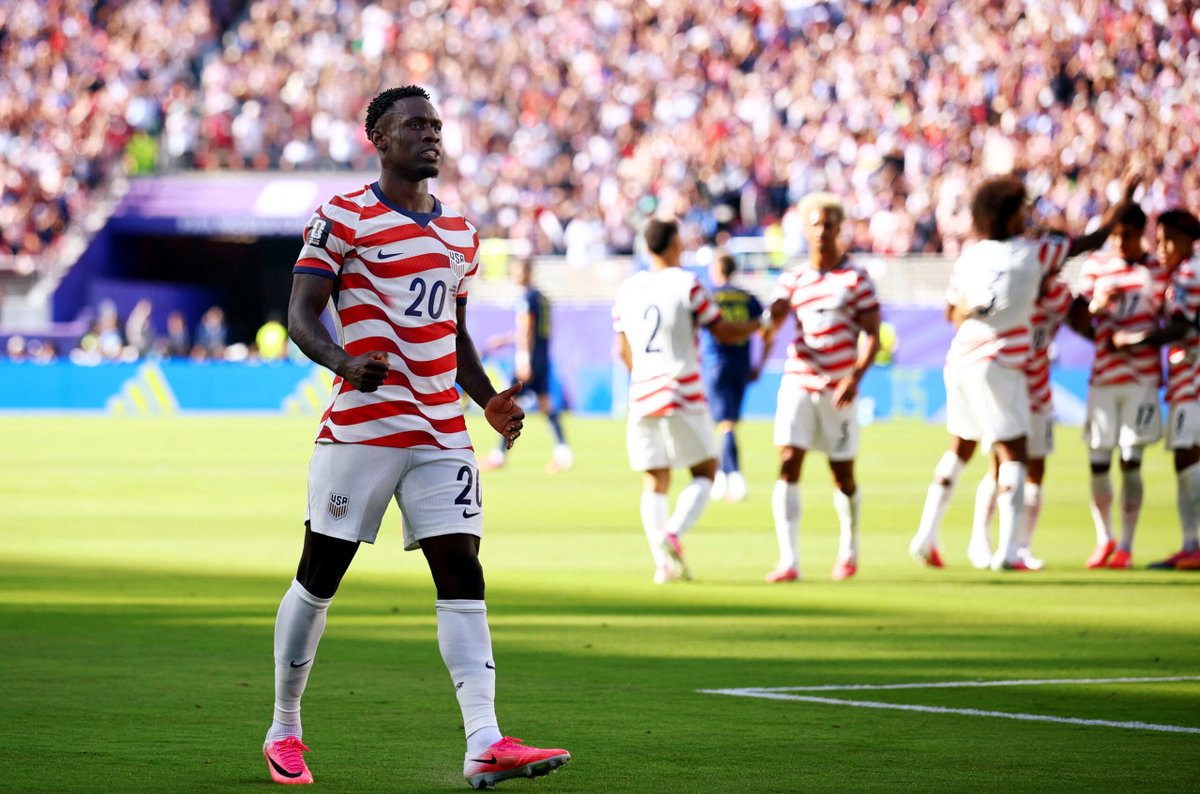
July 1, 2026; Santa Clara, California, U.S.; Folarin Balogun of the U.S. celebrates scoring their first goal. Mandatory Credit: Phil Noble-Reuters via Imagn Images
Yet, everything changed just a day before the Belgium match in Seattle. His one-game suspension was suddenly overturned, making the American striker eligible to play in the knockout fixture.
The move also raised serious questions both outside and inside the USMNT camp. Many fans and pundits wondered why the punishment had been reversed so suddenly.
The head coach of the USMNT, Mauricio Pochettino, defended the outcome.
However, in a White House press conference, President Donald Trump later claimed credit for the decision. The president said he had called the current FIFA president, Gianni Infantino, and asked for a review of the suspension.
The opposition team for the R16 clash, Belgium, reacted strongly, saying the soccer organisation was “astonished” by FIFA’s decision. The country’s appeal was denied just hours before the match, and the US striker was named in the starting lineup.
In the end, the controversy made little difference in the R16 clash. Belgium dominated the match and secured a 4-1 victory, keeping Balogun quiet from the opening minutes. But it wasn’t for long.
“My initial reaction was I was happy to be back in the team, but when I kind of started to reflect,” he said during the CBS This Morning show. “I knew it was going to cause a lot of controversy. And I could almost see within my teammates a bit of nerves because it’s something that is so unique.
“But the closer we got to the game, I just tried to focus as best as I could, but it was difficult. A lot of outside noise, and that’s hard to avoid.”
On the other hand, as the tournament progressed, the focus moved from individual incidents to on-field decision-making, where the use of technology, intended to support accuracy, at times led to confusion.
VAR controversies have plagued the 2026 FIFA World Cup
Video Assistant Referee (VAR) was introduced to make soccer fairer by helping on-field officials review difficult decisions. However, this FIFA World Cup has seen several controversial VAR decisions that sparked debate.
One of the major incidents occurred during the R16 match between Argentina and Egypt. The Mohamed Salah-led team was leading 1-0 when Mostafa Ziko put a ball in the net in the 58th minute to double Egypt’s advantage. But instead of confirming the goal, VAR suddenly recommended an on-field review.
On the field, the referee looked at an earlier incident involving Egypt’s Marwan Attia stepping on Argentine centre-back Lisandro Martínez’s foot. The contact happened 17 seconds before the goal.
However, after reviewing the footage, the on-field referee ruled out Egypt’s second goal, causing chaos on the field. Lionel Messi’s Argentina then staged an impressive comeback and won the match 3-2.
The VAR decision quickly became a major talking point of the World Cup. The major question was whether the foot-stepping incident on Martínez was still connected to the goal, or if play had moved on enough for it to be considered finished.
Another VAR controversy came during Norway’s QF match against England.
The 27-year-old defender Torbjørn Heggem appeared to give Norway the lead in the 55th minute by scoring from a rebound after a corner kick. But replays showed that their talisman Erling Haaland had extended both arms and pushed England’s midfielder Elliot Anderson to the ground before the corner kick.
Although the ball was not yet in open play when the push happened, the referee ruled that it had a direct causal link to the goal. The VAR team then reviewed the goal and later dismissed it, becoming one of the tournament’s most debated VAR incidents.
Even in the final of the 2026 FIFA World Cup, VAR found itself at the center of another controversy when Spanish winger Nico Williams’ opening goal was ruled out after a VAR review.
The Athletic Club forward had given his side what looked like a crucial lead after firing the ball into the back of the net. But the joy lasted only a few moments before it was cut short.
VAR stepped in, and the on-field referee disallowed the goal after ruling that Spanish striker Mikel Merino had fouled Argentine centre-back Nicolas Otamendi during the build-up.
Egypt criticized the officiating after the controversial Argentina game
The R16 game between Argentina and Egypt became one of the tournament’s biggest controversies after Messi’s side defeated Egypt. The Egyptian Football Association (EFA) strongly criticised the refereeing, as well as the VAR decisions, after Egypt’s heartbreaking loss. Egypt looked set to produce one of the biggest upsets of the 2026 World Cup, having built a 2-0 lead over the defending champions with only 11 minutes left to play.
However, the match took a stunning turn. La Albiceleste scored three late goals to complete an incredible comeback and eliminate Salah’s team from the competition. Egypt’s frustration grew even deeper in the closing stages of the R16 match, when the players appealed for a definite penalty after defensive midfielder Hamdy Fathy went down under a challenge in the Argentine box, but Francois Letexier waved play on.
Moments later, Argentina launched another counter-attack and scored the winning goal in the 92nd minute, changing the entire outcome of the match.
After the match ended, EFA President Hany Abo Rida submitted an official complaint against the on-field French referee Francois Letexier and his assistants.
“Hany Abou Rida, president of the Egyptian football federation, filed a complaint with FIFA, demanding an investigation into the French referee Francois Letexier after the serious refereeing mistakes committed by the team of referees and double standards, which caused the Egypt team to lose the match and leave the World Cup,” the EFA statement read.
Simon Chadwick, professor of Afro-Eurasian sport at Shanghai, also shared his views with Al Jazeera.
“A sense of injustice was induced by the VAR decision,” he explained. This technology was supposed to minimise doubt and bring consistency. Instead, its use during this match had significant cognitive and behavioural effects.”
For many fans, the Argentina-Egypt clash became a reference point for how easily a single decision could alter the narrative of a World Cup knockout tie.
Hydration breaks and the controversy surrounding them
The three-minute stoppages in the middle of each half quickly became one of the tournament’s most debated additions, especially as they also created extra advertising opportunities for broadcast channels.
From the opening match, many fans inside stadiums responded with loud boos, feeling the breaks disrupted the natural flow of the game. Ståle Solbakken, the Norwegian coach, openly criticised the idea, describing it as “unnecessary.”
The departing France manager, Didier Deschamps, also questioned the new format, citing that the stoppages split the matches into “almost four quarters.” Netherlands and Liverpool Soccer Club captain Virgil Van Dijk admitted he was not a huge fan of the commercial breaks on television.
Hydration or cooling breaks have been a contentious topic in past FIFA World Cups, especially when they were first formally used in extreme heat. At the 2014 World Cup in Brazil, referees paused play in matches such as the Netherlands vs Mexico R16 tie when temperatures and humidity crossed agreed thresholds, prompting debate over momentum and tactical advantage as much as player safety.
In 2018 and 2022, similar breaks appeared more selectively and were framed mainly as medical precautions. Even then, some purists felt they disrupted the traditional flow of the game, while coaches increasingly treated them as mini timeouts.
However, opinions among fans and pundits began to shift slightly, especially in matches played in hotter conditions, where the cooling breaks appeared more clearly linked to player welfare and recovery.
Controversy surrounding the German elimination from the World Cup
The controversy surrounding the 4-time World Cup winner Germany’s elimination became one of the biggest stories of the World Cup’s early knockout stage.
Germany’s campaign ended heartbreakingly after a 1-1 draw against South American side Paraguay in the R32. Paraguay eventually won the penalty shootout 4-3 to knock the European giants out of the tournament.
The biggest turning point came in extra time of the game. German defender Jonathan Tah appeared to have scored the winning goal with a header before the on-field referee overturned it after a VAR review.
The VAR officials ruled that German and Borussia Dortmund centre-back Waldemar Anton had fouled the Paraguay goalkeeper before the goal.
Germany soccer legend and current player for Vancouver Whitecaps FC, Thomas Müller, strongly criticised VAR’s decision.
“I honestly don’t know what VAR is looking at anymore,” Müller shared with Magenta TV. “What a call is that? The goalkeeper must be the luckiest player on the pitch because, from everything I’ve seen, Germany have scored a perfectly legitimate goal.
“We, the Germans, feel used and cheated. This is wrong. This is daylight robbery on the biggest stage in football. If that’s a foul, then football has completely lost its consistency because we’ve seen far stronger challenges allowed all tournament.”
FIFA rejects request to wear black armbands for France
Another shocking 2026 FIFA World Cup controversy emerged after the organisation refused to let all the France players wear black armbands during their match against Norway. The initial request was made to honour the departing coach Didier Deschamps’ mother, who passed away during the group stage matches.
The French Football Federation (FFF) had formally asked FIFA for permission to wear black armbands during France’s final group-stage match at Gillette Stadium. However, FIFA reportedly rejected the request.
The FFF also misunderstood the purpose of the minute’s silence before the last group-stage match. Officials of the game initially believed it was being held in memory of Ginette Deschamps. They later learned that the tribute on the field was actually dedicated to the victims of the Venezuela earthquake last month.
Ugly brawl erupts during the final showdown in NY
The final of the FIFA World Cup 2026 did not end the way many expected. The defending champions managed just 2 shots, both coming deep into the second half of extra time. By then, Argentina were already trailing 1-0.
The situation became even more difficult after Argentine midfielder Enzo Fernández was sent off. He received two yellow cards, reducing one half of yesterday’s finalists to 10 men for the closing stages of the match.
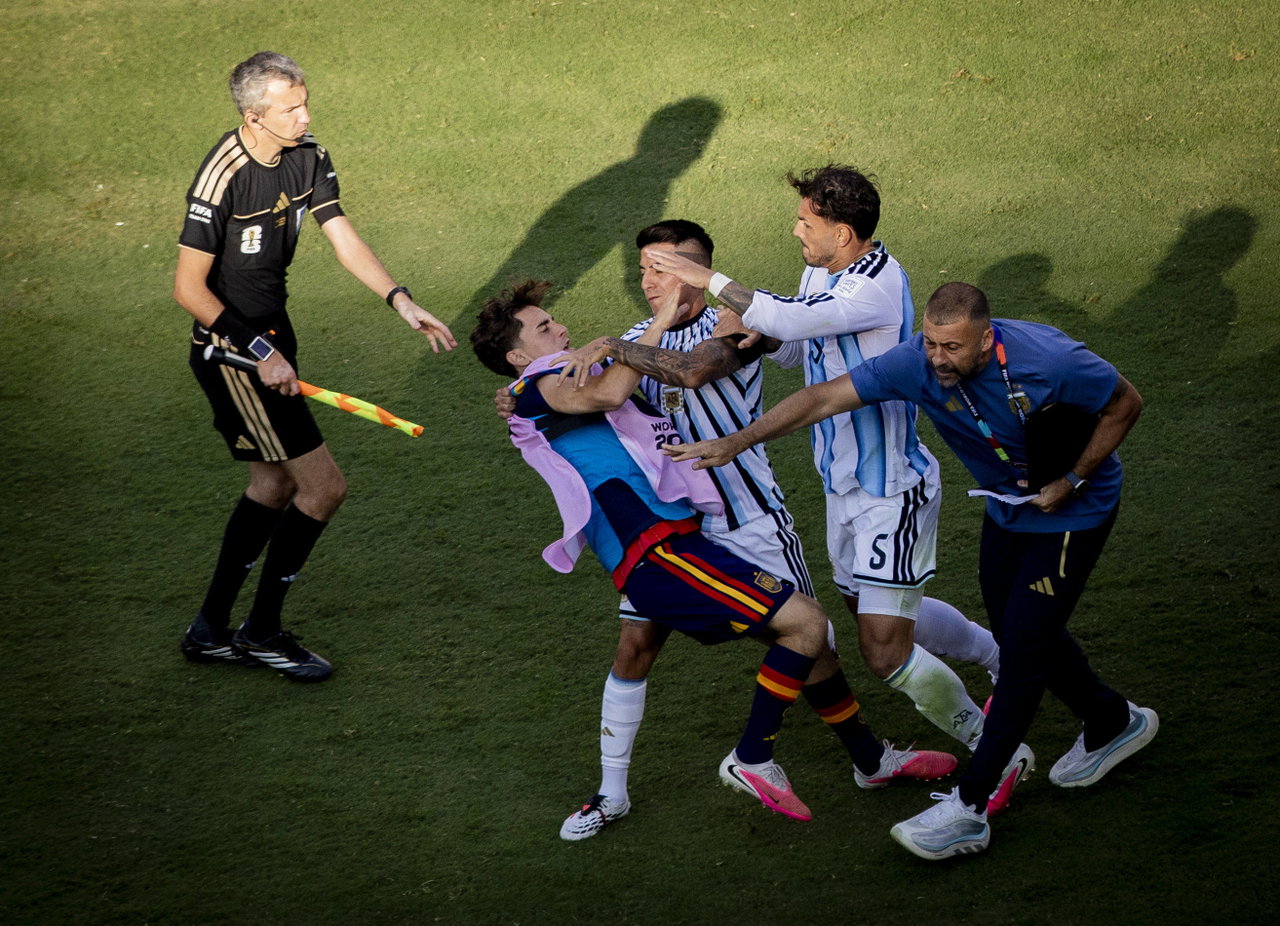
Tempers quickly boiled over once the match ended. Atlético Madrid left-back Nahuel Molina, defensive midfielder Leandro Paredes, and attacking midfielder Thiago Almada became involved in a shocking mass brawl, with players from both sides getting physical.
Molina drew particular attention for all the wrong reasons as he seemingly punched the Spanish captain, Rodri, kicking off the chaotic scenes, making an ugly ending even worse.
The final whistle crowned Spain champions in what was likely Lionel Messi’s last World Cup campaign. Fans will have to wait another four years for the next chapter in world soccer.