
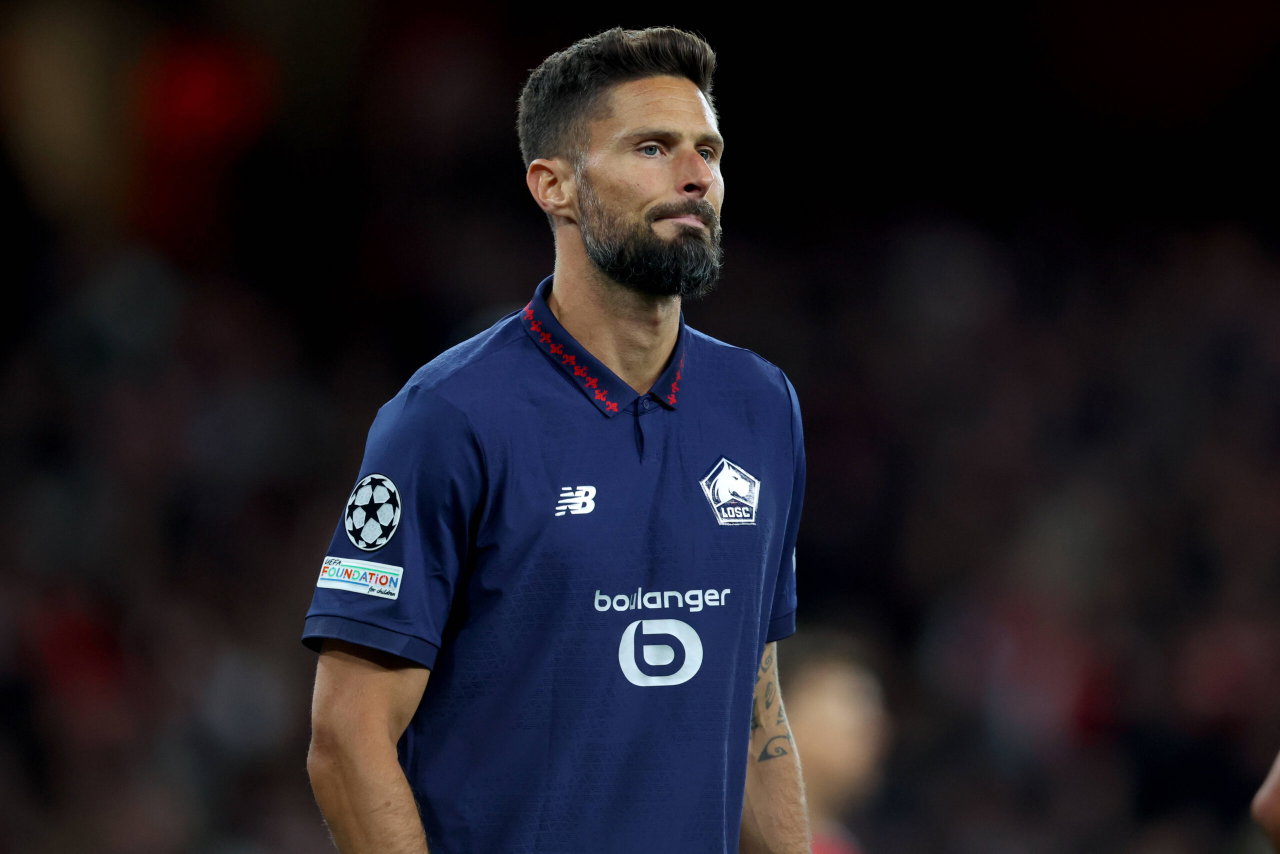
Olivier Giroud wanted a new challenge when he crossed the Atlantic. But his brief MLS adventure left him longing for something he could not quite find in Los Angeles: the atmosphere of European football. His blunt assessment of American soccer has now sparked criticism, especially as the sport continues to build a passionate following across the country.
Watch What’s Trending Now!
The French World Cup winner spent the 2024 and 2025 seasons with Los Angeles FC before returning to France to join Lille. While his time in California brought silverware, it never quite delivered the footballing experience he wanted. Speaking to Ligue 1+, Giroud admitted that the American game did not suit him.
“On the football front, it wasn’t really for me,” he said. “I missed this passion, this fervor, these boiling stadiums of Europe, and the competition.” Then came the remark that drew even more attention. “For me, the United States is not a football country,” Giroud added. His remarks come as the U.S. soccer landscape includes around 4 million registered players.
For a player who has experienced some of Europe’s biggest football stages, the comments offer an honest explanation for his departure. But they also risk overlooking how far the sport has come in a country where soccer continues to attract new fans.
Giroud arrived at LAFC in the summer of 2024 after leaving AC Milan, reuniting with former France teammate Hugo Lloris. His excitement was evident when he announced the move, expressing his eagerness to play before the club’s supporters, known as the 3252.
The striker eventually helped LAFC lift the 2024 U.S. Open Cup, scoring in the final against Sporting Kansas City. He also found the net in the Leagues Cup final, although LAFC finished as runners-up. Those moments showed that his American stint was not without memorable achievements.
However, his overall return proved modest. Giroud scored five goals in 38 appearances, and the club mutually agreed to part ways with him in June 2025. He subsequently joined Lille, seeking a fresh challenge in familiar surroundings.
But after seeing his recent comments, a fan stated, “We didn’t enjoy Giroud in MLS. He seemed to lack the passion we want from our players.”
His disappointment appears to have centered less on the club’s supporters than on the broader playing environment. LAFC has built a reputation for an energetic matchday atmosphere, making Giroud’s comments particularly striking. A stadium can be loud and its fans deeply invested, yet a player may still prefer the competitive culture and traditions of another league.
That distinction matters. Giroud described his own experience, but his sweeping conclusion about an entire country has inevitably invited disagreement. Another fan wrote, “He’s a sh– player anyways … we don’t claim him.”
Is America really not a soccer country? Well, the timing of Giroud’s comments makes the debate even more interesting, as soccer has been gaining ground in the United States, with the 2026 FIFA World Cup bringing unprecedented attention to the sport.
Data from Ampere Analysis, published by The Economist earlier this year, placed soccer third among America’s most popular sports, with a 10% share of fans. American football remained first at 36%, followed by basketball at 17%, while baseball stood at 9%.
Those figures show that soccer still trails the country’s established sporting giants. Yet they also challenge the suggestion that it has no meaningful place in American sporting culture.
Reacting to Giroud’s comments, another fan wrote, “Dude is pi–ed because he sucked in MLS.”
If we take a deeper dive into the popularity of the sport in the US, the younger generation offers another encouraging sign. A 2024 Aspen Institute study found that children aged 6 to 17 showed a stronger preference for soccer than American football, while basketball, baseball, and soccer ranked among the most popular sports for younger participants.
More recent viewing figures suggest that interest is translating into a larger audience. Nielsen data released in October 2026 showed that the number of Americans identifying as soccer fans rose from 66.8 million in July 2025 to 75.2 million in July 2026, a 13% increase. MLS fandom also grew by 28% since 2022.
The momentum has extended beyond the domestic league. English Premier League viewership among U.S. adults aged 18–34 increased by 30%, while LaLiga viewership rose 42% year over year. The World Cup has helped accelerate that growth, but the sport’s development began well before the tournament.
But Giroud’s contrasting comments led a fan to label him “Crybaby.”
Giroud is now back in France, where he can pursue the atmosphere and intensity he missed. The veteran has scored once in his first five Ligue 1 appearances for Lille this season, and he will hope to contribute further as the campaign progresses.
His return does not make his American experience a failure. He won a trophy, experienced a different football culture, and learned that the MLS environment was not the right fit for him at this stage of his career.
But the distinction between personal preference and a national verdict remains central to the backlash. America may not yet match Europe’s deep-rooted football traditions, and soccer still competes with sports that have dominated the country for generations. That does not mean its supporters lack passion or that its audience is standing still. Another fan wrote, “He was not enough for LAFC and MLS.”
Giroud has every right to prefer Europe’s packed stadiums and familiar rivalries. Whether the United States qualifies as a football country, however, is a much bigger question than one player’s experience in Los Angeles can settle.