
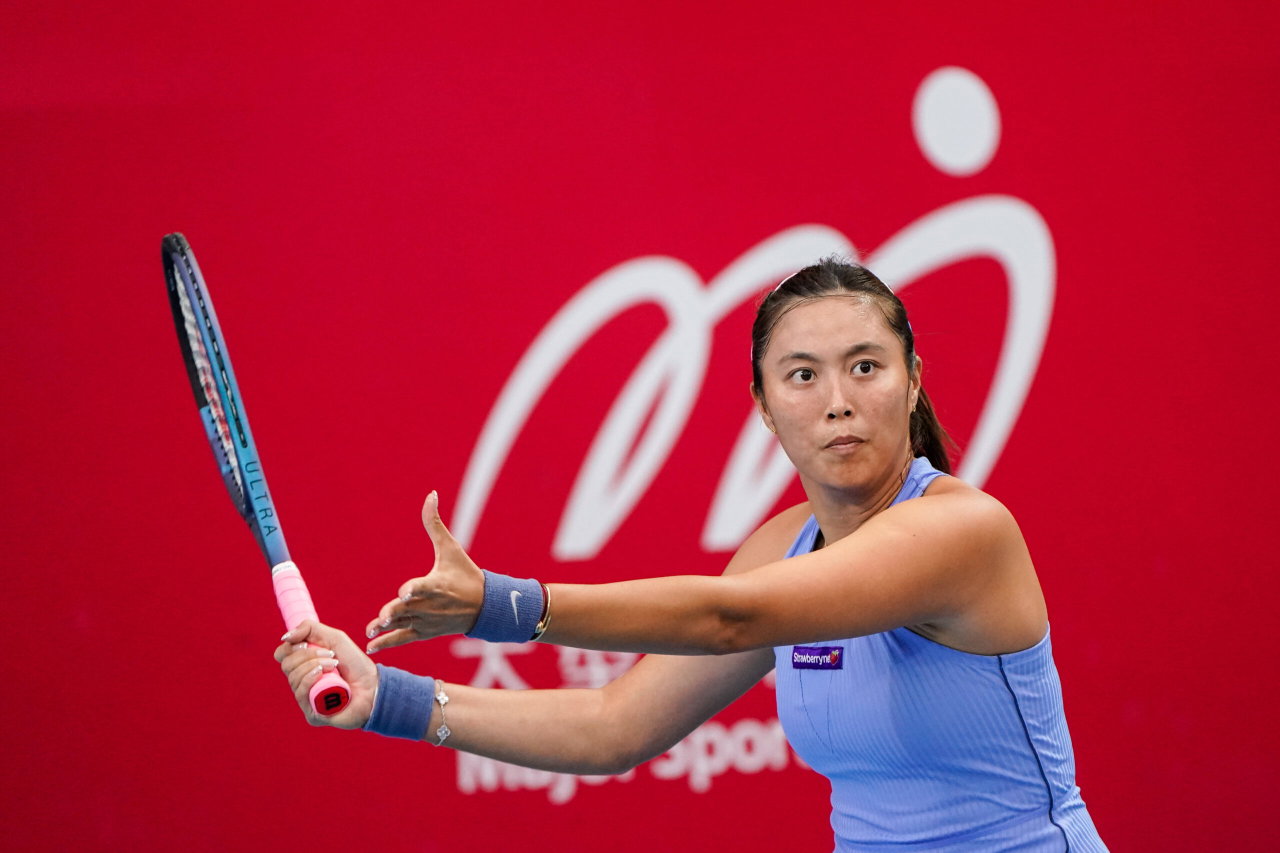
Let bygones be bygones- Easier said than done, especially when it’s a decade-long rivalry between compatriots playing professional tennis. Even so, Taiwanese pro Chan Hao-Ching attempted to mend fences with her on-and-off-court rival, Hsieh Su-wei, after she lost the women’s doubles final at the 2026 Asian Games. However, Hsieh was not in the mood to accept Chan’s handshake at the net, after which both had some choice words for each other.
Watch What’s Trending Now!
“At the US Open, I didn’t shake her hand, and that’s because in previous times I didn’t get any response and I felt that there was no point in sticking my warm face to a cold b**t,” said Chan to Reuters. “But today, I felt this is a match for (Taiwan). Before the match, I decided that I would stretch out my hand after the match. But I still didn’t get to shake her hand.”
It was a great day for Taiwanese tennis as both women’s doubles teams in the Asian Games final were from their contingent. While Tsieh partnered with Liang En-shuo, Chan had Wu Fang-hsien by her side, with the 33-year-old being the defending gold medallist at the Games. The match was close, with the pairs splitting the first two sets, and it went into a ten-point tiebreak.
Tsieh and Liang were the better players under pressure, winning the tiebreak 105 to clinch the gold for their country. However, when it came to the handshakes, Chan had her hand extended when coming towards Hsieh, but a cold snub was all that the latter offered. Once Chan had made her disappointment with the handshake snub known, Hsieh had a commensurate retort to her compatriot’s comments.
“It’s important to respect your opponents on court,” Tsieh said to Reuters. “If my opponent doesn’t respect me, what’s there to say? I wouldn’t feel like shaking hands, that’s it.”
There has been no love lost between the two Taiwanese players, as was evident during the US Open. Back then, the two met in the third-round doubles action, with Chan partnering with Maya Joint and Tsieh partnering with Jelena Ostapenko. The match was heated as the team of Tsieh and Ostapenko complained to the chair umpire about heckling from the Chan camp, who were sitting in the stands.
Just like the Asian Games final, Tsieh had the last laugh on the court, winning the match. It was not much of a surprise that Tsieh and Chan did not shake hands, even though their doubles partners had completed the formalities. Ostapenko too joined in on the act, shouting at Chan’s box after she and Tsieh had closed out the victory.
The feud between the two top Taiwanese players reportedly began a decade ago, had serious implications during the Olympic Games in 2016, and, given the recent incidents, is still very much alive in 2026, even if it looks like Chan is prepared to extend an olive branch.
The Feud Between Chan Hao-Ching and Tsieh Su-wei Is Nowhere Close to Being Over
Both Chan and Tsieh are quite determined to keep their feud going on, even though the former has attempted to reconcile. Offering her hand for a customary handshake at the net after the Asian Games final was a significant gesture from Chan, who also had words of appreciation for her countrywoman.
“As for Su Wei, I don’t need to say anything about her skills, she is definitely a top-notch player, and the most important part of the game after the match,” said Chan on her Instagram post. “I respect the Chinese team and you, so no matter what the result is, no matter what happens, I tell myself to reach out, but unfortunately, I didn’t show the proper tennis etiquette, but I still wish you all the best in your future competitions.”
The feud began a decade ago with both players and their camps hurling accusations against each other. Tsieh has often blamed her country’s tennis federation for siding with Chan during the multi-national events in terms of coaching support and funding.
The emotions boiled over in Rio in 2016, when Chan was allowed to travel with her father as her coach to the Olympics, Tsieh’s brother was not extended the same courtesy by the national federation. Even though it was Tsieh who was to play in both singles and doubles at the Olympics, it was her younger competitor who was given higher priority for coaching accreditation, leading Tsieh to leave the national team at that time.
Both Tsieh and Chan have made their names in the doubles circuit, with the former being a nine-time Grand Slam winner, including seven doubles titles and two mixed doubles titles. Chan has yet to win a Grand Slam title, but the Taiwanese player has reached four Major finals so far in her career, including three in mixed doubles, and her only Grand Slam doubles final came at the 2017 Wimbledon.