
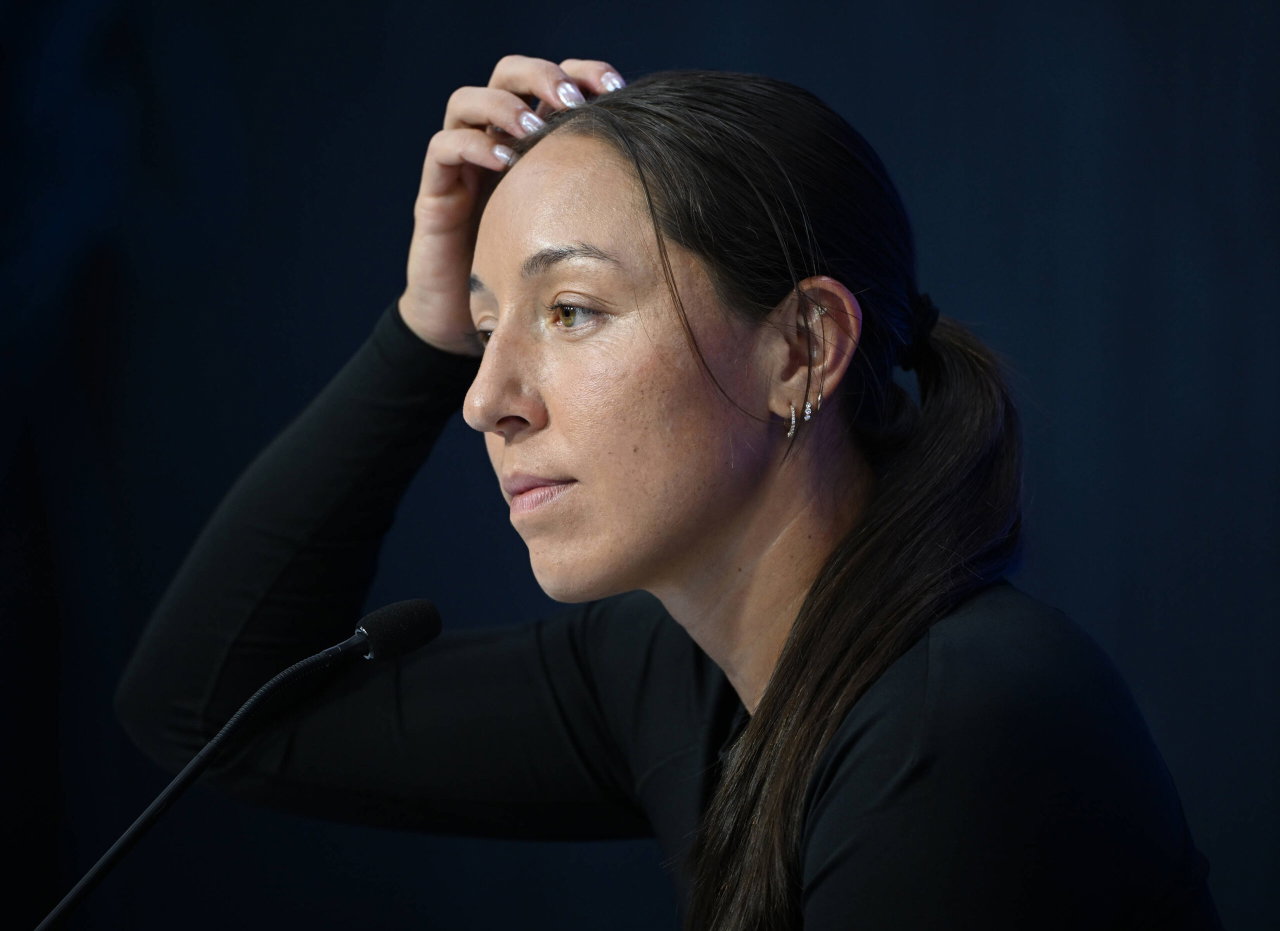
It doesn’t hurt if you have two billion-dollar sports teams in your family to take care of after you retire. That’s how Jessica Pegula is envisioning it. The current World No.3 still has a lot of tennis left in her, but her one eye is on her post-retirement plans. As she recently revealed, Pegula is all for staying in her family and helping run the multi-billion-dollar assets they have in the top franchise leagues in the NFL and NHL.
Watch What’s Trending Now!
“I can’t say that wouldn’t be exciting if I got to help out with the organization one day,” Pegula said in a CNBC Sport interview. “I always thought that I wanted to be in the sporting world when I was done with tennis.”
Pegula’s father, Terry Pegula, owns both the Buffalo Sabres and the Buffalo Bills in the NHL and NFL, respectively. Making his fortune in the oil and gas industry, Pegula’s father sold off his company’s assets for over $4 billion in 2010, which he later used to acquire the sports teams. Spending $165 million in 2011 helped Terry acquire the Buffalo Sabres, and a further $1.4 billion investment in 2014 brought the Buffalo Bills into the fold.
Both teams owned by the Pegula family have current valuations over a billion dollars, with the Bills at $8.5 billion. Despite both teams being financially successful, the on-field performances have been on opposite sides of the spectrum. The Bills have been a strong contender for the NFL title in the last few years and a regular playoff fixture, even though they have tasted little postseason success. On the other hand, the Sabres have not fared well since the Pegula takeover, which included a 14-year spell where they did not reach the playoffs.
As for family involvement, Pegula is not the only one who would be joining the company business if she indeed made the switch after retirement. Her mother, Kim Pegula, was the CEO and President of the Pegula Sports and Entertainment banner, making her the first female president for an NFL franchise. However, a cardiac arrest in 2023 saw her move away from her duties as she had to take care of her health.
Even Pegula’s husband, Taylor Galaghan, was in the business in the past, working in the corporate marketing department, while also being a senior director of the Sabres, a role he later moved on from. While Pegula has expressed her desire to work in the family business after retirement, the American has not set an exact timeline for her leaving the sport, as the World No.3 still aims for the biggest prizes in tennis.
Jessica Pegula Does Not Have a Set Retirement Timeline
When asked in a recent interview, Pegula did not commit to a set timeline regarding her retirement. The American admitted it was more of a spontaneous decision on her part than a planned move, even though she hinted she might step away from the sport in the next five years.
‘Five years? Wow, that seems like an eternity. I don’t even know if I’ll be playing in five years,” said Pegula in a WTA interview. “Five years is a long time. I prefer to take it step by step, according to my physical and mental state.”
Pegula has been the most consistent player on the WTA in recent years. The American has reached twenty Tour-level finals in the last four seasons, winning nine titles during this period. Although she has tasted success at every level of the sport so far, including four WTA 1000 titles, the Grand Slams remain a dream she has yet to realize.
In the past, Pegula had a quarterfinal barrier she could not move past at the Majors. Between 2021 and 2023, she reached six Grand Slam quarterfinals, losing all of them. Her breakthrough came at the 2024 US Open, where she reached the final, and since then has made consecutive semifinal appearances in New York over the last two seasons, only for her run to end at the hands of Aryna Sabalenka each time.
While her consistency on the court is commendable, Pegula is also quite active off the court, tackling the various issues in the sport. She is a member of three councils in the sport, including the new Grand Slam player council, which aims to make conversations between players and the Grand Slams smoother regarding revenue sharing, prize money, and scheduling.