
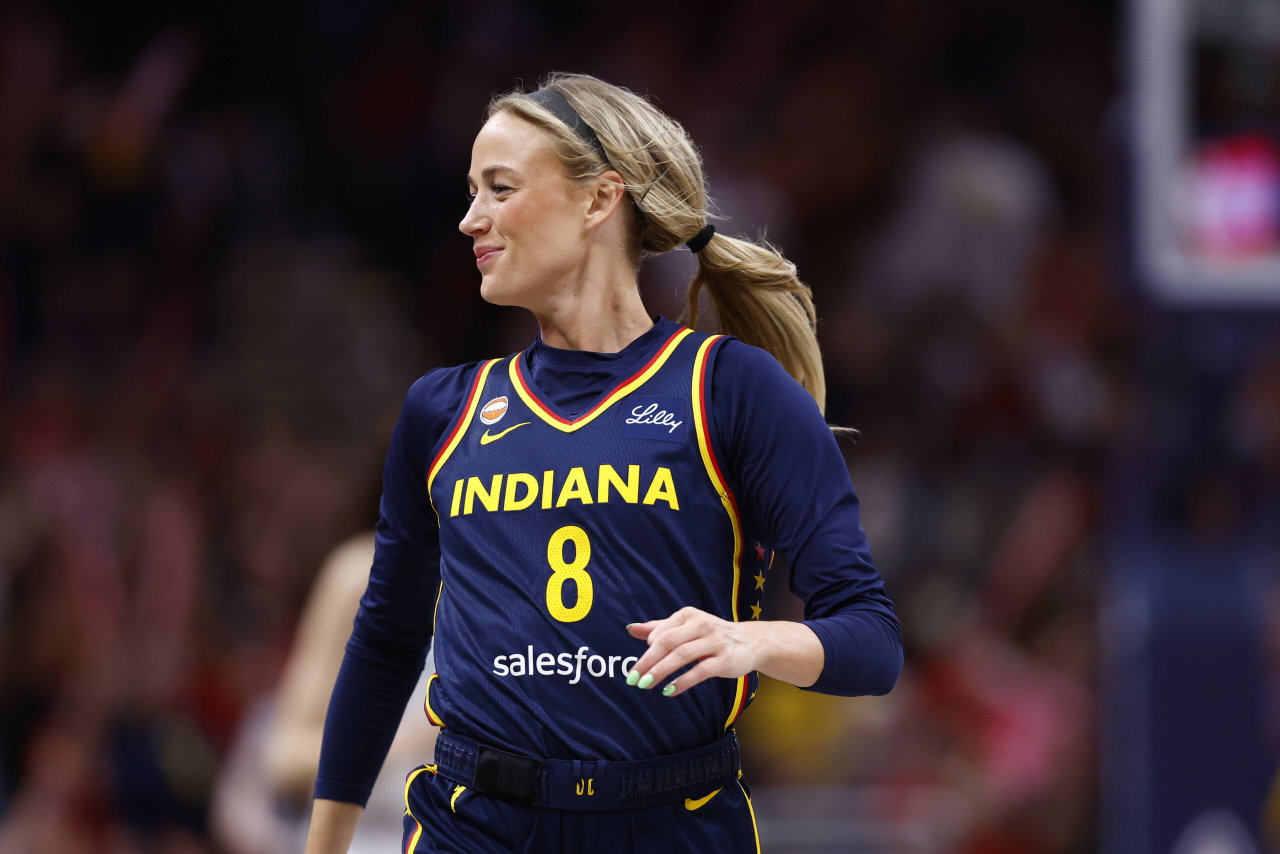
Sophie Cunningham’s recent statement supporting the barring of transgender athletes from competing in women’s sports has sparked significant backlash from fans and sports commentators alike. And many have come out to voice their support for the transgender community, particularly in the wake of the recent U.S. Supreme Court ruling allowing states to ban transgender girls and women from participating in female sports.
Watch What’s Trending Now!
The latest to respond is someone with a uniquely personal connection to Cunningham, her former teammate Brianna Turner, who played alongside her with both the Phoenix Mercury and the Indiana Fever. Turner was reacting to a video in which Minnesota Lynx head coach Cheryl Reeve also expressed her support for the transgender community while sharing her views on the ban on X. Turner’s reaction came in the form of a lengthy thread that was equal parts personal testimony, advocacy, and a direct challenge to the prevailing narrative around transgender athletes in sport.
“‘Because exclusion is never the answer, trans lives matter.’ Beautifully said. I’ve been an advocate for the trans community since I entered the WNBA. So many takes about them are based on fear-mongering and bigotry. A tiny minority of the population identifies as trans, yet they are always a trending topic, unfortunately. I’m in my 8th season as a WNBA player,” Turner wrote, reaffirming Reeve’s message.
“To date, there’s been one out trans player in the league. They caused zero problems.”
The way Turner sees it, transgender athletes are not the significant issue that many have framed them as. In her view, the real and pressing issues demanding attention are far more concrete.
Turner went on at length in her thread, expanding on her knowledge of sex variations and making clear she was willing to accept whatever backlash her stance might attract. She also used the platform to speak directly to transgender individuals, reiterating that their lives matter and that she stands firmly in their corner.
Sophie Cunningham, for her part, has since clarified that she harbors no hatred toward the transgender community and does not intend to communicate any. She has stated that her position is one of love and that for her, love also means being honest. And in her view, what she said was the truth, expressed with the specific aim of protecting young girls in locker rooms and young women in sports who she believes should not have to compete against biological males.
Brianna Turner Stated Her Support for Trans Athletes Previously as well
This is not the first time Brianna Turner has come out in strong support of the transgender community. In fact, about two months ago, in April, she wrote an op-ed for USA TODAY on the issue. In the piece, Turner laid out an extensive defense of transgender athletes while taking a firm stance against the International Olympic Committee’s policy on transgender participation at the time.
One of the first points Turner established in the piece was that transgender athletes do not in any way possess an inherent competitive advantage simply because they are transgender. That argument has long been one of the central claims made by those who support restrictions on transgender participation in women’s sports.
Addressing that point directly, Turner wrote: “In over 15 years of organized basketball, I’ve played with and against people who are transgender and undoubtedly people with intersex variations. And I’ve never experienced any unfair advantages.”
In the piece, Turner went on to argue against the International Olympic Committee’s binding policy requiring every woman seeking to compete in the Olympics to undergo sex verification testing. In her view, the policy is nothing more than an invasive measure that effectively disqualifies transgender women and athletes with intersex variations from having the opportunity to compete.
As far as Turner is concerned, sex variations, physical appearance, and transgender status do not in any way provide any form of competitive advantage. And for her, policies like the Olympic policy and now the U.S. Supreme Court’s ruling only serve to exclude an already marginalized group rather than address the real issues facing women’s sports.