Imago
Via Imago
Imago
Via Imago
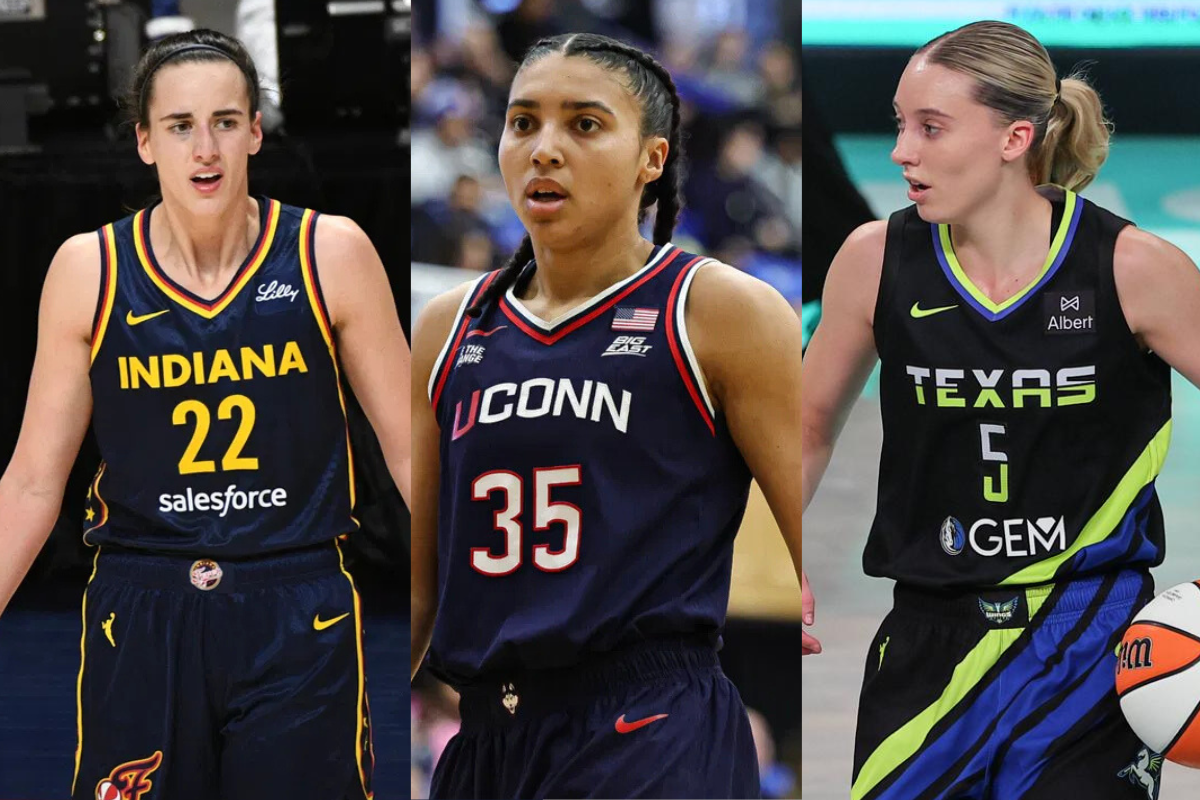
The anticipation around the FIBA Women’s Basketball World Cup Qualifying Tournament is already on cloud nine. Because how often do you see stars like Paige Bueckers and Caitlin Clark playing on one team? Well, don’t think too much, the answer is not often. And that’s what makes this team dangerous, something opposing teams might want to brace themselves for, according to Azzi Fudd.
Watch What’s Trending Now!
During a recent interview with Sports Illustrated reporter Grant Young, the UConn star and Paige Bueckers’ girlfriend was asked to imagine what the offensive dynamic could look like when Bueckers and Clark suit up together in the upcoming qualifiers. So, having faced and studied both players closely, Fudd offered a perspective that sounded less like analysis and more like a warning for defenders.
“I’m really excited to watch the qualifying tournament. This roster is full of talent. Thinking about how that team is going to have to figure out how to guard that, I feel sorry for them,” she said.
Fudd then went on to explain why the pairing could create constant headaches for their opponents.
Azzi Fudd when asked about Paige Bueckers and Caitlin Clark sharing the floor with Team USA at the FIBA World Cup Qualifying Tournament:
“You have to pick your poison.” pic.twitter.com/Fq2hY8SKaw
— Grant Young (@GrvntYoung) March 6, 2026
“It’s going to be a lot of fun to watch. Being able to play off that much talent, you’re going to draw the defense in so many different ways. People are going to be wide open, and you have to pick your poison in a sense. So it’s going to be a lot of fun to watch and cheer them on.”
For fans of the sport, the intrigue goes beyond simple star power. Caitlin Clark and Paige Bueckers have spent much of their careers dominating the game on opposite sides. Whether it is in college basketball or the WNBA. But this time, two of the most electric guards in the game will operate within the same system.
Clark’s deep shooting range and generational playmaking already make her one of the most difficult offensive players to defend. But now pair that with Bueckers’ smooth midrange scoring and ability to attack through contact, and Team USA suddenly has multiple offensive triggers capable of stretching defenses in completely different ways.
That’s exactly the dilemma Fudd was hinting at.
If the defenders focus too much on Bueckers’ drives and midrange game, Clark’s outside shooting can punish them instantly. However, if they focus on Clark, too, Bueckers becomes dangerous. So as Fudd put it, opponents may simply have to “pick their poison.”
The timing of the tournament also adds another layer of excitement. As this will be the first competitive appearance of Clark since last summer.
Although the United States has already secured its place in the main World Cup, which is set to take place in September, the qualifiers will offer a preview of how the next generation of American stars might look when playing together.
How to Watch Caitlin Clark and Paige Bueckers at the FIBA World Cup Qualifiers
Team USA will begin its campaign at the FIBA Women’s Basketball World Cup Qualifying Tournament on March 11 in San Juan, Puerto Rico, where they will compete in a six-team pool featuring New Zealand, Puerto Rico, Senegal, Italy, and Spain.
All of Team USA’s games will be broadcast on TNT Sports platforms, with coverage available on truTV and streaming via HBO Max.
Imago
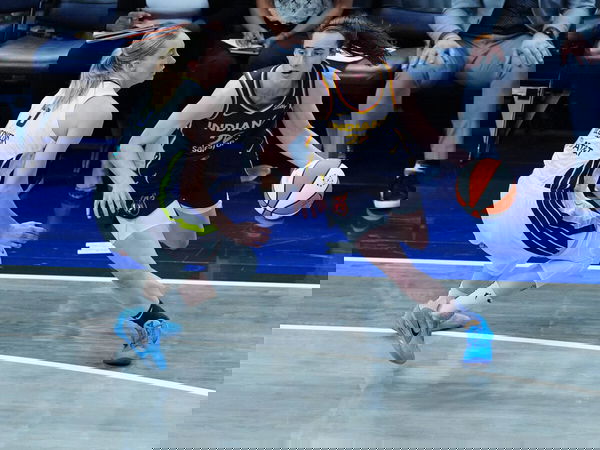
INDIANAPOLIS, IN – JULY 13: Indiana Fever guard Caitlin Clark 22 drives to the basket against Dallas Wings guard Paige Bueckers 5 on July 13, 2025, at Gainbridge Fieldhouse in Indianapolis, Indiana. Photo by Brian Spurlock/Icon Sportswire WNBA, Basketball Damen, USA JUL 13 Dallas Wings at Indiana Fever EDITORIAL USE ONLY Icon250713180
Here’s a look at their schedule:
- March 11: USA vs. Senegal — 4:45 p.m. ET
- March 12: Puerto Rico vs. USA — 7:45 p.m. ET
- March 14: USA vs. Italy — 4:45 p.m. ET
- March 15: New Zealand vs. USA — 1:45 p.m. ET
- March 17: Spain vs. USA — 4:45 p.m. ET
The top four teams from the group will advance to the 2026 FIBA Women’s Basketball World Cup set to take place in Berlin this September, where Team USA will look to defend its legacy as the tournament’s reigning champions.
With the first game right around the corner, are you ready to see how defenses handle Team USA’s star-studded lineup? Tell us in the comments.