
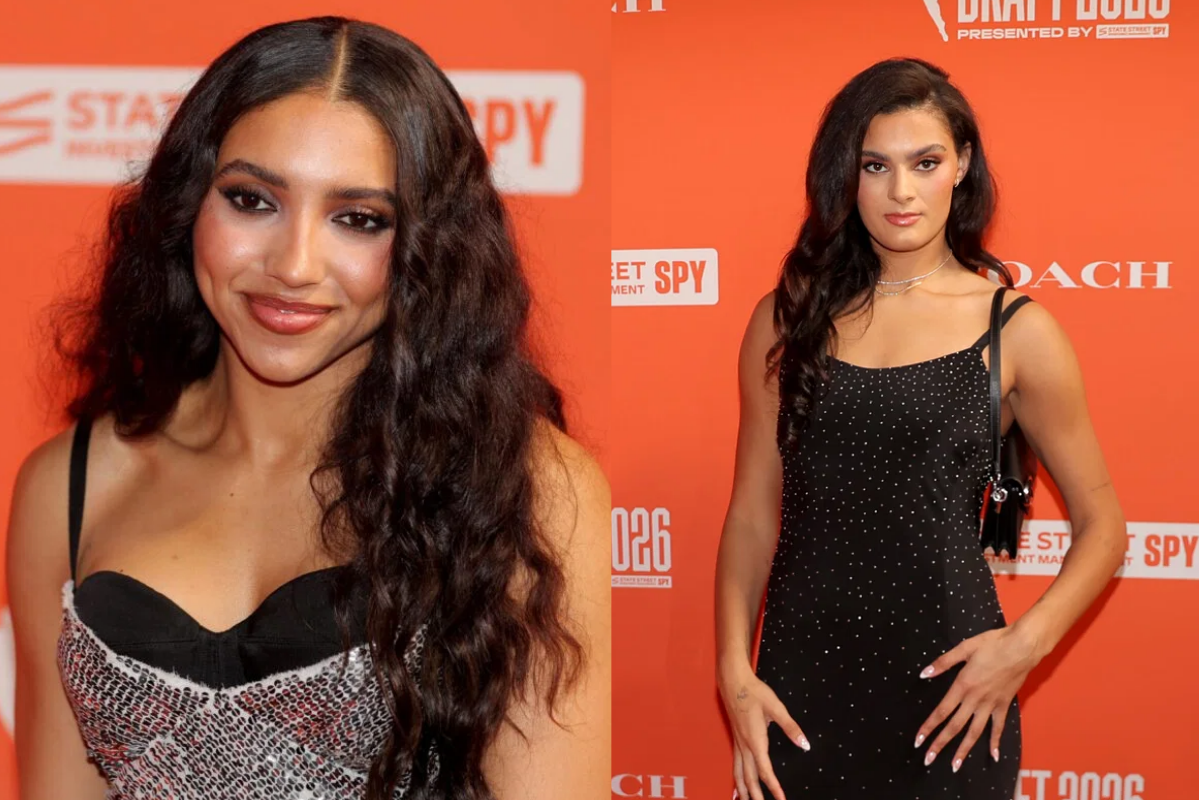
Olivia Miles deferred her WNBA plans for another year and was rewarded with 6 times the salary. If Miles, like Paige Bueckers, had entered the draft last year, she would have received $78,831. However, as the second draft pick going to the Minnesota Lynx in 2026, she will earn $466,913. The No.1 pick, Azzi Fudd, will earn a cool half million. The draftees are reaping the rewards of the intense CBA negotiations, and now they have revealed how they intend to spend it.
Watch What’s Trending Now!
The No.1 pick, Azzi Fudd, will take home $2.24 million over the course of her four-year contract, per Spotrac. Miles will collect about $467,000 in her first season and $2.1 million by the end of her rookie deal. The number drops as you go down the list, but even the No. 15 pick, Gianna Kneepkens, will earn more than A’ja Wilson did last year. Each has their own priorities, but it seems the players have become financially literate after handling their increased NIL money.
“I am gonna save it, I am a saver or a family vacation. It’s much needed,” Azzi Fudd said. Miles echoed by saying, “Stocks and bonds—save up, kids.” Marta Suarez was the same, as she said, “My 401k, come on.”


First thing WNBA draftees will spend their first check on 🤑
While many point out the negative effects of NIL and the effect it has caused on recruiting and programs, there are some silver linings too. Now, the WNBA stars know how to manage their wealth before coming to the league. They already have earnings from their past brand deals, which help them grow faster. Even beyond their financial literacy, Holly Rowe recently pointed out the players are engaging in public service as well.
“This whole NIL conversation, I think we looked at it as a lens of it’s a negative thing,” Rowe said. “And I think what we’re learning is these young people are doing a lot with their NIL money and doing good with it. They’re not just buying a car or a house or whatever. They may be doing some of those things, but what they’re doing is putting that money back in the community. And I think it’s been really positive.”
Flau’jae Johnson has her own foundation—More to 4—which helps single mothers and underserved families in Savannah, Georgia. Iowa State star Audi Crooks launched a program meant to battle food insecurity in November when many families were struggling. Fudd has her annual Azzi Fudd Hooping for a Cure Basketball Camp that raises funds for critically ill children.
So, there is another factor to that NIL money. While most opted to save their hard-earned paychecks, there were some exceptions for the likes of Johnson, Lauren Betts, and Angela Dugalic.
“A Chef, cause I gotta get big. These vets are huge, they got grown woman strength,” Johnson said. “But I am not into spending too much money; I am into investing.” Of course, the difference in athleticism and strength is something rookies struggle to cope with. The game is a lot more physical and Johnson will need all her strength to survive. But everybody needs a hobby and Lauren Betts has her nails.
“I am probably gonna save it, To be honest. But if not, maybe like furniture for where I am going to live, like essentials.” Lauren Betts said. “But I am just trying to sound good on camera. We all know probably like nails or something.”
Betts recently opened up about her mental health struggles in the past. And hobbies are a big part of how people can avoid falling back into it. For Betts it’s her nails, while for Dugalic it’s a bag. “If it is some luxury item. If I were to splurge. I think I would get this Chanel bag. It’s absolutely gorgeous. It’s not mine but I want it to be,” Dugalic said. Everyone has their own way of celebrating and the fact that these rookies are getting paid will only help the league.
The High Rookie Salaries Set To Elevate The WNBA Product
The WNBA has historically been undermarketed and has hung around the lower rungs of the US Sports ecosystem. But in the last few years the interest has surged sporadically, which has given these players this transformational CBA. Last season, the popularity was met with some disappointment. The league had 200+ injuries, there were multiple complaints with the referees and the CBA controversy with a lockout threat remained in the background.
At least one aspect of the issue has now been resolved. The injury problem remains on the radar for the fans as the league could expand to 50 games in the future. However, these high salaries will have a positive effect on solving that problem. WNBA players have had to play internationally to supplement their limited WNBA income. That led to them playing almost all year round. Some of the international leagues, especially in Europe, are even more physical than the WNBA.
With these high salaries, the top future prospects will most likely not play outside of the WNBA. Some have signed contracts with Unrivaled in the offseason, but a 3v3 league within the country is a lot less stressful than traveling internationally. It should correlate to the veterans as well. But youngsters are the future of the league. If they are saved from a career-altering injury, it helps the league greatly. So, while the WNBA has opened its purse to its players, they are set to benefit from that.