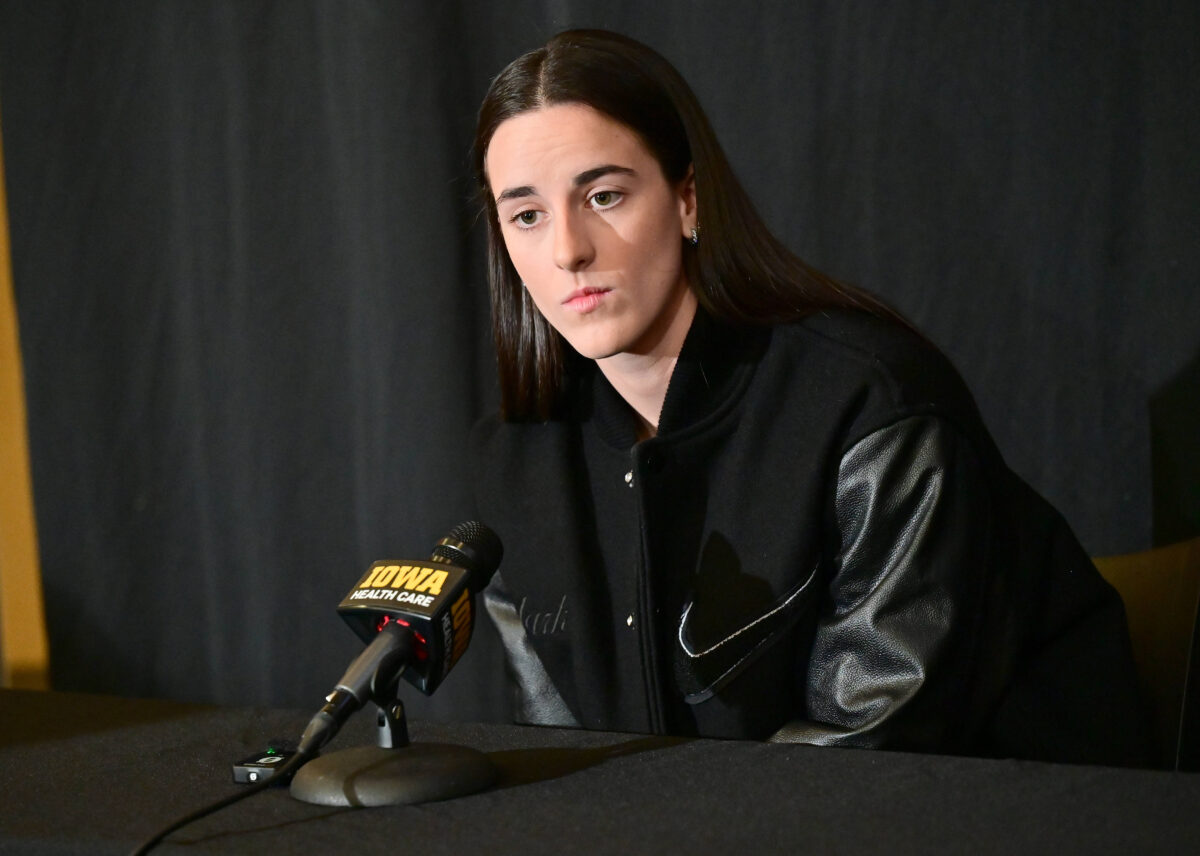
Caitlin Clark doesn’t need much to say what she’s thinking as sometimes, all it takes is one off-looking picture. What was meant to be a simple post from the Indiana Fever, featuring Clark and Aliyah Boston, quickly caught fans’ attention for all the wrong reasons. Something about it felt off, and within minutes, the reactions started pouring in. As the confusion and jokes picked up, Caitlin Clark didn’t stay on the sidelines. With a swift, natural response, she turned an awkward moment into something far more relatable and very hard to ignore.
Watch What’s Trending Now!
The Fever recently shared an Instagram post featuring Clark and Boston as part of their broadcast schedule announcement. But there was one problem! The image used to merge the two stars had clearly gone through an AI tool, and the result wasn’t clean.
Caitlin Clark’s hand, in particular, looked visibly distorted. So when she noticed that, in classic CC fashion, she dropped a comment under the post that read: “New hand alert.”
Caitlin Clark called out an Indiana Fever Instagram post that was made with AI tools.
A source familiar with the matter told FOS that the error with Clark’s hand came from using an AI tool in an attempt to combine an image of Clark with one of Aliyah Boston.
Full story ⬇️
— Front Office Sports (@FOS) May 1, 2026
A simple one-liner, but still enough to instantly flip attention onto the mistake. As a result, the franchise quickly deleted the graphic.
According to Front Office Sports’ source, “the error with Clark’s hand came from using an AI tool in an attempt to combine an image of Clark with a separate image of Boston.”
So far, the Fever have not publicly detailed the exact tool used, sources familiar with the situation confirmed it was part of a broader design software workflow being tested for content creation.
This is where the moment becomes bigger than just one post. From NHL franchises to MLB teams to WNBA, AI-generated visuals have already sparked debates about authenticity, creative control, and where human design ends and automation begins.
Though the incident doesn’t change much on the basketball side, it does raise questions inside the Fever’s growing digital identity. As the team continues to expand its media presence around Clark, Boston, and the rest of the roster, the balance between creative tools and accuracy becomes even more important.
From Creativity to Controversy: AI’s Growing Role in Sports Media
The Fever’s social media slip wasn’t just a one-off mistake; it’s part of a much bigger shift happening across sports. Because right now, AI isn’t sitting on the sidelines anymore. It’s actively being tested and used.
Take Seattle Mariners broadcaster Angie Mentink, for example. She went viral after she was seen using Google Gemini to generate postgame interview questions. But instead of brushing it off, Mentink addressed it head-on, explaining that she was simply experimenting with AI as a tool to add to her preparation, not replace it. She silenced her critics by stating she was “Always Learning.”
Imago
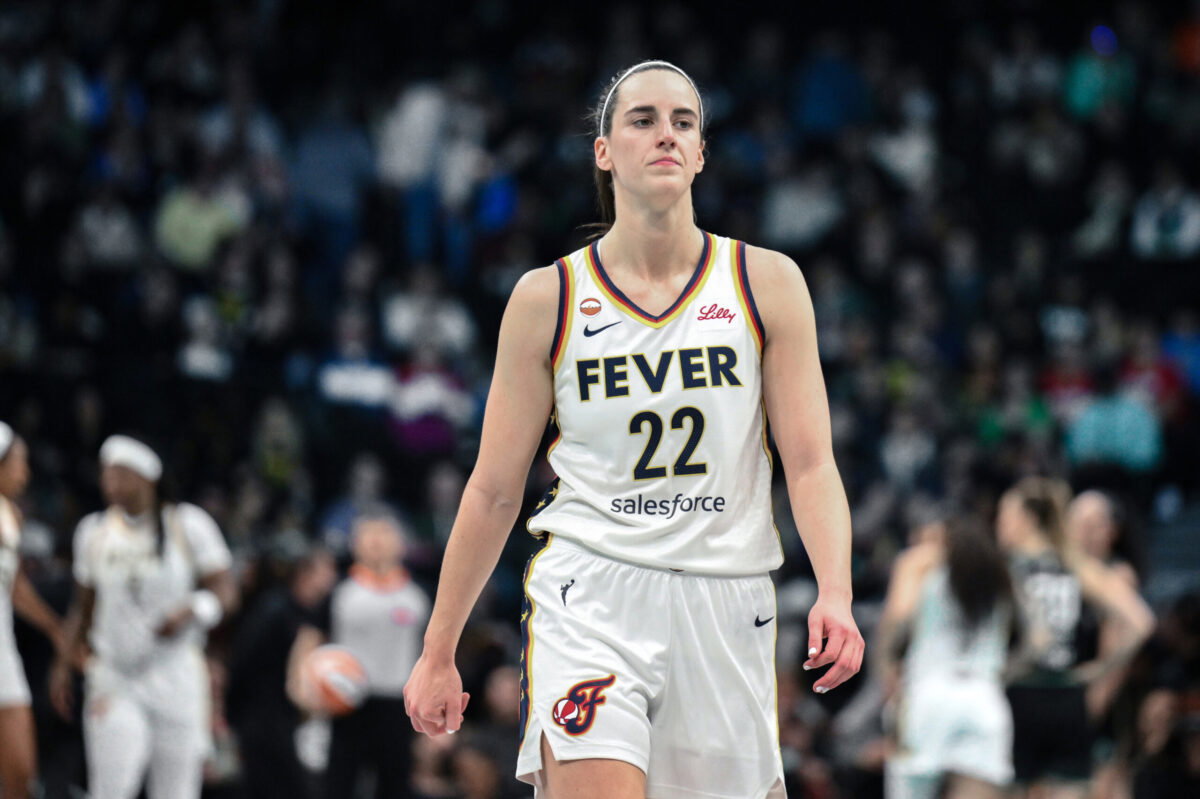
Apr 25, 2026; Brooklyn, NY, USA; Indiana Fever guard Caitlin Clark (22) during the first half against the New York Liberty at Barclays Center. Mandatory Credit: John Jones-Imagn Images
And that’s exactly where sports media finds itself today.
From broadcast booths to social media teams, AI is slowly becoming part of the workflow. Some franchises are using it to enhance graphics. Others are leaning on it for efficiency. And leagues like the WNBA are even integrating AI into fan engagement and moderation, using it to monitor online spaces and cut down on hate speech. Let’s not forget that as helpful as it can be, AI is not without its flaws.
Because for every smooth graphic or smart assist, there’s also the risk of something going wrong, like a distorted hand of Caitlin Clark in what was supposed to be a routine post.
And that’s where the debate really begins. How much is too much? Where do teams draw the line between creativity and control? And more importantly, how do you balance speed with accuracy in a space where everything is instantly visible?
Some creatives believe AI is inevitable. As Georgia’s assistant athletic director of creative strategy, Chad Morehead, put it: “If you are a creative and not actively learning to incorporate AI into your workflow, you are getting left behind… adapt or die.”
Others also see moments like the Fever’s mishap as a reminder that human oversight still matters just as much, if not more. In the end, we know that technology isn’t the problem. It’s all about how you leverage it.
As teams continue to explore that balance, moments like these will be part of the learning curve. As leagues evolve, so will the scrutiny that comes with it.