
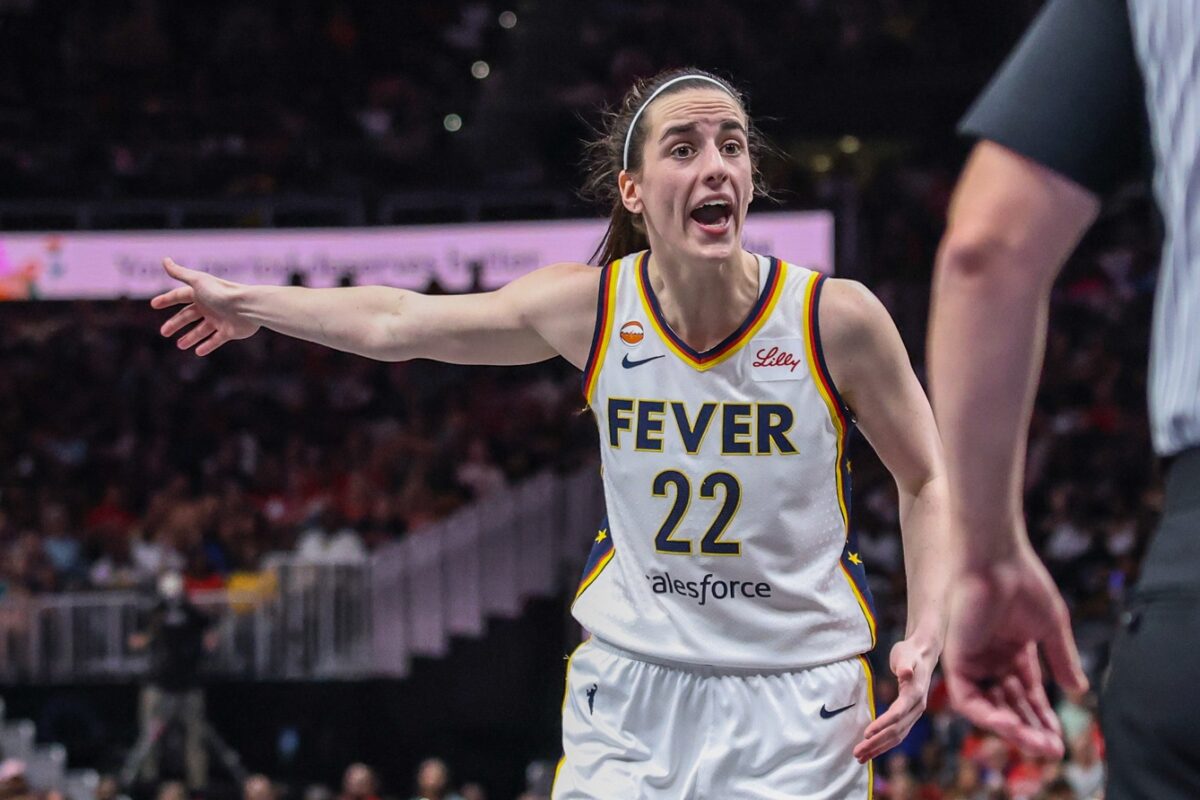
Caitlin Clark’s star power has brought unprecedented attention to the WNBA. But that same attention is also casting a much brighter and more unforgiving light on some deeply uncomfortable league-wide issues that have existed for years. That was the central point made by WNBA analyst Seerat Sohi, when she spoke on PBS NewsHour.
Watch What’s Trending Now!
“I do think that refereeing issues are consistently bad across the WNBA,” Sohi said, when asked whether the narrative of Clark being treated unfairly holds up to scrutiny. “I don’t think that the WNBA really has a standard for or a vision for how they want the game to look. They are very reactionary. I think that’s why you saw this flagrant foul and suspension issued after the game, when the public pressure was really starting to get to them. You can see that with previous instances, with really every crisis the WNBA has dealt with. I think the best way to look at it is that Caitlin Clark is a magnifying glass to a lot of issues that have been plaguing the WNBA for a long time.”
In Sohi’s view, the WNBA’s leadership has struggled to manage a range of issues for years. What has changed is not the nature of the problems; it is the audience now watching them unfold. Prior to Caitlin Clark’s arrival, many of these shortcomings simply didn’t attract the level of mainstream scrutiny capable of forcing a response. Now, with the entire sports world paying attention, every lapse is visible, and every misstep is amplified.
That reactionary pattern is itself one of the most damaging issues Sohi identified. The Alyssa Thomas fist-to-the-throat foul that went uncalled in real time, only to result in a suspension after the public outcry became impossible to ignore, is the most recent and vivid example. But it is far from the only one.
The same sequence has played out before. Most notably, Chennedy Carter’s infamous hip-check on Clark during her rookie year. It was initially ruled a common foul during the game. And the incident also generated massive public debate and a social media firestorm. And then the league, upon review, later upgraded it to a Flagrant 1 foul. A similar sequence happened with Marina Mabrey’s foul during the 2025 WNBA season.
For Sohi, the thread running through all of these moments leads back to the same place, the WNBA’s poor leadership. As she said, “Really, a lot of it just comes down to the league’s leadership.”
Furthermore, another controversy swirling around the league’s handling of Caitlin Clark is her striking omission from the WNBA’s 30th anniversary poster. Seerat Sohi connects this back to the same fundamental leadership issues she described throughout her conversation with PBS NewsHour
Caitlin Clark’s WNBA 30th Anniversary Poster Omission: Another WNBA Leadership Lapse
The explanation behind Clark’s absence is indeed a technical one. It was that the organization responsible for designing the poster does not hold the licensing rights to Clark’s image and likeness. But for Sohi, that explanation raises a more important question than it answers.
“The group that made that poster actually just does not have the licensing rights to Caitlin Clark’s image and likeness,” Sohi said. “Now, you could say, why didn’t the WNBA go to a different organization to do this? I think that’s a very fair question. And again, it just to me goes back to the WNBA’s leadership.”
There has been quite a lot of debate as to why the WNBA consistently keeps breeding these controversies around Clark. But from Sohi’s perspective, it connects directly to the league’s poor leadership. As she puts it, “This is a rocket ship that has a bad captain.”