
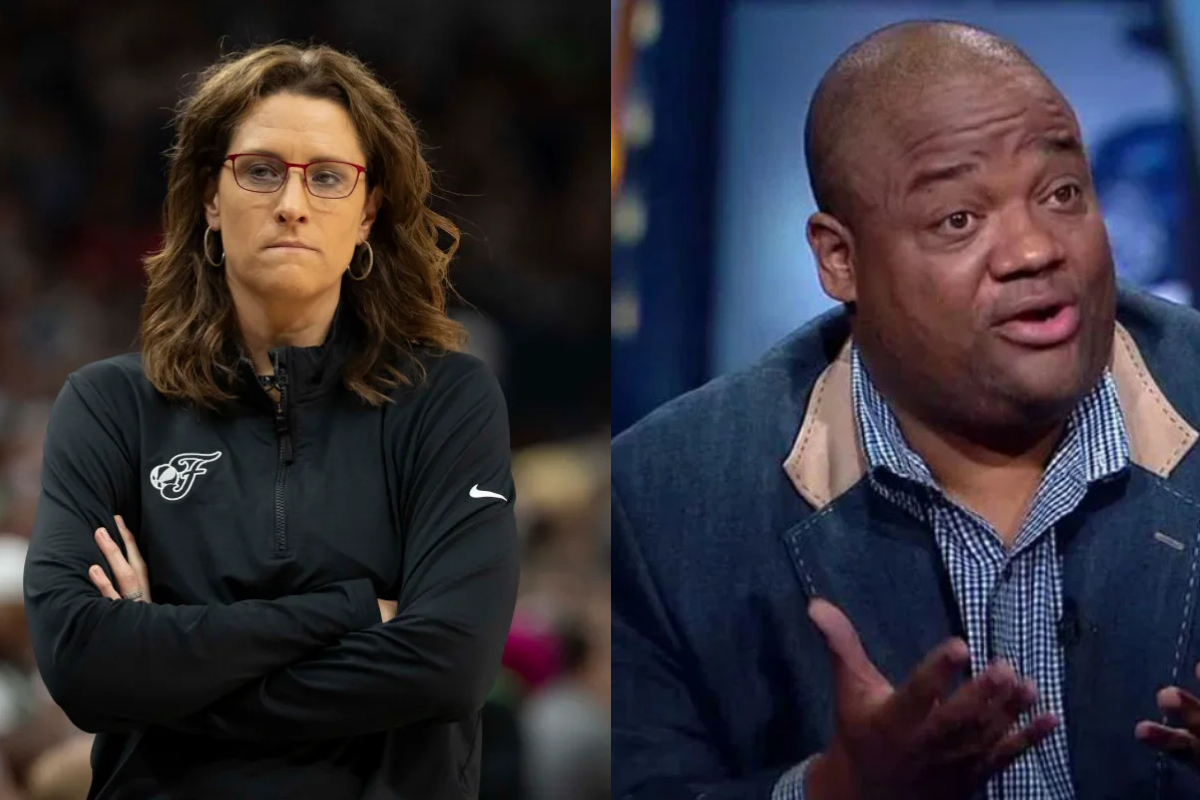
For the Indiana Fever, the microscope has been on their defense. “When you score 104 points, you gotta win the game. We gave up 107, so we need to focus on our defense,” Stephanie White said after their Dallas loss. The second game arrived and the team improved, conceding only 78 points in the Sparks win. However, when the Washington Mystics came, the Fever had some offensive struggles and Stephanie White is getting blamed for it.
Watch What’s Trending Now!
With a 15-6 run, the Fever started hot against the Washington Mystics. They fired off two quick threes as well. Washington could do little as Caitlin Clark fired off two threes later in the quarter to fire up the crowd and break her outside shooting drought. Yet, the second quarter came and to the surprise of the Indiana Fever fans, Caitlin Clark was on the bench and the Mystics capitalized.
“Fever, first 5:59 of the game: 6/7 from deep, 4 points in the paint, 2 turnovers,” noted Tony East. “Fever in the 16:27 since 1/11 from deep, 4 points in the paint, 5 turnovers.” The Mystics won the second quarter 20-9, grabbing the momentum as the Fever shot 19% from the field. And for many watching, the collapse traced back directly to White’s coaching decisions.
“Absolute coaching malpractice in Indianapolis,” Whitlock wrote. “I’m a little bit behind (2 mins left in 2nd QTR). Stephanie White figured out a rotation that left Boston and Clark separated for far too long and when they’ve been on the court together, no pick-and-roll. Offense collapsed.”

Absolute coaching malpractice in Indianapolis. I'm a little bit behind (2 mins left in 2nd QTR). Stephanie White figured out a rotation that left Boston and Clark separated for far too long and when they've been on the court together no pick-n-roll. Offense collapsed.
Eventually, Clark and Co. made it a close game but the Mystics edged to a 104-102 win. The point guard finished with 32 points, 8 assists and 4 rebounds, including the game-tying three-pointer in the dying seconds of the game. She was +12 in a game where they lost by 2 points, further emphasizing her time off the court.
However, Clark did not have Boston for the majority of the game, as she exited with a lower leg injury. Even with that stipulation, the Fever just looked clueless as Clark almost willed them to a win.
“This game should change everything in the Fever organization,” Whitlock wrote after the game was completed. “Fire Stephanie White and the whole organization built around Caitlin Clark. Boston’s contract makes no sense if she’s not in pick-n-roll with Clark. You cannot put the toothpaste back in the tube. It’s Caitlin’s team. Period.”
Boston’s injury only compounded what had already been a difficult stretch. She already struggled in the last game against the Sparks. She had 4 points, 7 rebounds, 2 assists and a team-high 6 fouls. None of her 3 shots from the field landed, nor did the one 3-Pointer she attempted. And this injury came after 9 points on 3-8 shooting along with 4 rebounds.
Imago
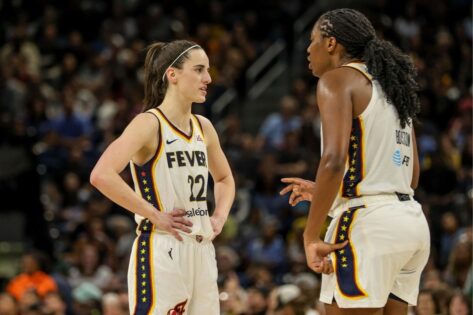
Chicago, USA, June 23, 2024: Caitlin Clark 22 Indiana Fever speaks with Aliyah Boston 7 Indiana Fever during the game between the Chicago Sky and Indiana Fever on Sunday June 23, 2024 at Wintrust Arena, Chicago, USA. NO COMMERCIAL USAGE Shaina Benhiyoun/SPP PUBLICATIONxNOTxINxBRAxMEX Copyright: xShainaxBenhiyoun/SPPx spp-en-ShBe-8P6A8511
The Clark-Boston connection hasn’t been activated yet, with little to no pick-and-roll action between them. But she still has half of her field goals (6) assisted by Clark this season. Over their careers, Clark has assisted Boston 158 times. So, White needs to address this disconnect between the duo. But, even beyond that, there were some questionable rotations and decisions from the Fever coach.
After Boston left, the Fever needed defense and size. And despite drafting Raven Johnson for that, White played her for just 4 minutes in a game where they leaked points. She also restricted Makayla Timpson, the 6’2 athletic big, for just 4 minutes. Then there was the final play mistake yet again.
After Clark tied the game in regulation, the Fever had a similar chance in overtime. Yet, they went to Kelsey Mitchell instead of Clark, who drove to the baseline and fired off an off-balance jumper that fell short. Despite these errors from White, all the blame doesn’t fall on her, as paltry errors cost Fever in the dying minutes.
Stephanie White Not Solely to Blame for Indiana Fever’s Meltdown
It’s very easy to put the coach under the hammer. And there is even an argument for it in this case. However, White doesn’t have control over everything. The Indiana Fever had a roller coaster of a game against the Mystics, but it was the simple mistakes that eventually cost them this game.
Let’s be real, Caitlin Clark dragged the Fever from a tough spot. After struggling for the first three quarters, she scored 17 of her 32 points in the fourth quarter and dished out eight assists. In overtime, Lexie Hull and Kelsey Mitchell went 1/4 from the foul line in the final minute. The Fever was down three after the final miss from Hull.
Then, Kelsey Mitchell had a chance to give Fever the lead with an open transition layup. But with Shakira Austin fast approaching, Mitchell missed that crucial basket. It was the ultimate opportunity to give Fever the game. These were some crucial misses from two fairly experienced players.
Even before these blunders, the Fever players did have many open shots throughout the game. And that includes clark who just could not finish around the rim in this game, going 3/11 from the two-pointers. Out of the 11 turnovers, many came from the players just failing to catch good passes. So, even with some tactical failures, there are a lot of other mistakes for the Fever team to look at.