Imago
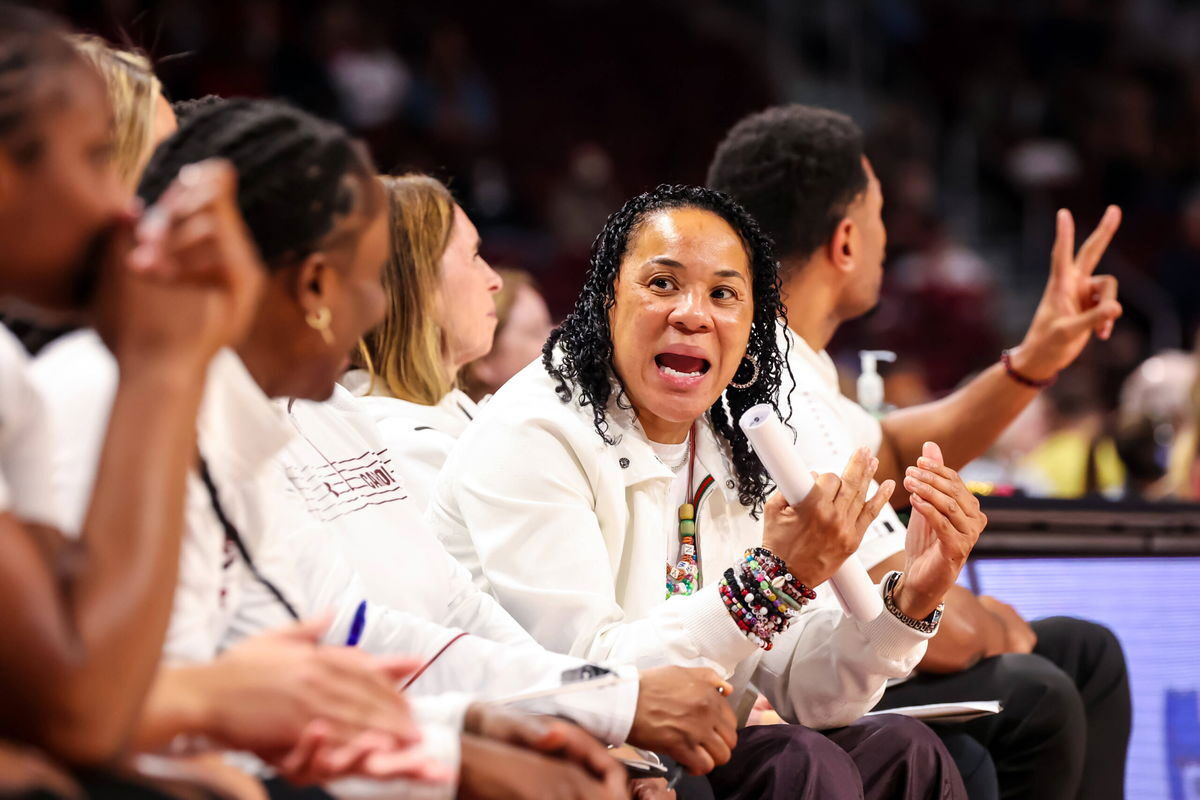
NCAA, College League, USA Womens Basketball: Winthrop at South Carolina Nov 19, 2025 Columbia, South Carolina, USA South Carolina Gamecocks head coach Dawn Staley directs her team against the Winthrop Eagles in the second half at Colonial Life Arena. Columbia Colonial Life Arena South Carolina USA, EDITORIAL USE ONLY PUBLICATIONxINxGERxSUIxAUTxONLY Copyright: xJeffxBlakex 20251119_cec_ay3_156
Imago
NCAA, College League, USA Womens Basketball: Winthrop at South Carolina Nov 19, 2025 Columbia, South Carolina, USA South Carolina Gamecocks head coach Dawn Staley directs her team against the Winthrop Eagles in the second half at Colonial Life Arena. Columbia Colonial Life Arena South Carolina USA, EDITORIAL USE ONLY PUBLICATIONxINxGERxSUIxAUTxONLY Copyright: xJeffxBlakex 20251119_cec_ay3_156
Since the inclusion of players like Caitlin Clark, Angel Reese, Paige Bueckers, and many more, the WNBA’s popularity has been on the rise. Still, this has been their most uncertain offseason in years. With the league’s rise, players are demanding better pay and benefits, which has pushed the WNBA and the WNBPA to agree on a new CBA. However, with over a year at the table now, it has reached a point where the league and the players’ union are nowhere near finding a common ground, which has started to affect the WNBA’s schedule.
Watch What’s Trending Now!
With the pressure mounting and deadlines looming, sides are forming. And one of the most respected voices in women’s basketball, Dawn Staley, has made it clear where her support lies.
The collective bargaining talks between the WNBA and the Women’s National Basketball Players Association have already dragged past multiple deadlines, and as a result, key league operations have been frozen. But the 2026 season is scheduled to tip off on May 8, and speculation around whether it will begin on time has only intensified. With free agency, the two-team expansion draft, and the collegiate draft all hanging in limbo until a deal is finalized, the clock is ticking.
Yet, amid that growing uncertainty, the South Carolina Gamecocks coach, Staley, has offered a perspective on the situation.
“Some of them think it’s going to start on time. Some of them think it’s going to be delayed. I don’t know, but I think it’s good, actually,” Dawn Staley said during a pregame media availability ahead of the Gamecocks’ matchup against Ole Miss. “I think negotiating is hard, but it’s good. Anybody that is willing to bet on self in this space is always a good thing. A bet on self is both ways. The WNBA is betting on self, and the players are betting on self.”
She further added, “I’ve been a player, you know, and the game is in high demand, like super high demand. If you don’t fight for something right now, you’re gonna settle for anything in the future. So I think we’ll have a season, just me. I think we’ll have a season, and I believe it’s going to start on time.”
Dawn Staley on the WNBA CBA talks:
“I’ve been a player & the game is in high demand. If you don’t fight for something right now, you’re gonna settle for anything in the future. I think we’ll have a season & I believe it’s gonna start on time. But I don’t have a dog in the fight” pic.twitter.com/YRbu3FcOvp
— Matt Dowell (@MattDowellTV) February 20, 2026
Back in 2003, when Staley was still an active player playing for the Charlotte Sting, the WNBA and the WNBPA found themselves in a similar standoff.
Financial constraints, salary disputes, and the implementation of limited free agency created friction between the league and its players. At the time, questions about long-term sustainability loomed large, and uncertainty surrounded how or when an agreement would be reached. But that impasse didn’t last forever.
In late April, just weeks before the season was set to begin, the two sides reached an agreement in principle on a new five-year collective bargaining deal. The compromise preserved the season and laid the groundwork for structural growth that followed.
That precedent helps explain Dawn Staley’s stance. Labor disputes in professional sports are rarely smooth, but while history suggests a deal can be reached in time and the season still moves forward, the current divide is about revenue sharing, and so far, neither side is willing to budge.
Even as Dawn Staley Stays Optimistic, Revenue Sharing Remains the Core Divide
The players’ union has recently submitted a counterproposal asking for an average of 27.5% of gross revenue over the life of the agreement, which will begin at 25% in Year 1, along with a salary cap below $9.5 million. And if you look at this from what they were demanding back in December, it’s a step down. Originally, the players wanted an average of 31% of gross revenue and roughly a $10.5 million cap.
However, in a public statement, the WNBA has labeled its latest proposal as “unrealistic,” stating that it would cause hundreds of millions of dollars in losses for teams. To give you a better understanding, the league projections reportedly estimate the union’s demand could result in approximately $460 million in losses over the life of the deal, which was $700 million earlier tied to the previous proposal.
The core divide lies in how revenue is calculated. Players are seeking a model tied to gross revenue (before expenses), while the league has proposed a structure based on net revenue (after expenses).
Getty
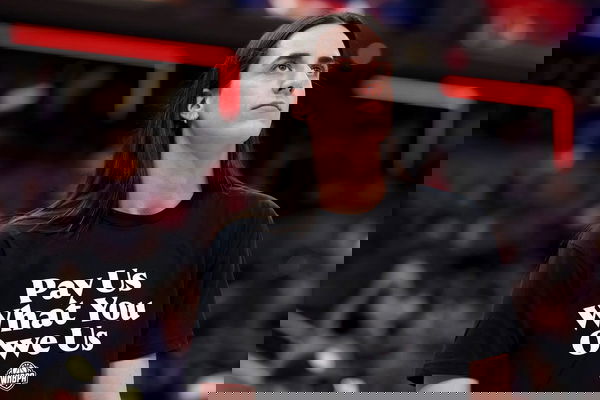
Steph Chambers/Getty Images
The WNBA’s offer includes a $5.65 million salary cap in 2026, which is a significant jump from roughly $1.5 million in 2025, with maximum salaries projected near $1.3 million next season and potentially approaching $2 million by 2031 through revenue-sharing mechanisms.
To understand the difference, the 2025 supermax salary was under $250,000.
Beyond compensation, the league has proposed expanded developmental roster spots, increased 401(k) contributions, codified charter flights, facility standards, and other structural changes. Yet none of it resolves the fundamental disagreement over how the sport’s rapidly growing revenue pie should be divided.
The players opted out of the previous CBA in October 2024, and negotiations have now stretched 16 months with two extensions and a moratorium agreement to keep business moving temporarily. But until a new deal is signed, free agency, the college draft, and the expansion draft tied to new franchises remain on hold.
Which is why Dawn Staley’s framing matters. Because in her eyes, both sides are “betting on self.”
The league is banking on long-term sustainability, while the players are betting on the value they believe they’ve already created. Still somewhere between those positions, a deal will have to emerge if they want a season.
Written by

Edited by

Snigdhaa Jaiswal