
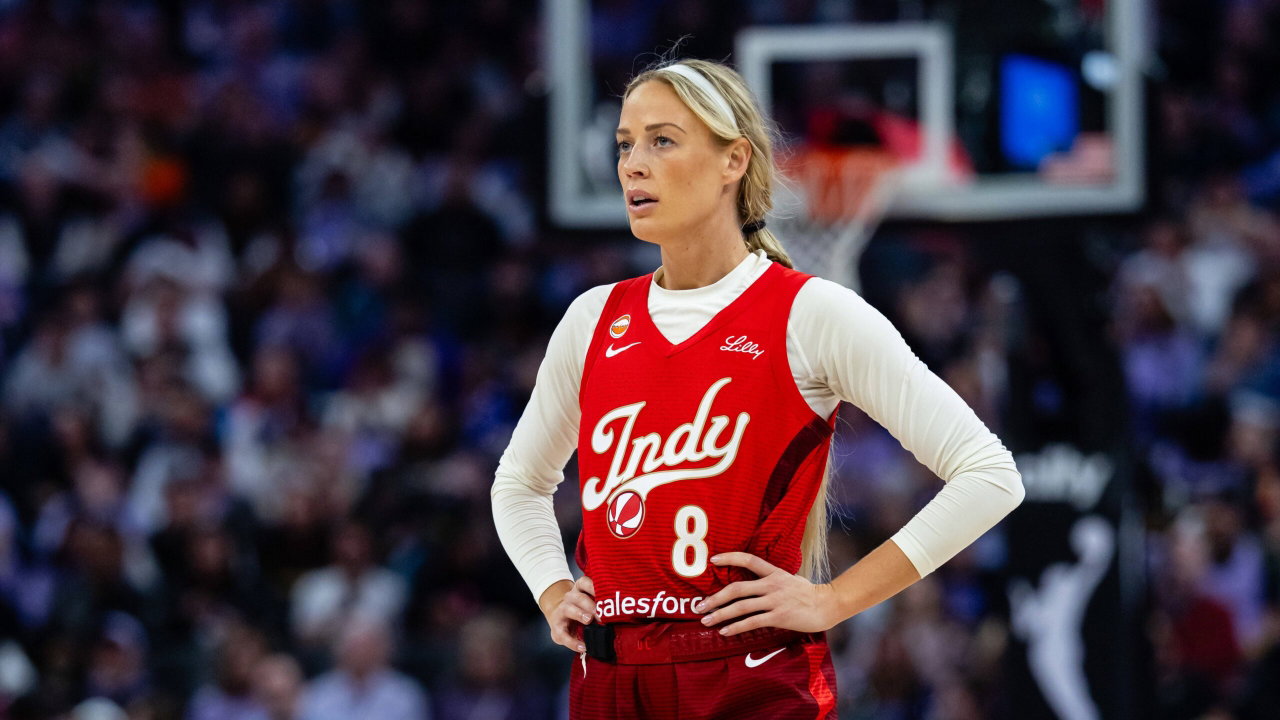
The debate over who should be eligible to play in the WNBA has become much bigger than basketball, and a petition for a change in the eligibility description now has over 18,200 signatures. Since Sophie Cunningham sparked the conversation around transgender athletes in women’s sports on July 21, the issue has spilled into protests outside WNBA arenas and even drawn attention from former NBA players. Amid this growing debate, three-time Olympic gold medalist Nancy Hogshead has taken her concerns directly to the league through a petition calling for greater clarity around its eligibility rules. And her message has now found support from a familiar political name.
Watch What’s Trending Now!
Donald Trump’s daughter-in-law Lara Trump has urged her followers to add their names to the growing list of people calling on the WNBA to define who qualifies as a woman for eligibility purposes.
“I’ve been covering this issue on my shows for weeks, and I keep hearing the same thing from athletes and others speaking out about women’s sports: the WNBA needs to define the W,” Lara wrote on X. “3x Olympic gold medalist Nancy Hogshead is asking the league to finally do one thing: make sure the WNBA is for WOMEN. It really shouldn’t be this complicated. Add your name to Nancy’s petition.”
The WNBA’s collective bargaining agreement states that “only players who are women are eligible to play in the WNBA.” However, the agreement does not provide a further public definition of “woman” or specific language addressing transgender eligibility. That lack of clarity has become one of the biggest talking points in the debate after Sophie Cunningham’s comments about protecting young girls in the locker room went viral.
The debate went a step further after former NBA players Enes Kanter Freedom and Royce White declared their intention to enter the 2027 WNBA Draft amid that ambiguity.
So Hogshead has added another layer to that fight. Her petition on Change.org – which has already collected more than 18,200 signatures as of this writing – argues that WNBA players deserve certainty about who they could be competing against.
“The athletes in the WNBA deserve to know that when they step onto the court, they will be competing on a level playing field – without biological males,” she wrote on Change.org.
She also called on the WNBA “to explicitly clarify that ‘woman’ means female for eligibility purposes, and to protect fair and safe competition for female athletes.”
The former Olympian is the CEO of Champion Women, an organization that provides legal advocacy for girls and women in sports – and her X profile states that she is “using sport as a vehicle for social change in the world.”
Her mission now has the attention of Lara Trump, who in mid-August conducted an exclusive interview with Enes Kanter Freedom, where he hailed Cunningham as an “American hero.”
For the league, the issue is no longer simply about what is written in its CBA. With political figures, former NBA players, and Olympic champions now weighing in, the pressure to clarify what “woman” means for WNBA eligibility is becoming increasingly difficult to ignore.
The last time the league’s task force met was on August 12, when it condemned “bad-faith efforts” to use the topic of trans players in women’s sports to “demean or marginalize others.”
Regarding the eligibility rules, the WNBA’s statement added that they “will approach these important conversations thoughtfully and in alignment with the values of our league.” However, there were “no immediate eligibility matters affecting the WNBA.”
But while the conversation around her comments continued to grow, Sophie Cunningham herself made it clear that she wanted the attention to return to where she believed it belonged just days after the discourse began to spiral.
“I’m going to let people just do the speaking for themselves, but for me, I want to get back to basketball,” Cunningham said on August 5, per ESPN. “It’s always been about basketball. That interview happened in [March]. I just want to make sure that the focus stays where it should because people are playing at such a high level.”
But even though she has made her position clear, the conversation appears to have a life of its own, as the pressure on the WNBA to clarify its eligibility rules continues to grow.