
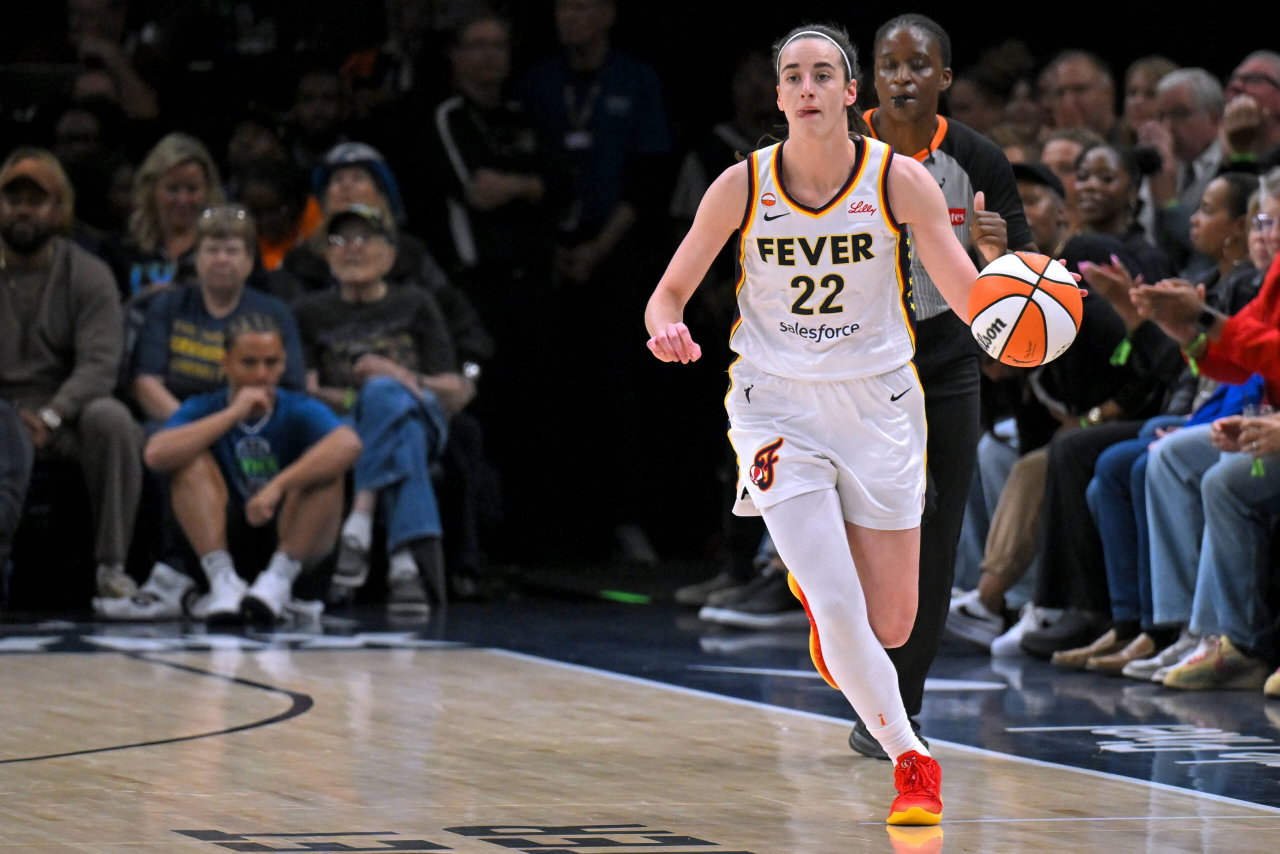
The Indiana Fever already know what their offense can look like when Caitlin Clark is at the center of everything. They finished the 2026 regular season with the league’s best offense, averaging 96 points per game. But whenever the games slowed down and the Fever had to get stops, that same level of dominance was nowhere to be found. That is why former college player Rachel A DeMita believes Indiana’s next step should be about building a roster that allows their biggest offensive weapon to conserve her energy and puts bigger, more versatile defenders around her.
Watch What’s Trending Now!
“Caitlin Clark shouldn’t be picking up on defense full court. She’s an offensive threat. You don’t need to wear her out on the defensive end,” the analyst said on her October 6 podcast episode. “And if you’re going to have the style of basketball where you’re pushing the ball, where you’re running the floor, where you’re playing really fast, and that’s your identity, and that’s how you beat teams, you don’t want her expending that energy guarding the best player on the other team or picking up full court.”
The situation surrounding Caitlin Clark reminded the analyst of Stephen Curry and how the Golden State Warriors have managed his defensive responsibilities. Curry is still expected to defend, but he is not consistently tasked with guarding the opposing team’s best player or picking up full court because of the offensive burden he carries. So, in DeMita’s view, Indiana should take a similar approach with Clark and make sure her defensive responsibilities do not take away from what makes her most dangerous on the offensive end.
Indiana’s 117 offensive rating ranked first in the WNBA this season, but its 110.3 defensive rating ranked only ninth. The Fever also allowed 90.4 points per game, which placed them 11th in the league. In other words, Indiana was elite at creating points but merely middle of the pack at preventing them. And the issue wasn’t simply effort.
The Fever’s defensive structure had clear weaknesses throughout the season. At midseason, NBC Sports reported that Indiana was allowing a league-high 44 points in the paint per game, with the problem tied in part to limited frontcourt size and a lack of ball pressure from its guards and wings. And that is precisely where DeMita’s roster-building argument comes into play.
“If you’re looking at it in that sense, you need more defensive wings,” she added. “Wings that might be 6’1, 6’2, but they play bigger than that.”
The Fever certainly had size available on the roster, with Aliyah Boston at 6-foot-5 and players such as Sophie Cunningham, Lexie Hull, Grace VanSlooten and Makayla Timpson providing additional size. But the bigger question is whether Indiana has enough perimeter defenders who can consistently handle the league’s best scorers without forcing Caitlin Clark or Kelsey Mitchell into difficult defensive assignments.
Mitchell, after all, is only 5-foot-8. The analyst specifically pointed to that issue while questioning some of Indiana’s roster decisions, including the addition of Ty Harris.
“I thought Ty Harris was great, but again, that’s another undersized guard when you already drafted an undersized guard, and then you already have an undersized guard in the starting lineup,” she said.
That leaves Clark in an interesting position. At 6-foot, she isn’t undersized by guard standards, but as the analyst pointed out, “she doesn’t play big.” The solution, then, isn’t necessarily to hide Caitlin Clark from defense altogether. It is to make sure she isn’t constantly being asked to solve Indiana’s defensive problems herself.
The Fever saw how damaging those problems could become when the stakes rose. In Game 1 of the playoffs against Las Vegas, the Aces scored 102 points, with A’ja Wilson exploding for 38 points and 16 rebounds. Indiana also committed 17 turnovers that became 28 Las Vegas points, while Caitlin Clark later graded the Fever’s defensive performance an “F.”
Indiana ultimately pushed the defending champions to three games, but the first-round exit exposed the same imbalance that appeared throughout the regular season: an offense capable of overwhelming opponents, paired with a defense that could be targeted. So that makes DeMita’s blueprint difficult to ignore.
“There’s so many variables, but I think when it comes down to it is like this is going to be a rebuild season next year regardless of what happens,” she further said.
For Indiana, that rebuild should not mean reinventing Caitlin Clark. It should mean building around her strengths. If the Fever want to play fast, maximize Clark’s offensive impact, and finally make a deeper postseason run, surrounding her with bigger, disruptive defensive wings could be the missing piece.