
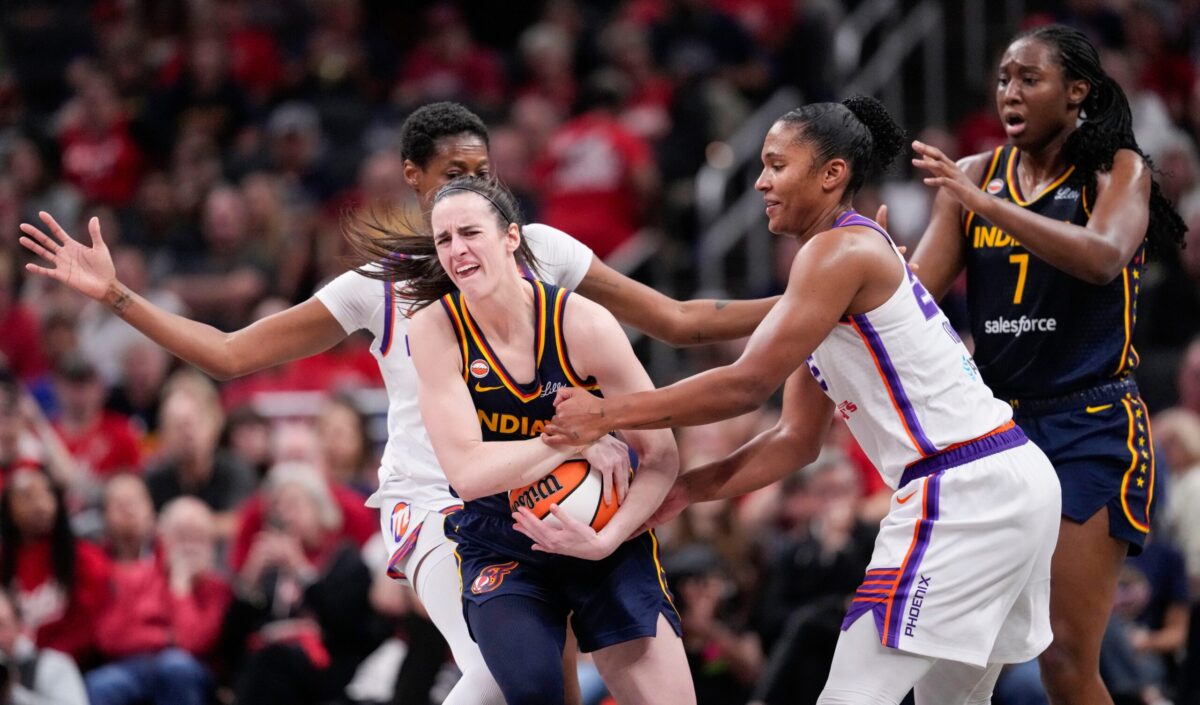
The Indiana Fever’s rematch against the Phoenix Mercury already carried extra tension after their heated meeting just two days earlier. But midway through the second quarter, a controversial sequence involving Alyssa Thomas and Caitlin Clark went unpenalized despite broadcast replays appearing to show contact to Clark’s neck. The incident, which Fever head coach Stephanie White later called ‘egregious,’ has since drawn strong reactions from former WNBA players, analysts and journalists alike.
Watch What’s Trending Now!
For former WNBA player Stacey Dales, this incident seemed to further fuel the widespread concern about how much physicality toward Caitlin Clark the league has allowed to continue without enough action.
“This. Tonight was a pivotal moment in Caitlin Clark’s season and career. It’s time the league takes notice and adjusts. It impacts a franchise,” she said, with her post being highlighted by Yahoo Sports on X.
American sports broadcaster Robin Lundberg was equally direct in his response. “The WNBA must suspend Alyssa Thomas for the dirty play she made against Caitlin Clark,” he said.
Sports radio co-host James Boyd, who initially missed the incident, also made the same point after seeing the replay.
“Missed this earlier because I’m sitting high up. But #Mercury star Alyssa Thomas pushing down on #Fever star Caitlin Clark’s neck is something the officials should have reviewed,” he added.
The officials, having missed a foul in a game already carrying so much emotional and physical baggage, only compound the problem. The previous meeting between these same two teams just days earlier was intense. It saw five players, including both Caitlin Clark and Thomas, receive technical fouls. So the threshold for alertness in this game should have been at its absolute highest.
ESPN Radio host Harrison Sanford pressed that exact point in his reaction. “Based on all the animosity from Monday’s game. WNBA officials should have been on high alert for things like this tonight. Can’t let Alyssa Thomas do this to anybody, in this instance Caitlin Clark, and go unpunished,” he said.
Indiana Pacers and Fever beat reporter Scott Agness also addressed the incident after someone pointed it out in response to an earlier post in which he had described both teams as composed.
“Yes, I saw that. Dangerous and unnecessary. I’m sure the league will take a look,” he clarified. “When I said composed, I meant tensions not carrying over from 48 hours ago. No technicals. Everyone was battling. The AT moment wasn’t good, nor was another risky close-out on Clark before that.”
So far, the reaction to that violent conduct toward Caitlin Clark has met with strong criticism. Whatever action the league will now take toward it, however, is still uncertain. But the chorus of voices demanding accountability is loud, unified, and growing.
Throughout this season, as the narrative of unfair officiating treatment toward Caitlin Clark has grown louder, Fever head coach Stephanie White has largely maintained a measured and professional stance on the issue. In fact, she has often placed responsibility on Clark herself to be better and smarter in foul situations. That approach, however, appears to have reached its limit.
“She Is Not Called the Same”- Stephanie White Calls Out WNBA Refs Over Caitlin Clark Treatment
With the uncalled foul against Clark in this game, White was no longer willing to be diplomatic, and she left no room for ambiguity in her postgame press conference.
“I mean, we spent all offseason looking at officiating, all offseason. And I still say the one thing that we keep asking for is consistency. She is not called the same way everybody else is called,” White said rather sternly.
The Alyssa Thomas incident was, in fact, not the only play White took issue with. She also called out a separate sequence in which Valériane Ayayi stepped completely underneath Clark’s feet on a three-point attempt. That was a play that the officials actually reviewed, saw clear video evidence of, and still chose to classify as a common personal foul rather than upgrading it to a Flagrant 1 reckless closeout.
The fact that the officials watched the replay and still arrived at the wrong call made the decision considerably harder to excuse. And in a game coming just 48 hours after one of the most tension-filled matchups of the season between these two teams, the officials had every reason to be operating at maximum alertness.
White made that point explicitly when she said. “You’re coming in here aware of what happened two nights ago, and that still happens. Absolutely unacceptable. And the reckless closeout that they actually reviewed. The foot still comes down on top of the defender’s foot, which wasn’t upgraded. Absolutely disrespectful. We have a generational talent and a WNBA superstar who had two cheap shots right there that weren’t called. And I just say again, absolutely unacceptable,” she added.
The way White sees it, and also other icons of the game like former WNBA player Stacey Dales, this treatment toward Caitlin Clark is detrimental to the player, who in fact, had to leave the game prematurely due to a back injury. It is, in fact, also bad for the Indiana Fever as a franchise.
And perhaps most significantly, it is bad for the WNBA, a league that cannot afford to have its most visible and commercially impactful player subjected to this kind of treatment without consequences.