
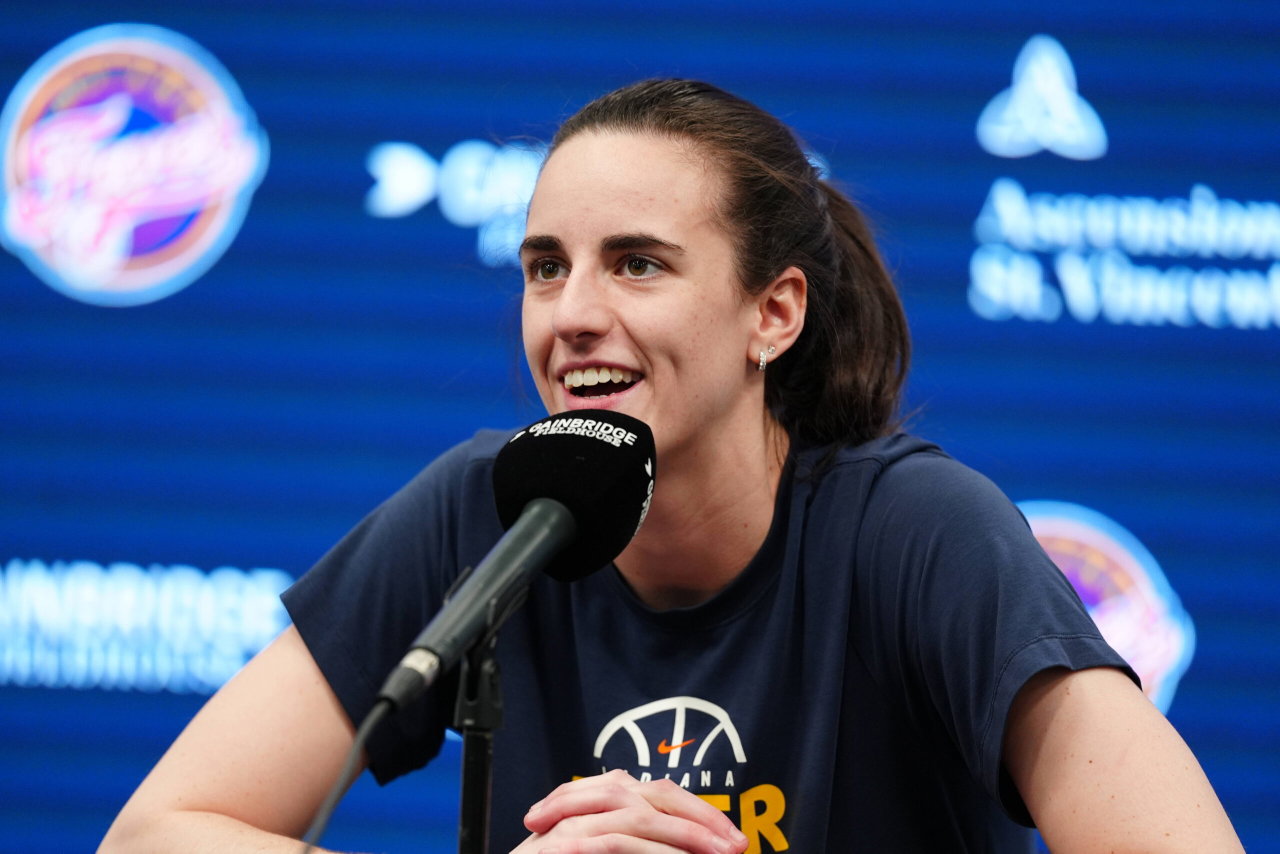
The Indiana Fever had a very obvious problem in their just-concluded 2026 WNBA season, one that practically every WNBA commentator and analyst must have pointed out. And yes, Caitlin Clark is not oblivious to her team’s weakness, as she has now openly acknowledged it.
Speaking on Wednesday’s episode of the New Heights Podcast with Jason and Travis Kelce, Clark reflected on Indiana’s defensive struggle, identifying it as a major factor in the team’s disappointing end to the season and, of course, an important area that needs improvement heading into the offseason.
“We had the most talented offense in the league, but we really struggled defensively. So, I think that’s our next step: getting a really good perimeter defender. I think that could help us go far. I think that’s probably the frustrating part of the season. Obviously, we had a great year, and we had really great moments, but you have all this talent, and you’re so good on offense, and then it’s like, ah, first-round exit. So, I think defensively, a lot of improvement.”
The Indiana Fever really did have one of the best offenses in the WNBA during the 2026 season. Across 44 regular-season games, they ranked No. 1 in points per game with 96.0 and also led the league with a 117.0 offensive rating. They were also first in total points scored, field goal percentage, and three-point percentage.
Even more remarkably, Caitlin Clark and Kelsey Mitchell ended the season as the highest-scoring backcourt duo in WNBA history. Together, the pair combined to average 47.0 points per game, more than any two teammates in a single season in league history.
Despite all these offensive accomplishments, the Fever lacked the defensive strength to back them up. They finished ninth out of 15 teams in defensive rating and allowed 90.4 points per game, one of the highest marks in the league. They also set a WNBA record for the most losses in a single season when scoring 100 or more points. So, even though Indiana was remarkably productive on the offensive end, its defensive shortcomings were just as glaring.
That imbalance proved costly in the first round against the Las Vegas Aces. Indiana struggled to get critical fourth-quarter stops, giving up 94 points in the decisive Game 3 elimination loss as A’ja Wilson poured in 36 points.
The next logical step, as Clark and several other WNBA observers have repeatedly pointed out, is for the Fever to strengthen their perimeter defense this offseason. For Clark, however, the improvements should not end there. The team also needs to address its bench depth while adding more shooting options to complement its offensive system.
“I think depth, too. How can we get better in the bench area? I think also the game of basketball is just moving to be more centered around five-out and more shooters, and how can we play like that? How can we space the floor?”
As was the case heading into this season, winning a WNBA championship will once again be the Fever’s biggest objective as they prepare for the 2027 campaign. Perhaps, if Indiana can make the necessary improvements on both ends of the floor, the franchise may finally get closer to ending its 14-year championship drought.