
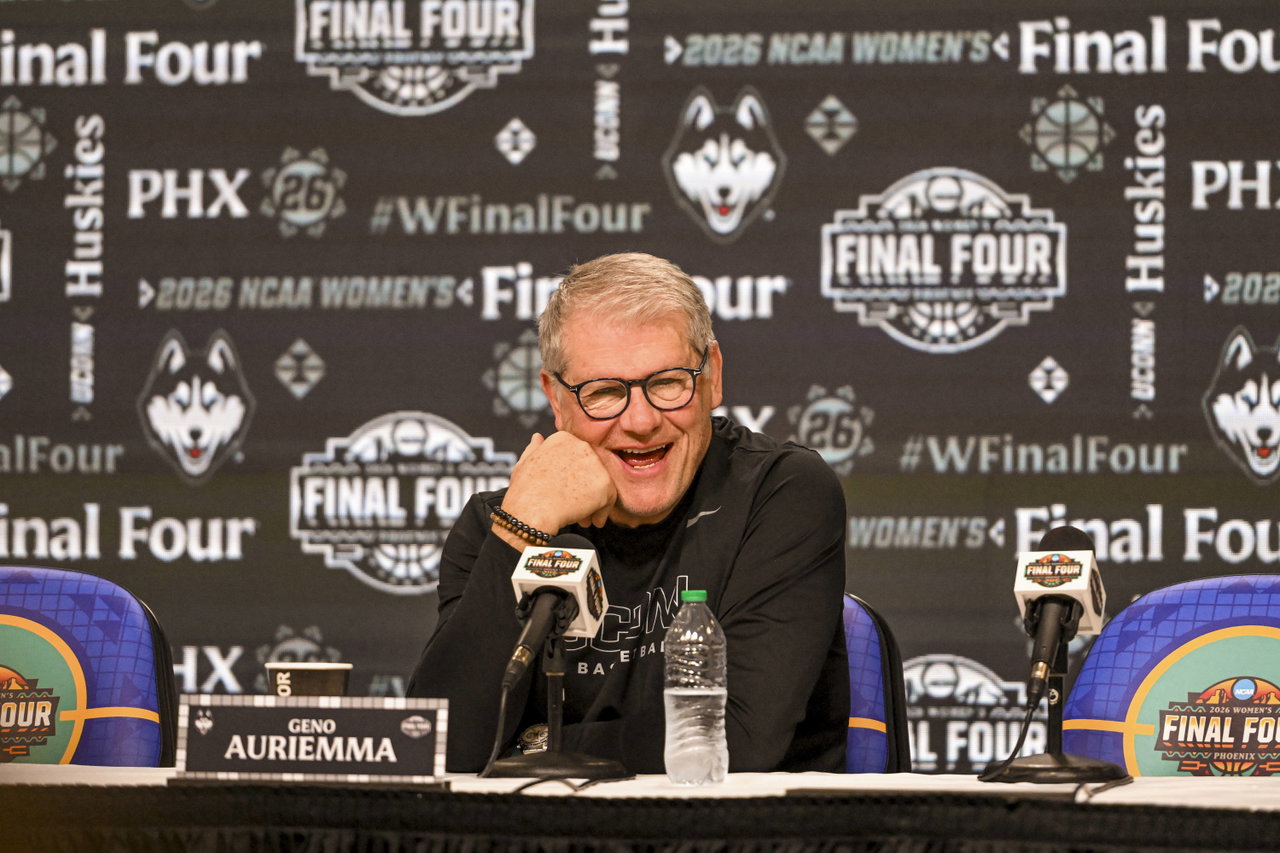
For years, the WNBA had to fight for the kind of attention that other major American sports leagues took for granted. That has changed dramatically in recent seasons, with the league now drawing record audiences and entering its 30th anniversary year with more eyes on its players than ever before. But UConn head coach Geno Auriemma believes that greater visibility has also exposed the league to a new set of problems when it comes to handling controversy and communicating with its growing audience.
Watch What’s Trending Now!
Auriemma recently discussed that transition on The Ryen Russillo Show, explaining how the WNBA has gone from trying to convince people to pay attention to becoming a major sports business dealing with the same level of scrutiny as the NBA, NFL, MLB, and NHL.
“For the longest time, the WNBA wasn’t treated as a legitimate sport. They were more like a cause, you know, we’re next, and they came up with all these slogans: ‘come on, help us out here, help us grow.’ Well, little by little, little by little, we come to today, the thing blows up, the players are really good, and here comes all the attention, and now we’re not a cause; we’re a big business, and we’re trying to compete with the NBA, Major League Baseball, the NHL, the NFL. If you put yourself out there to get more exposure and you can’t deal with it, you’re going to get exposed,” Auriemma said on The Ryen Russillo Show.
Auriemma believes that learning how to handle that attention is one of the biggest challenges facing the league now.
Auriemma believes the WNBA needs better messaging
The WNBA has dealt with several controversies this season, with some of them extending well beyond basketball. Sophie Cunningham’s comments in July about transgender athletes participating in women’s sports sparked a major debate and quickly became part of a wider political conversation.
The discussion eventually involved current and former players, coaches, political figures, and other prominent voices. The controversy also brought renewed attention to the league’s eligibility rules and how the WNBA responds when issues surrounding its players become part of a much larger public debate.
The situation became even more unusual when former NBA players Enes Kanter-Freedom and Royce White declared themselves eligible for the 2027 WNBA Draft. Kanter-Freedom later attended a Chicago Sky game before being removed from the arena, and he subsequently filed a lawsuit against those involved.
In June, Alyssa Thomas’ flagrant foul on Caitlin Clark during a game led to a wave of online abuse directed at Thomas, including reported death threats. The incident also brought criticism toward commissioner Cathy Engelbert, with several players questioning the league’s response to the harassment.
Engelbert had already faced criticism throughout the season over officiating and calls during games. Her handling of several controversies also became a talking point as the season progressed.
With Engelbert set to leave her position at the end of the 2026 season, the WNBA will soon have a new commissioner tasked with guiding the league through its next stage of growth. For Auriemma, that person will have to do more than simply oversee the business side of the league.
“I think the new commissioner, whoever it is, needs to get with the players and say, we need to have a voice, we need to use our voice, but we need to use it in a way that pushes us forward. The messaging from the players has to be really, really, really good,” Auriemma added.
Auriemma does not believe the WNBA should shy away from the attention that has helped fuel its recent growth. Instead, he believes the league and its players need to become better equipped to deal with everything that comes with being in the spotlight.
“So more exposure is great, but you have to learn how to deal with that, and I think that’s the phase that we’re in now. Throw that into the political climate that we have, and then it becomes, you know, black, white, right, left, gay, straight, you know, so you get into all these different things, and everybody takes the thing that they want and uses it against whoever they don’t like, and then the players get in the middle of it, and you have what you have now. I think there needs to be better messaging.”
The numbers show just how different the WNBA’s position is now compared to where it was a few years ago. The league had 51 games surpass one million viewers during the 2026 season. Before 2024, the WNBA had not reached that mark since 2008.
The league’s growth means more people are watching, more people are talking about its players, and more people are paying attention to what happens away from the court as well.
For the WNBA, sustaining the popularity it has gained in a good light will mean figuring out how to manage the increased scrutiny without allowing every controversy to overshadow the game itself. That is the growing pain Auriemma believes comes with the league’s rapid rise.