
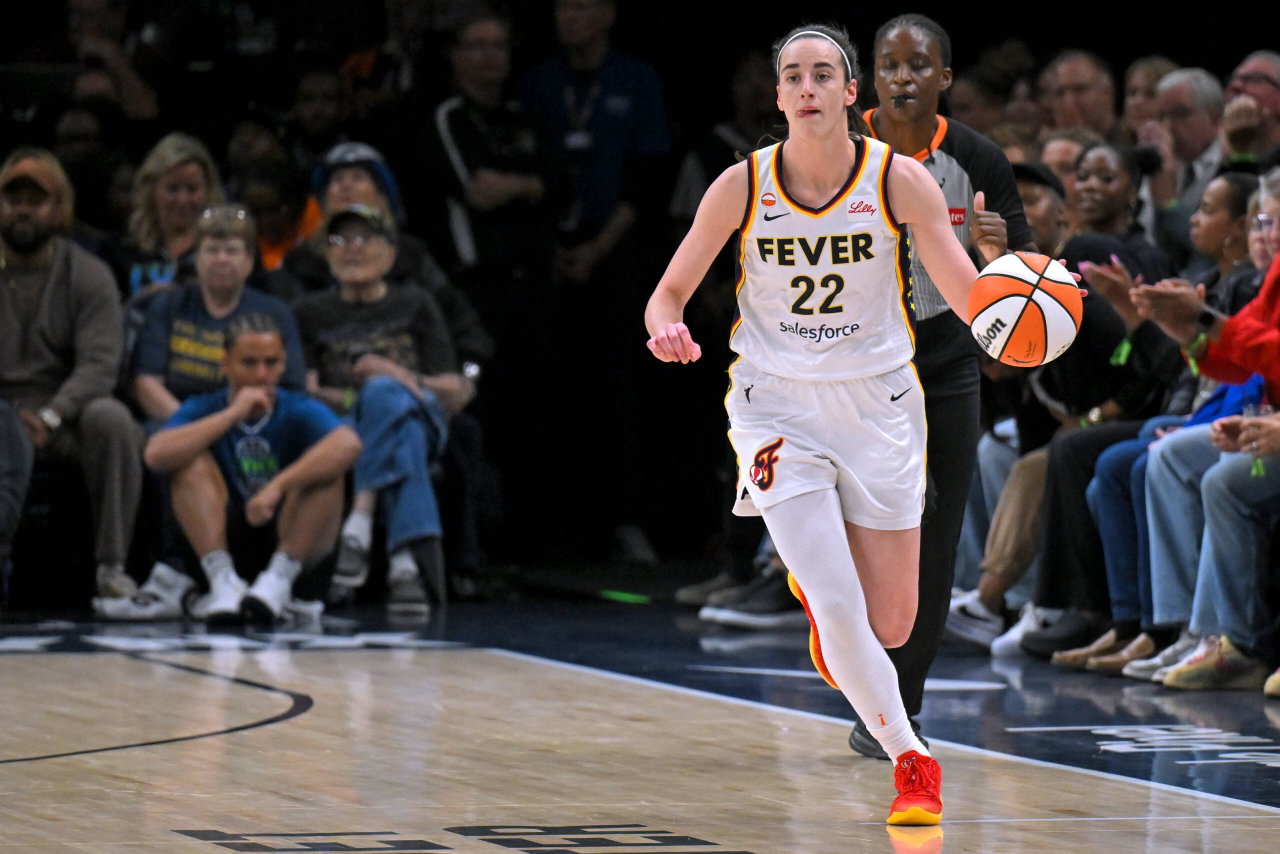
The WNBA has never been short of conversations about the relationship between popularity and on-court performance. Angel McCoughtry recently found herself at the center of one such debate after making remarks about how physical appearance influences a player’s marketability in the league.
During an appearance on the Get To The Point podcast, the former WNBA star contrasted Caitlin Clark’s popularity with that of Clark’s Indiana Fever teammate Kelsey Mitchell, suggesting that beauty can sometimes play a bigger role in recognition than basketball ability. The comments quickly drew backlash, with some fans reading them as a direct insult to Clark and Mitchell. And as a result, McCoughtry has now had to clarify her statement.
“I never called anyone ugly; those words never came out of my mouth,” she wrote on Threads, a screenshot of which was reshared on X. “I don’t even think in that way. So when people lie and say you said something you didn’t or paint a lying picture. Isn’t that a defamation lawsuit? One thing people gone do is twist your words for the negative.”
To a large extent, though, McCoughtry’s original remarks and her subsequent interaction on the podcast left her critics plenty to work with.
“In the NFL and NBA, if you’re good, you’re good,” she said. “In the WNBA, if you look pretty, you might not be the best player. Because I went to a conference and I said, everybody loved Indiana. They love Caitlin Clark. I said, ‘How many of you know Kelsey Mitchell?’ None of them raised their hands. She’s the best player on the team, the leading scorer on that team. She don’t have a million followers.”
McCoughtry’s argument was that in the WNBA, looks drive visibility and endorsements. She contrasted Mitchell, whom she called Indiana’s best player, with more famous teammates like Caitlin Clark and Sophie Cunningham. And by tying Mitchell’s lack of recognition to a lack of “pretty privilege,” critics argued she implicitly suggested Mitchell does not benefit from conventional beauty standards.
However, when co-host Chris Spencer pressed her by asking, “Are you saying Caitlin is pretty?”, McCoughtry gave no clear answer and burst out laughing instead. And to back her point, she turned to Cunningham as an example.
“Let’s use Sophie Cunningham for example. Sophie Cunningham. She’s pretty. Now, she averages nine points per game. She has an Adidas shoe deal. There are other girls who could probably have all out that’s balling,” McCoughtry said.
By pausing, bursting into laughter, and prompting the host to joke, “I rest my case,” McCoughtry‘s reaction did much of the heavy lifting for her critics. Even though she is now insisting through her Threads post that “those words never came out of my mouth,” the silence and laughter left the audience to fill in the blanks on their own.
Perhaps saying “yes” would have validated the claim that she was reducing Clark’s historic popularity to her looks rather than her basketball skill. Saying “no” would also have contradicted her own premise about why Clark gets so much attention.
Overall, many have pointed out that in trying to praise Mitchell’s game, McCoughtry ended up insulting and disrespecting all three Fever players at once: implying Kelsey Mitchell does not fit conventional beauty standards, laughing off Caitlin Clark’s looks, and reducing Sophie Cunningham’s commercial success to her appearance.
WNBA Analysts Push Back Against Angel McCoughtry’s Caitlin Clark Comments
McCoughtry’s comments have not sat well with many voices in the WNBA coverage space. WNBA analyst and former collegiate player Rachel DeMita, speaking on her Courtside Club podcast, described the former player’s remarks as disrespectful, admitting that the entire exchange genuinely bothered her.
“This one bothered me because what are we doing?” DeMita said. “The fact that there’s a former WNBA player and also WNBA media member chiming in on this conversation and laughing about the way that Caitlin Clark looks in their opinion is quite disrespectful. Actually, just flat-out mean. Having a conversation where you’re kind of essentially saying that Kelsey is not getting marketed enough because she’s not pretty, which is one, mean, two, disrespectful, three, unnecessary and four, just not true.”
For WNBA analyst Robin Lundberg, McCoughtry’s argument was nothing more than unnecessary shade, rather than a meaningful contribution or logical argument.
“What point are you making? Again, it’s just shade after shade after shade, day after day after day, when it comes to the WNBA media and the attention that’s come with Caitlin Clark,” Lundberg said.
An analyst on Fox News’ The Big Weekend Show also weighed in, describing the situation as a sad reality of how some players have responded to the increased attention surrounding the league.
“It’s amazing to me how the WNBA and the players in the WNBA, their league is getting attention that helps and benefits all of them, but you see certain players actively badmouthing the ones who are bringing the attention, the money, and the eyeballs to their league. And it’s just amazing to me what women are willing to do to each other at their own detriment,” she said.
There have also been arguments challenging McCoughtry’s perspective. Notably, Rachel DeMita pointed to players like Breanna Stewart and A’ja Wilson, highlighting how their basketball accomplishments have translated into national advertising campaigns, major brand partnerships, and even signature shoe deals.
DeMita also explained that opportunities outside basketball often depend on individual players’ interests and the efforts of their agents, management teams, and publicists to secure the right partnerships. In her view, the level of recognition and commercial opportunities WNBA players receive is not simply a matter of how they look.
Ultimately, the debate surrounding McCoughtry’s comments has highlighted the complicated relationship between basketball performance, individual popularity, and commercial opportunities in the WNBA. While her intention may have been to draw attention to the differences in how players are marketed, she has instead sparked a viral controversy.