
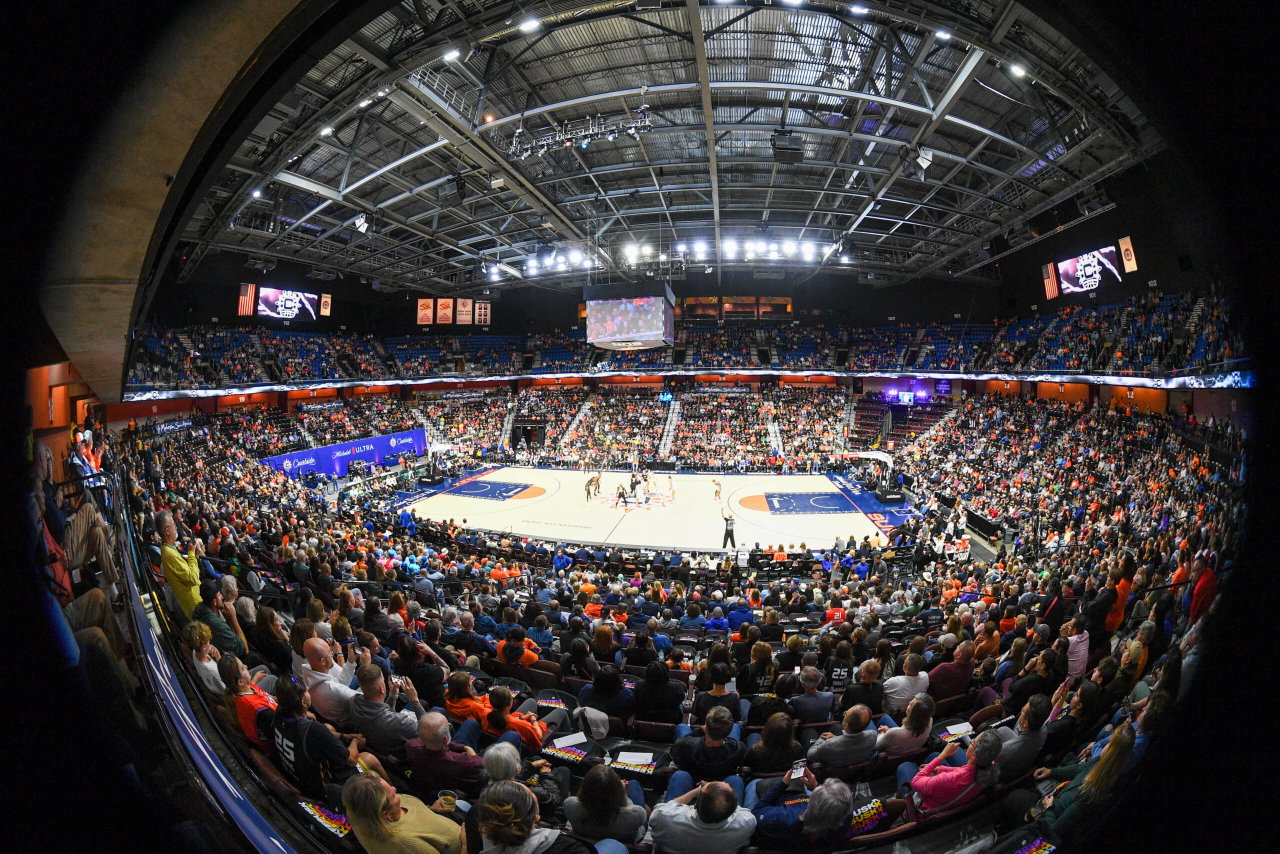
The WNBA has made significant strides in its commercial growth, with an exponential rise in viewership and an unprecedented level of attention in recent years, something that the league has always wanted and continues to pursue more of the same. But that level of visibility and commercial momentum also almost always comes with an elevated degree of scrutiny, criticism, and a diverse range of opinions on players, teams, and the league as a whole.
Watch What’s Trending Now!
Those critiques, however, frequently tend to generate highly emotional reactions from within the WNBA community. And for four-time WNBA champion Tina Thompson, that is something the WNBA community needs to learn how to withstand, if it wants to match its growing commercial ambitions with the maturity expected of a billion-dollar industry.
“Billion-dollar decisions are not emotional,” Thompson said on Tuesday’s episode of the Post Moves podcast with Candace Parker. “So, as WNBA players, commentators, fans or whatever, we have to stop being so emotional. You can love your player. It doesn’t mean that they’re not without fault. And just like you could have an opinion, as long as your opinion is not rooted in malice, accept it, move on, disagree, go to something else.”
“I think it’s like, if we want to have billion-dollar conversations, if we want to be paid a certain way, if we want to be treated a certain way, then we have to start acting according to those statements.”
“So if you’re going to compare one of our greats to one of their greats (NBA, NFL) then those guys receive a lot of backlash and things being said about them. They’re not emotional about it. They’re not offended. People are allowed to have an opinion,” she added.
Tina Thompson is one of the most foundational and decorated players in women’s basketball history. She joined the league in its inaugural season in 1997 as the first overall pick of the Houston Comets, and alongside fellow Hall of Famers Sheryl Swoopes and Cynthia Cooper, anchored the legendary dynasty that won the first four consecutive WNBA championships from 1997 to 2000.
The WNBA at that time, of course, did not enjoy anywhere near the popularity, visibility, or financial investment it does today, as the league is now surpassing expectations, transforming into a genuine billion-dollar enterprise, attracting unprecedented fan bases and generating record viewership, attendance, and revenue.
But that commercial growth, as Thompson is pointing out, also carries a responsibility. And the emotional reactions of players, fans, and commentators to scrutiny and criticism do not always send the message that the WNBA community is ready to operate at the level it demands to be valued at.
The most clear-cut example of the kind of behaviour Thompson is describing came during Game 2 of the 2026 playoffs, when A’ja Wilson confronted an Indiana Fever fan. After a physical play involving Sophie Cunningham, a courtside fan stood up, stepped forward, and pointed directly at Wilson, reportedly saying “That’s on you.” And in reaction, Wilson immediately charged toward the spectator, shouting and pointing back, before being physically restrained by her teammates.
Media analysts and former players noted that Wilson treated what amounted to a routine moment of fan rowdiness as a personal threat. And in this case, Thompson’s broader argument is that in the NBA or NFL, superstars deal with thousands of fans screaming, gesturing, and pointing at them every single night, and they do not break focus during a live playoff game to confront a spectator for doing so.
Beyond that incident, there have been numerous other examples throughout the season of players, fans, and commentators exhibiting emotional reactions to on-court fouls, media critiques, and off-court opinions that generated far more heat than the original trigger warranted. For Thompson, the WNBA and everyone within its orbit simply have to develop a thicker skin.
Tina Thompson Admits She Avoids Social Media to Protect Her Reputation Amid WNBA Criticism
Thompson also turned her attention specifically to fans and the broader public, and the way she sees it, the problem of excessive emotional sensitivity extends well beyond the players themselves. It is a defining feature of the wider WNBA conversation right now. And it is one significant reason why she keeps her own social media presence carefully managed.
“I think just in general, not just in the WNBA, but in the world, we are way too sensitive,” Thompson said. “Opinions are not always factual, and two things can be true at the same time. So, the reaction to someone giving an honest opinion, for me, especially when it’s someone who’s done it in a real way at a very elite level, they’re actually speaking based on experience and what they’ve done.”
“How the fans, you know, or the people out there in social media land respond, I think is ridiculous. And it’s probably why I’m not on social media that much, because I have very little restraint, and I have a big mouth, and I say what I want to say when I want to say it. So, I avoid a lot of those moments. Not because I’m scared, but I just work really hard for the reputation that I have. And, you know, you just don’t want to get involved,” she added.
To an extent, emotionally charged fan reactions are a feature of virtually every sport. That level of passionate investment is, after all, part of what makes sport culturally significant in the first place. Perhaps in the WNBA, the intensity and frequency of those reactions have tipped into something excessive.