
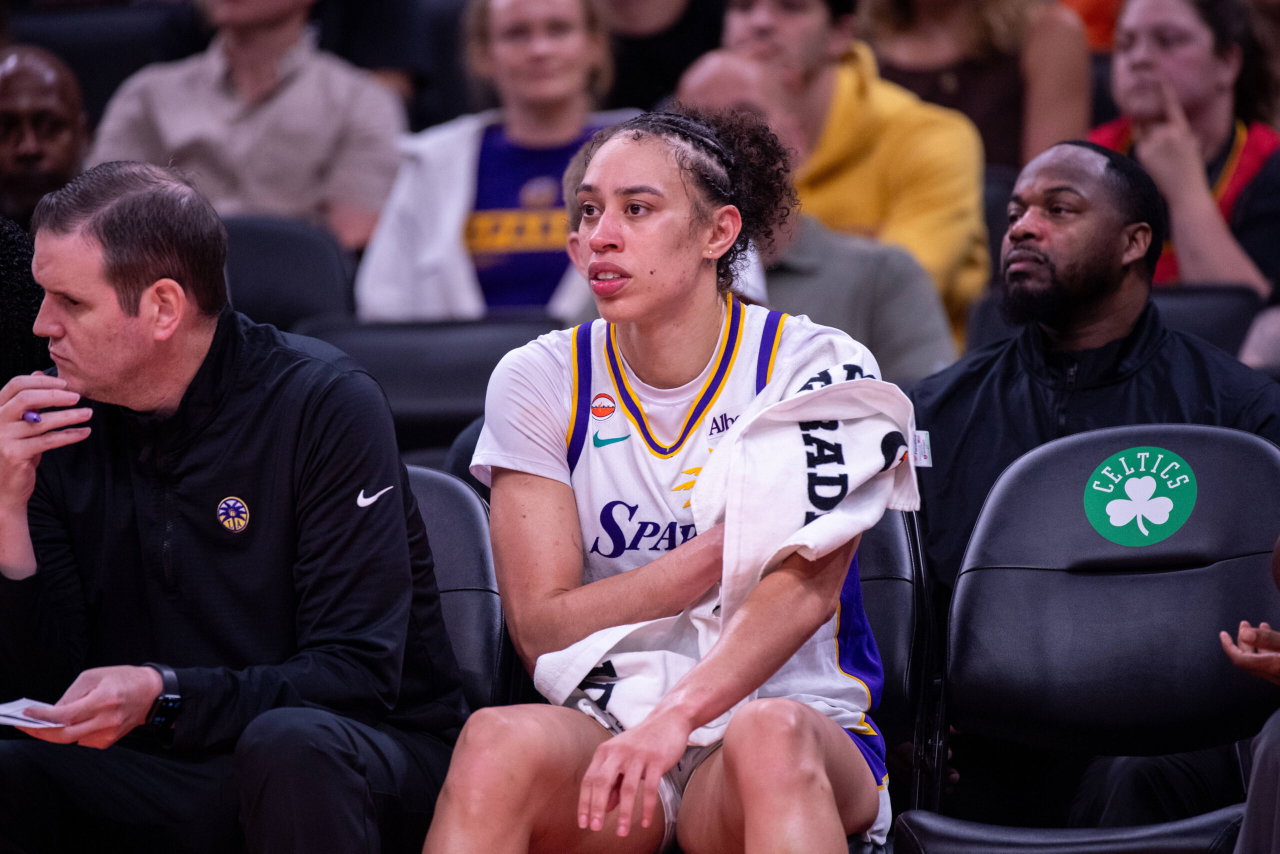
At a time when WNBA players continue to face abuse that goes far beyond criticism of their performances, Dearica Hamby’s decision to speak out has resulted in something the players have been demanding for years: accountability. After the Los Angeles Sparks forward was subjected to racist and hateful messages following her ejection from an August 22 game, Hamby refused to let the incident fade away quietly.
Watch What’s Trending Now!
With the help of her fans, Hamby was able to identify the person believed to have sent the messages as an employee of Acclaro Medical, a Rhode Island-based medical equipment company. The company swiftly took action, firing the employee and issuing a statement referring to a “deeply disturbing situation on social media.” And that response has now earned the approval of tennis legend Martina Navratilova.
Civil rights attorney Ben Crump shared the update on X, writing, “The sender is now out of a job and permanently banned from WNBA games and events. This is accountability.” Navratilova reposted Crump’s message and simply responded with three clapping emojis: “👏🏼👏🏼👏🏼.”
The WNBA has also made it clear that the consequences will extend beyond the employee’s workplace. The league also released a statement on the matter.
“The WNBA stands unequivocally with Dearica Hamby and condemns the racist abuse directed at her in the strongest possible terms. We are committed to holding anyone who engages in such abhorrent behavior accountable, and this individual will be permanently banned from all league games and events.”
For a league whose players have repeatedly been subjected to abuse, the action represents an important benchmark. Yet the fight is far from over.
Dearica Hamby is hardly the only WNBA player to find herself at the center of such an incident. Just weeks earlier, Las Vegas Aces guard Chelsea Gray publicly called out a Hilton Grand Vacations employee after receiving racist abuse, ultimately resulting in the employee losing their job.
Phoenix Mercury forward Alyssa Thomas faced a similar wave of abuse after her infamous incident with Caitlin Clark, when Thomas made non-basketball contact with Clark’s throat. The backlash quickly crossed the line from criticism into racial slurs and death threats, prompting Thomas to publicly call on the league to do more to protect its players.
Dearica Hamby and Chelsea Gray’s case shows what a player can achieve when they speak up. Players will hope that this can become part of a broader, sustained effort from the WNBA to protect its players, not as a reaction, but before online abuse has a chance to escalate.
The WNBA, however, has not been completely passive in the face of the growing problem. As incidents of racism, harassment, and online vitriol have continued to follow players beyond the court, the league has tried to attack the issue from multiple fronts.
One of those efforts came through its No Space for Hate campaign, which was created to push back against prejudice and discrimination both inside arenas and across digital spaces.
Through this “multi-dimensional platform,” the league focused on four key areas. “Enhanced technological features to detect hateful comments online; increased emphasis on team, arena, and league security measures; reinforcing mental health resources; and alignment of core against hate.”
WNBA also rolled out an AI-powered technology solution to monitor social media activity and protect the community from online hate speech and harassment. They also enforced a newly enhanced and more accessible Fan Code of Conduct.
But measures like these can only go so far. So when abuse crosses the line, the league has increasingly moved toward punishment.
The league has investigated reports of fans directing hateful or abusive comments at players and has handed out permanent bans to those found responsible. In cases like those involving Dearica Hamby and Chelsea Gray, the consequences have even gone beyond the arena.
So the WNBA has the policies, technology, and resources in place to combat the abuse, but the challenge is making sure those measures continue to evolve as the harassment does.