
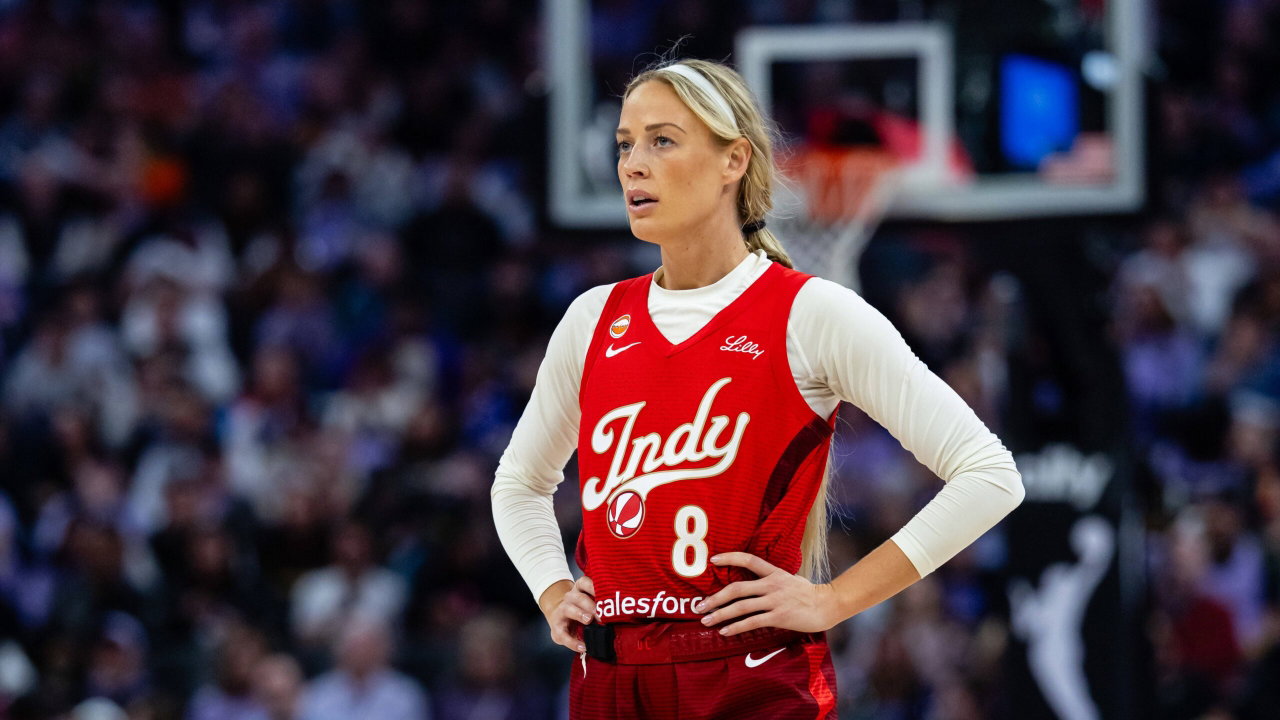
“I want to protect young girls in a locker room, or young girls in sport who shouldn’t have to go against biological men,” Sophie Cunningham said in a July 21 profile by ESPN’s Hallie Grossman. Her remarks drew criticism from parts of the WNBA community, including players, coaches and analysts. Now, after former Enes Kanter Freedom only intensified that debate after doubling down on his eligibility for the 2027 WNBA draft, former NBA champion Michael Porter Jr. has given his take on trans athletes competing in women’s sports.
Watch What’s Trending Now!
The conversation began when Porter Jr. asked podcast guest Lexie Brown where she stood on the issue. Brown did not offer an outright endorsement of transgender participation in the WNBA, but she emphasized inclusion and argued that sports should not be used to discriminate against transgender people. Porter Jr., however, explained why he believes inclusion can raise questions about competitive fairness.
“When it comes to sports, to keep the integrity of the game… ‘Cause from my perspective I would be like that wouldn’t be fair. Like I know that there was a man that transitioned to a woman and then fought… Almost hurt this person. Like it’s not fair,” Porter Jr. said on the August 17 episode of the Curious Mike podcast on YouTube.
Since Porter Jr. agreed that he was talking about an Olympic boxer, the only reference he could’ve made was Algerian boxer Imane Khelif at the 2024 Paris Olympics. Later, the International Olympic Committee stated that Khelif was born female, registered female, lived as a woman, and held a female passport. However, Porter Jr.’s broader concern has examples in other sports too.
One of the most prominent cases is Fallon Fox, a former professional MMA fighter who became publicly known in 2013 as an openly transgender fighter. Fox competed professionally in women’s MMA and finished her career with a 5-1 record, with her lone defeat coming against Ashlee Evans-Smith in 2013. Fox’s loss, of course, does not settle the larger argument over competitive advantage. But that is precisely why the debate continues.
Players like Sophie Cunningham have made their position clear, while the ones like Lexie Brown have focused on the danger of turning sports into a vehicle for discrimination against transgender people.
“I feel like people use these examples in sports to weaponize and talk about their beliefs and opinions, which can come off as very transphobic. And I don’t support that. Because at the end of the day, there’s a lot of trans men and women in this world that are dealing with a lot of s— … I would say a large majority of them, sports is like the last thing that they’re concerned about,” Brown said on the podcast.
And the WNBA has now found itself caught in the middle of that argument. The issue gained even more attention after former NBA players Enes Kanter Freedom and Royce White announced plans to enter the 2027 WNBA Draft, prompting the league to address the subject through its task force. The league subsequently said there are currently no transgender-player eligibility issues affecting the WNBA, while the task force has continued discussions around the broader issue.
For now, there is no final answer that has satisfied everyone. But with Sophie Cunningham, Brown and now Porter Jr. offering very different perspectives, the debate surrounding transgender participation in women’s sports is unlikely to disappear anytime soon.