
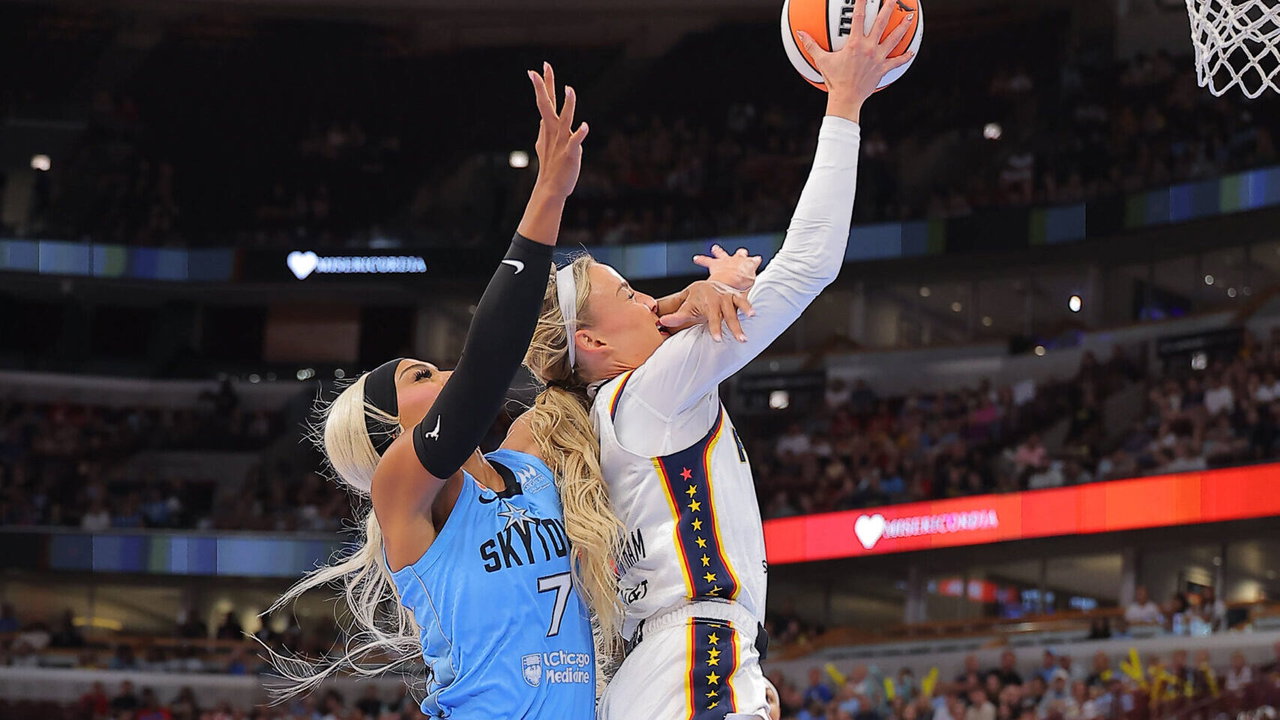
The Sophie Cunningham and DiJonai Carrington saga has started to cool down a bit since the August 8 incident. But the conversation surrounding it has hardly disappeared. WNBA analyst Mariah Rose has now revisited the incident, pointing to what she sees as a much bigger issue facing the league.
Watch What’s Trending Now!
In a recent Instagram post from Hoops for Hotties, Rose acknowledged that she doesn’t agree with many things Cunningham does, but still felt Carrington’s ejection was the right call. However, while she understood why some fans viewed the incident through the lens of race, Rose believed there is a bigger issue that needed attention — the inconsistency in WNBA officiating.
“My main thing is there’s an overarching issue with inconsistency in WNBA officiating that Cathy Engelbert had announced at WNBA All-Star. They are making an effort to bandage, and fix, and evaluate, and I understand the call to eject DiJonai. However, I don’t think that she meant to hurt Sophie,” Rose said.
Rose’s concern about inconsistent officiating is hardly a new one in the WNBA. Officiating has remained one of the league’s biggest talking points, and the league entered this season promising to address the growing concerns around physicality. An eight-member officiating task force made up of coaches and general managers was formed during the offseason, with a focus on enforcing rules such as ‘freedom of movement’ more consistently as they aimed to give offensive players more space on the court.
But the changes made by the task force have come with their own set of frustrations. Foul calls have jumped this season, with teams averaging significantly more whistles (20+ per game) than they did a year ago (17.4), while players and coaches have continued to question which types of contact are being called and which are being allowed to go.
The issue, then, is not simply the number of fouls being called. It is the sense that the line keeps moving from game to game, with some physical plays like Alyssa Thomas’ non-basketball contact to Caitlin Clark’s throat going uncalled in real time while seemingly minor actions like clapping can still result in a whistle or technical.
The league itself has acknowledged that officiating still needs work, as commissioner Cathy Engelbert said at the All-Star event that officials are reviewing every call and significant non-call, while also admitting, “officiating, we always need to be better.”
So in response, the WNBA has now taken another major step toward addressing the problem. The league has announced that it will launch a centralized Replay Center at the start of the 2027 season. The system will connect every WNBA arena to the NBA’s existing replay facility in Secaucus, New Jersey, giving officials access to additional camera angles and centralized replay support in an effort to improve the accuracy, efficiency, and consistency of reviews.
And for Rose, that is exactly what makes the DiJonai Carrington-Sophie Cunningham incident part of a much larger conversation. The ejection may have been the right call in her view, but the bigger concern remains whether players, coaches and fans can trust the same standards to be applied consistently across the league.