
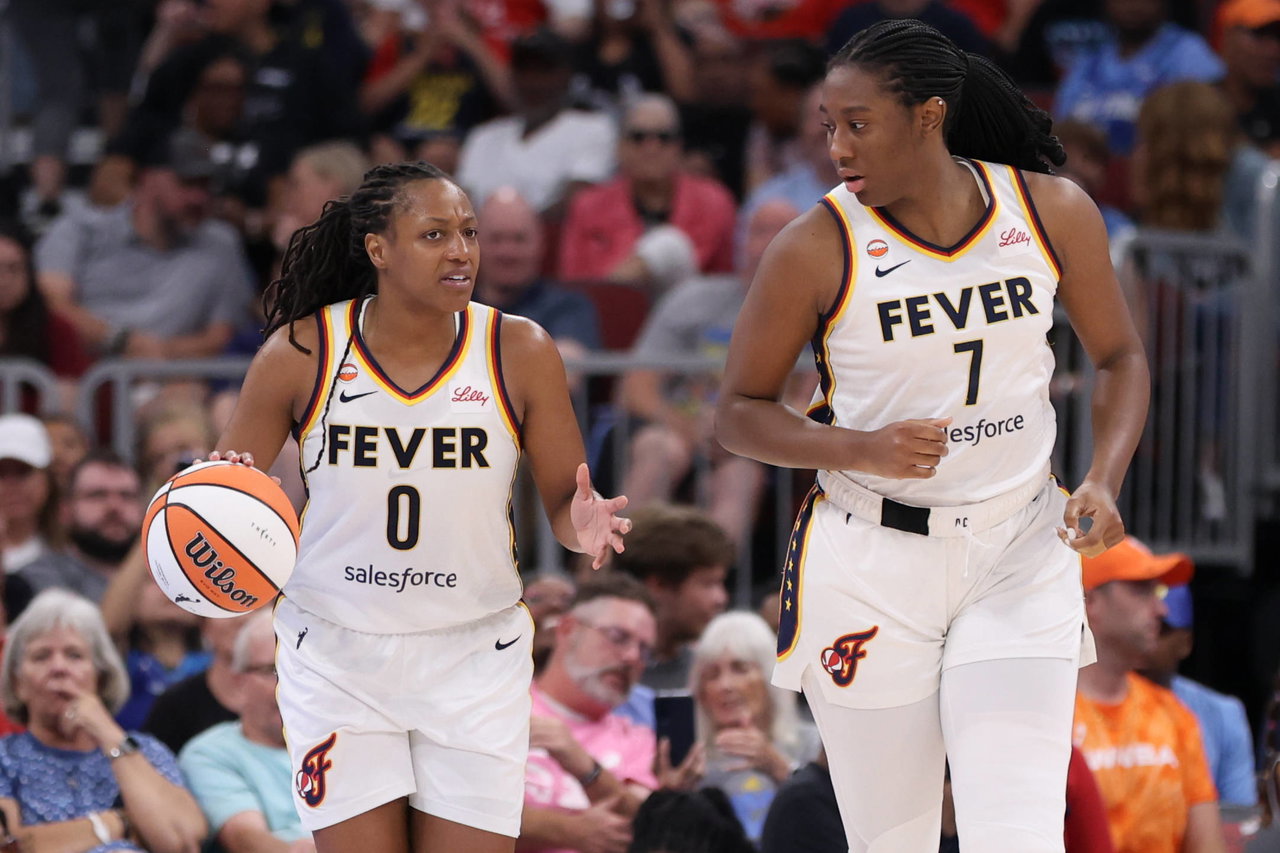
With the 2026 Collective Bargaining Agreement, WNBA salaries have been pushed to as much as $1.4 million for supermax players, but franchise risk control is now becoming a big question mark. That is exactly what a former Indiana Fever insider is asking. Unrivaled recently revealed the players who will be “Returning to Unrivaled” for Season 3, set to take place in 2027. Among several top-tier stars was Aliyah Boston, which prompted former Fever insider Scott Agness to raise an alarming question for Fever owners.
Watch What’s Trending Now!
“Clark was making like $72,000 her rookie year. Aliyah Boston making about that last year in the final year of her rookie deal-ish, right? So they go to Unrivaled, where they get some equity, they get more money, all in the six figures,” Agness said on the latest episode of Fieldhouse Files.
“But now that someone like Boston is making seven figures, she’s making a million dollars. Kelsey Mitchell’s making 1.5 million. Are we still going to see those players not only go to Unrivaled and promote them, but play in it? I’d have a real issue with that if I’m WNBA owners paying out those big contracts. Because you’re paying them more, and you absorb that risk as well. You totally understood it when they got bad contracts, when they weren’t completely paid.”
Aliyah Boston signed a contract extension with the Fever that will keep her with the team through 2029. She signed the four-year, $6.3 million deal under the new CBA, where she is set to earn 20% of Indiana’s total salary cap in each of the 2027, 2028, and 2029 seasons.
Kelsey Mitchell, on the other hand, signed a $1.4 million supermax contract with the Fever. So, with both stars now earning seven figures in the WNBA, the argument that ‘players must play in the offseason because their WNBA pay is too low’ no longer carries the same weight.
Yet Aliyah Boston will be joining Unrivaled for its third season, whereas Mitchell will not be playing in the 3×3 league for the upcoming season, despite playing for Hive BC in the 2026 season. Instead, Mitchell has signed a contract to play for Project B, an ambitious new global professional women’s basketball league expected to launch its inaugural season later this year.
And that brings up the question Agness is trying to raise: When an owner invests seven-figure money in a franchise cornerstone, wouldn’t the team also want some level of protection against the player getting injured outside the WNBA?
In the NBA, guaranteed multi-million-dollar contracts can come with contractual protections surrounding activities outside of basketball. Under the NBA’s 2023 CBA, according to Section III (a), players cannot participate in “public off-season basketball game, summer league, or public exhibition or competition of basketball skills” unless the event is approved in writing by the NBA.
The reason behind rules like these is simple. If a player suffers a serious injury during an offseason tournament or league, it could potentially derail an entire multi-million-dollar season for the team that pays their contract.
That is what makes Agness’ question worth watching as the WNBA enters a new financial era. Players are finally earning the kind of money they have spent years fighting for, but that also changes the relationship between those contracts and what teams may expect in return.
Unrivaled, the 3×3 league co-founded by Breanna Stewart and Napheesa Collier, came to life to provide women’s basketball players with a high-paying domestic offseason alternative as players continued to push for better pay in the WNBA. While this is very beneficial for the players who would otherwise have to travel abroad to play in international leagues during the offseason, it puts WNBA team owners at a great risk of losing important players to injuries that didn’t even happen in the WNBA.
Aliyah Boston and Kelsey Mitchell now earn seven figures in the WNBA and still have an opportunity to make additional money and build their brand in off-season leagues like Unrivaled and Project B. And for players, those decisions make sense. But for owners, the financial risk becomes much harder to ignore.