
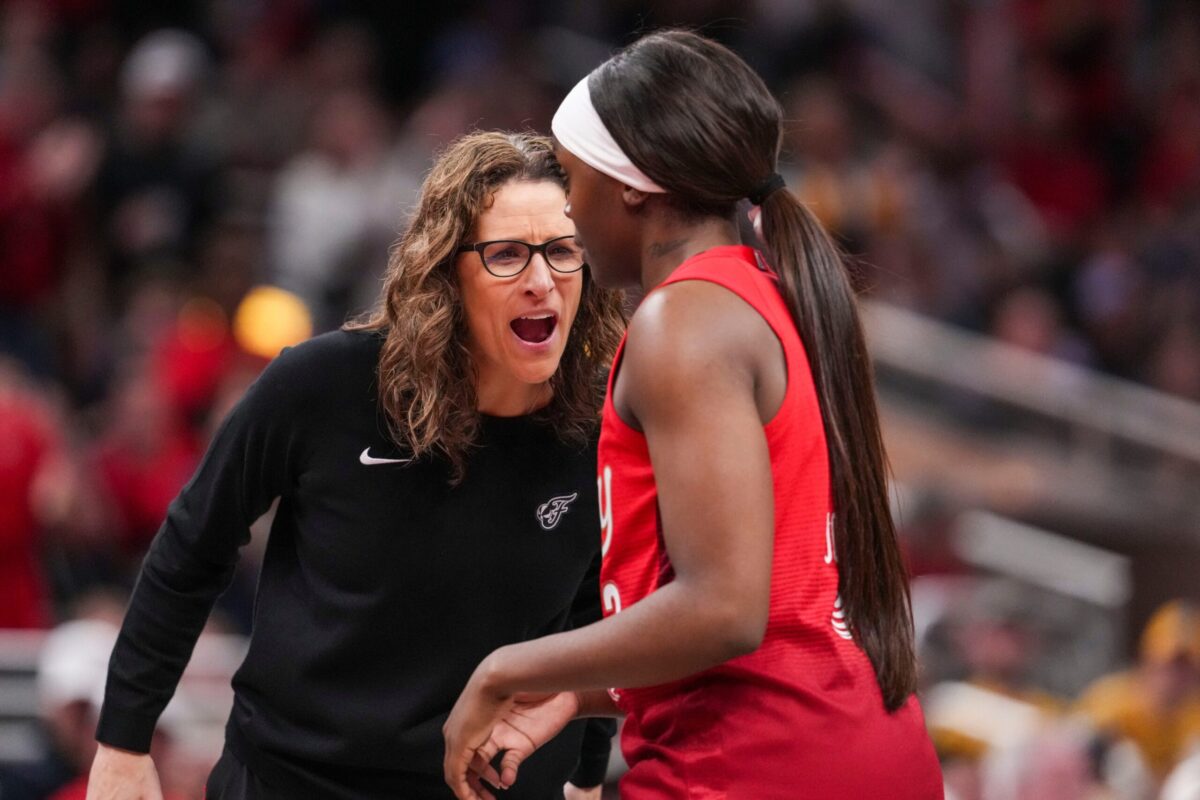
The Indiana Fever’s habit of giving up leads does not seem to go away. Not yet, at least. Head coach Stephanie White’s team has repeatedly struggled to halt opposing runs once momentum begins to swing. In the early-season loss to the Mystics, they led by 13 at one point, while it was 12 against the Liberty. When it came to the Connecticut Sun, it was the same story all over again. Indiana Fever reporters and fans alike believe this is a cause of concern for White.
Watch What’s Trending Now!
Take Fever reporter Tony East as an example. In the latest video on his YouTube channel, he said:
“Their offense really faded in the second half [against the Sun],” he said. “I thought the bench was a huge issue until one hero late that we’ll get to in Sophie Cunningham. They could not get any scoring. After three quarters, the non-big three had combined for five made shots.”
The Fever raced to a 47-38 lead at halftime. It looked like the Fever would run away with the game, but the Sun roared back with a 22-point quarter while giving only 16 to the Fever. Eventually, Sophie Cunningham helped close out the game with 11 points in the final two minutes. And the issue for almost blowing yet another lead, at least in this game, came down to their bench production, according to Tony East.
“It was a really poor bench night,” East further said. “Ty Harris, Raven Johnson, and [Myisha Hines] Allen, right after a huge game, none of those players were of much effect tonight. Michaela Timpson had a nice stint in the first half, popping into space and making some good defensive plays around the rim that helped the Fever build their early lead or at least catch up after falling behind. But outside of that, it was nothing.”
The entire bench combined to contribute 16 points for the Fever, including Cunningham’s final spree.
Without considering that, the Fever bench had only 5 points. In a game where the Fever won by 10 points, the bench showed how they struggled when the starters were not on the floor. By comparison, the Sun had Olivia Nelson Ododa scoring 12 from the bench and Kennedy Burke adding 10.
And it’s a season-wide problem for the Indiana Fever and Stephanie White. They need their key bench pieces like Johnson and Hine-Allen to fire if they want to maintain the intensity, as White said.
“We put a lot of pressure on our offense to be perfect when we don’t consistently defend,” White said after the Washington loss in May. “And this is on us as coaches; this is our responsibility. We’ve got to be disciplined the entire game. We’ve got to be disciplined every possession.”
Stephanie White needs to improve her rotations for the bench production to go up as well. Putting in the right people at the right time and giving them a favorable situation will help their performance. For example, Myisha Hines-Allen thrives in physical games that require some scrappy plays. Raven Johnson is still learning, but she is great at controlling the pace of the game.
There is work to be done all around, but the positive side of that is that they have started winning the games they were losing. The Fever has found a way to get results. Now, it’s about sharpening their depth to go from good to elite.